
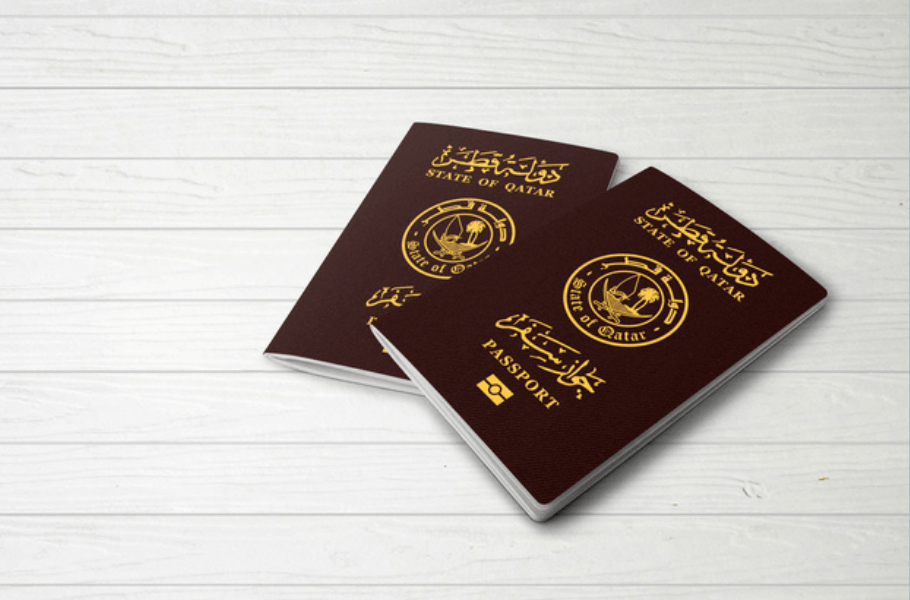
Qatar has outlined 16 categories of people eligible to receive diplomatic passports, including the country’s Emir, government ministers, diplomats, senior lawmakers and certain family members.
The eligibility requirements are contained in Law No. 25 of 2019, which amended provisions of the country’s 1993 passport law.
The legislation sets out the public officials entitled to diplomatic passports and specifies the conditions under which their spouses and children can also qualify.
Unlike ordinary passports, diplomatic passports are reserved for people who fall within the categories recognised by the law.
16 categories of people eligible for Qatar’s diplomatic passport
According to Article 6 of Qatar’s amended passport law, the following categories qualify for diplomatic passports:
- The Emir: Qatar’s head of state is eligible for a diplomatic passport.
- The Crown Prince: The designated heir to the throne is included.
- The Deputy Emir: The official occupying the position is eligible.
- Prime Minister and Deputy Prime Minister: Both officeholders, including officials holding equivalent ranks, qualify.
- President and Deputy President of the Shura Council: The two senior leadership positions in Qatar’s legislative advisory body are covered.
- President of the Supreme Judiciary Council: The head of the country’s Supreme Judiciary Council is eligible.
- Serving ministers: Government ministers, officials of equivalent rank and Ministers of State qualify.
- Members of the Shura Council: Members are eligible while their membership remains active.
- Undersecretaries of ministries: Serving ministry undersecretaries and officials of equivalent rank are included.
- Diplomatic and consular officers: Members of Qatar’s diplomatic and consular corps qualify.
- Qatar’s representatives at the United Nations: Officials assigned to represent the country at principal UN bodies or specialised agencies qualify for the duration of their assignment.
- Technical attachés: Technical officers attached to Qatar’s diplomatic missions abroad are included, regardless of their ranks.
- Diplomatic couriers: People responsible for carrying official diplomatic communications qualify.
- Spouses of certain officials: Qatari spouses of people listed under categories 4 to 12 are eligible.
- Minor children and unmarried daughters: Qatari children who have not reached adulthood, as well as unmarried daughters, of officials under categories 4 to 12 qualify.
- Certain adult children of diplomats and consular officers: Their Qatari children may also qualify while living under their care. Sons must be receiving education, while daughters must remain unmarried.
What the law says about family members
One notable aspect of Qatar’s diplomatic passport rules is that eligibility is not limited to government officials.
Certain family members can also receive the document, although the law places conditions on their eligibility.
For instance, the spouses covered by the legislation must be Qatari nationals. The same nationality requirement applies to children seeking diplomatic passports under the relevant categories.
Adult children of diplomatic and consular officers also face additional conditions. Sons must be studying and remain dependent on their parents, while daughters must be unmarried and living under their parents’ care.
These provisions mean that being related to a government official does not automatically guarantee eligibility.
When did Qatar introduce the 16 categories?
Qatar’s Law No. 25 of 2019 amended the country’s Law No. 14 of 1993 on passports.
The amendment replaced the previous provisions governing diplomatic and special passports.
It expanded and clarified the categories of people entitled to diplomatic passports, including senior government officials, lawmakers, judicial leadership and qualifying family members.
The legislation took effect on December 8, 2019.
The law also distinguishes diplomatic passports from special passports, which have a separate list of eligible recipients.
Therefore, the 16 categories specifically concern diplomatic passports and should not be confused with the country’s separate provisions for special passports.