

Progress or debt traps? The politics of Nigeria’s new infrastructure

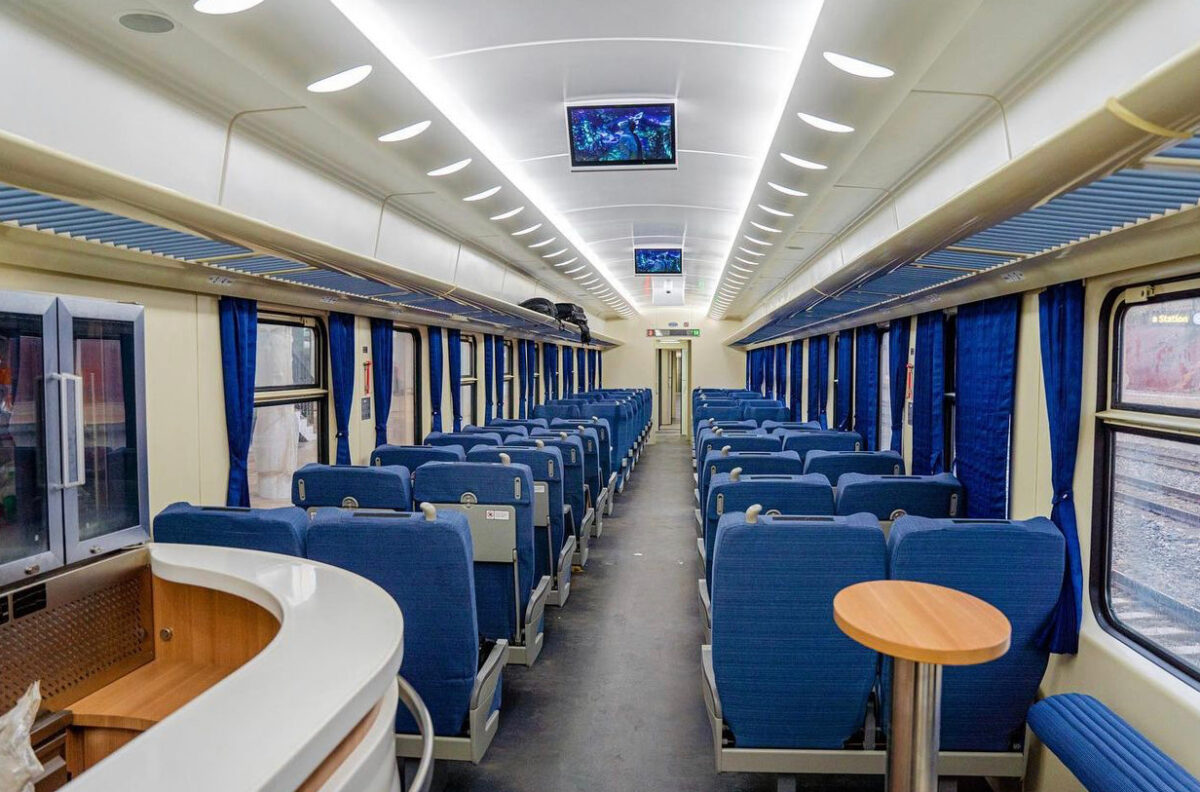
Lagos-IbadanRail Project. Credit: Dapoabiodunmfr-IG handle
By Joy Raji
Infrastructure has historically been the primary currency of geopolitical soft power globally. For Nigeria, the transition from oil-dependent stagnation to a more diversified industrial outlook has necessitated a partner capable of moving at the speed of the nation’s ambition. China, through the Belt and Road Initiative (BRI) and its various financing vehicles, has stepped into this vacuum with a readiness that traditional Western development partners often lacked. In Nigeria, this manifests as the Lagos-Ibadan Standard Gauge Rail, the Abuja-Kaduna line, the airport terminals in Port Harcourt and Kano, and the deep-sea ports designed to turn the Gulf of Guinea into a maritime powerhouse. Backed by the Export-Import Bank of China and the China Development Bank, this model pairs state-backed loans with fast-tracked execution by firms like CCECC.
However, this partnership is not simply a matter of engineering. It is inherently political. When a government stakes its legitimacy on the delivery of dividends of democracy, the rapid completion of a rail system becomes a validation of political stability and economic foresight. The Chinese model of non-interference coupled with state-backed financing has made it an attractive partner for Abuja, allowing the Nigerian government to circumvent the conditions often attached to loans from the World Bank or the International Monetary Fund. This dynamic has effectively repositioned Nigeria within the global order, elevating it from just a commodity exporter to a central player in China’s strategic expansion into the African market.
The Geopolitics of Debt and Industrial Ambition
As of recent data from the Debt Management Office (DMO) of Nigeria, Chinese loans account for a significant portion of the country’s bilateral debt portfolio. While these debts have generated intense public debate regarding the long-term viability of the country’s fiscal health, the government argues that the economic multiplier effect of a completed rail network outweighs the interest burden. For instance, the Lagos-Ibadan rail line constructed by CCECC Nigeria Limited, which cost $1.5 billion, was designed to decongest the country’s busiest commercial corridor. By slashing transit times and reducing the cost of logistics for agricultural and industrial goods, the project seeks to unlock value that was previously lost to the inefficiencies of road transport.
However, the political friction arises when these projects intersect with local labour laws and transparency expectations. How are these loans structured? What assets are, in theory, collateralized? These questions have become necessary. The political discourse in Nigeria remains polarized, with some factions viewing the influx of Chinese investment as a neo-colonial venture that displaces local contractors and artisans, while others view it as an overdue necessity for a nation in need of global technological standards.
Infrastructure as a Tool of Political Legitimacy
In the Nigerian political imagination, infrastructure is the most visible proxy for progress. During election cycles, the completion of a bridge or an airport terminal serves as an effective campaign tool, a physical manifestation of a promise kept. The Chinese-built terminals at the Nnamdi Azikiwe International Airport in Abuja are a testament to this move. These projects are framed by the state as symbols of modernity, designed to align Nigeria’s status with other emerging global middle-powers.
This creates a unique political tension where the government relies on Chinese efficiency to maintain its mandate, but this reliance creates a vulnerability. If a project stalls or if the human rights or labour reports from a construction site surface in the media, the government’s image suffers. When Nigerians interrogate the terms of the Nigeria-China trade relationship, they are investigating the social contract between the Nigerian government and the millions of people who will eventually use these rails and roads.
The Challenges of Local Content and Sustainability
One of the most pressing questions for Nigerians is the gap between foreign investment and domestic economic empowerment. China’s infrastructure strategy often involves the mobilization of Chinese labour and imported materials, which limits the immediate transfer of technology to the Nigerian workforce. While the railway projects do include clauses for local training, the longevity of these skills once the Chinese contractors depart remains an open question.
Furthermore, the environmental and social impacts of these large-scale projects often go unnoticed. In areas where new ports or rail lines have been established, local communities often face land displacement and the loss of livelihoods. The intersection of politics and infrastructure serves as a mirror for the broader challenges of the Nigerian state: a struggle to balance rapid industrialization with the preservation of rights and the protection of local enterprise. The political reality is that the government must manage its diplomatic commitments to China with the increasing demands of a young, digitally-savvy, and vocal populace that is no longer satisfied with empty promises of growth.
The Future of the Nigeria-China Nexus
As Nigeria looks toward the next decade, the role of China in its infrastructure development is unlikely to diminish. Instead, it is likely to evolve. We are seeing a move toward more digital infrastructure, including surveillance technology, fiber-optic networks, and data centers. These assets carry different political risks and opportunities, necessitating a higher level of scrutiny from Nigerians. The truth lies in the gray zone of logical diplomacy and the realities of national development.
Every rail line, every bridge, and every port should be evaluated by a simple metric: does this infrastructure serve the Nigerian citizen, or does it just serve the interests of the political elite and the foreign financier?
Nigeria’s infrastructure boom of the last decade has fundamentally altered the physical landscape of the country, creating a foundation that could either lead to a period of unprecedented economic growth or a protracted crisis of debt and dependency. The politicization of these projects, often used to promote executive authority, demands a focus on the structural, financial, and societal implications of the Nigeria-China relation. This is how the true health of the nation is measured, and the future of the African continent is forged.