

PFIPC: How a ‘non-existent’ Agency got N1.3bn in Nigeria’s 2026 Budget

Photos Credit: Premium Times
The controversy over the Presidential Foreign Intervention Promotion Council (PFIPC) has raised a question that goes beyond the alleged activities of its purported Director-General, Adeniyi Adeyemi: how did an organisation the Presidency says was never legally established make its way into Nigeria’s 2026 budget?
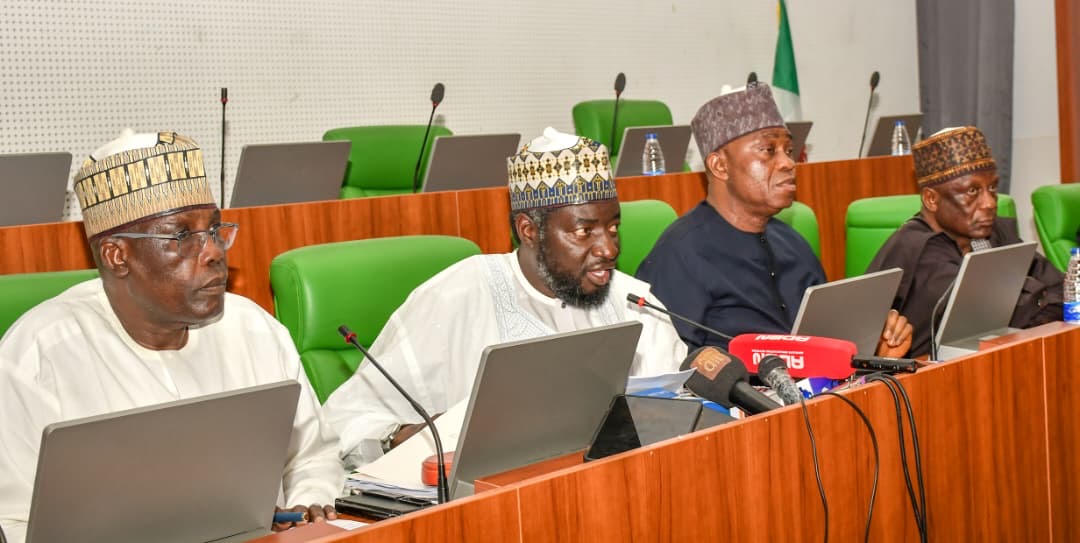
The question became more troubling after the House of Representatives’ ad hoc committee investigating the council released its interim findings on Wednesday.
The panel said it found no valid Act of the National Assembly, presidential executive order or other lawful instrument establishing PFIPC. It also found that documents presented as an appointment letter, executive order and National Assembly Act were fabricated or altered.
Yet the organisation appeared in the 2026 Appropriation Act and was allocated N1.303 billion.
That contradiction is at the centre of the PFIPC controversy.
PFIPC had a place in the 2026 budget
The 2026 budget listed the Presidential Economic Advisory Council/Presidential Foreign Intervention Promotion Council under the Presidency, with N1.303 billion earmarked for it.
Of that amount, about N803 million was for personnel costs, N200 million for overheads and N300 million for capital expenditure.
The allocation became public after Chief of Staff to President Bola Tinubu, Femi Gbajabiamila, publicly disowned Adeyemi and said the purported council did not exist under the administration.
The contradiction prompted lawmakers to investigate how an organisation described by the Presidency as non-existent could have been captured in the national budget.
The paper trail goes beyond the budget
PFIPC’s appearance in the budget was not the only indication that it had acquired the appearance of a government institution.
Earlier evidence showed that the purported council had an office at the Federal Secretariat and had dealings with government institutions.
The Central Bank of Nigeria (CBN) also told lawmakers in July that it opened two foreign-currency accounts linked to the organisation after receiving a formal directive from the Office of the Accountant-General of the Federation (OAGF).
One account was denominated in US dollars and the other in British pounds.
The CBN said it followed its standard procedures after receiving the OAGF’s mandate. However, the accounts were never funded or operated because the required documentation and authorised signatories were not completed.
This creates an important distinction: PFIPC had access to government processes, but there is no evidence from the available records that the N1.3 billion budget allocation was actually released to it.
The OAGF has said no public funds were paid to the purported council.
So, how did the agency get into the budget?
The available evidence does not yet provide a definitive answer as to who inserted PFIPC into the 2026 budget.
However, the investigation has established that the issue was serious enough for the House to specifically examine the budget process and the roles of institutions involved.
In July, Adeyemi claimed he personally approached officials at the Budget Office about including the proposed agency in the budget. He said he began the process in December 2024 and was later surprised to find the agency listed in the budget.
Those are Adeyemi’s claims and have not been established as fact by the House committee.
The significance of the claim is that it points investigators towards the process through which the purported agency moved from an alleged proposal to an entry in the national budget.
The unresolved question is therefore not simply who wrote PFIPC into the budget, but what checks were applied before the organisation was treated as a legitimate budgetary entity.
Where did government checks fail?
The House committee’s interim report offers perhaps the clearest indication yet of where investigators are looking.
The panel accused the OAGF and Budget Office of “institutional lapses” and said it was investigating whether those lapses resulted from negligence, failure to verify documents, breaches of procedure, wilful disregard or deliberate facilitation.
That wording is important.
The committee has not concluded that government officials knowingly participated in a fraud scheme. It also said no officer should be condemned without being given a fair hearing.
What the findings do show is that PFIPC allegedly moved through several layers of government administration without its legal status being detected early enough.
That is what makes the N1.3 billion allocation significant.
The bigger issue behind the PFIPC scandal
The PFIPC controversy is no longer only about Adeyemi or the alleged forged documents.
It raises questions about how Nigeria verifies organisations seeking recognition within government, how proposed agencies enter the federal budget and how different government institutions confirm information received from one another.
The House committee has already cleared Gbajabiamila of approving, establishing or participating in PFIPC, saying evidence showed that he acted after concerns about the organisation were raised.
But the wider institutional investigation remains open.
For now, the most striking fact is this: a council the House says had no lawful foundation was nevertheless given a place in the 2026 federal budget and was able to interact with government institutions.
The final investigation will have to establish how that happened — and, crucially, who failed to stop it.