

Petrol hits ₦1,500: More revenue for government, more suffering for Nigerians?— Here’s all to know

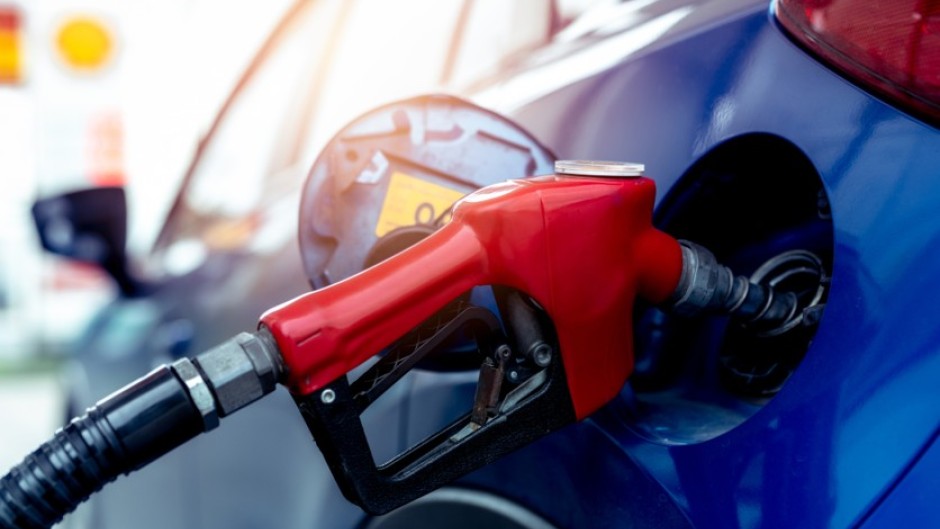
Petrol retail prices have climbed to ₦1,500 per litre in parts of Nigeria as the global increase in crude oil prices triggered by the US-Iran war continues to affect the domestic market.
However, there is another side of the story that is hardly told: Nigeria has also made billions of naira in additional oil revenue from the same surge in global crude prices.
In March and April 2026 alone, Nigeria recorded an estimated ₦5.13 trillion oil-revenue windfall as crude prices moved substantially above the $64.85 per barrel benchmark used in the 2026 budget.
The estimate put the March windfall at about ₦1.19 trillion and April’s at roughly ₦3.94 trillion. The analysis found that the sharp increase in crude prices, rather than production growth alone, was the major driver of the additional earnings.
That means Nigeria was not simply watching the international oil-price crisis from the sidelines.
The country was making more money from it.
Yet Nigerians are now buying petrol for as much as ₦1,500 per litre in several states.
So, if Nigeria is earning more from the oil-price surge, why are Nigerians still feeling the brunt more than ever?
Nigeria is making more from expensive crude
The starting point is the price of Nigeria’s biggest export.
The 2026 budget was based on a crude oil benchmark of $64.85 per barrel. When the US-Iran conflict sent global oil prices sharply higher, Nigerian crude was suddenly being sold at prices substantially above that assumption.
That created the estimated ₦5.13 trillion windfall in March and April.
The important point is that this is not simply a theoretical calculation about what could happen when oil prices rise.
The estimate was based on the difference between the government’s budget benchmark and actual oil prices and production during the period. It therefore provides evidence that the global price surge translated into substantially higher oil earnings for Nigeria.
The additional money does not mean the Federal Government personally collected ₦5.13 trillion in cash.
Nigeria’s oil earnings pass through a complicated system involving production volumes, government revenue, contractual obligations and payments to oil companies.
But that qualification does not change the central fact: the oil-price shock generated a major additional revenue opportunity for Nigeria.
And that is what makes the current petrol crisis difficult to explain to ordinary Nigerians.
But petrol has now reached ₦1,500
While the value of Nigeria’s crude has increased, the price of the fuel Nigerians actually buy has moved in the opposite direction.
PUNCH reported on September 17 that petrol was selling for ₦1,500 per litre in Kano, Yobe, Sokoto, Borno, Taraba and Zamfara, with prices also rising sharply elsewhere. In some less accessible locations, prices were even higher.
The Nigeria Labour Congress put the price at about ₦1,430 per litre in major cities, with higher prices in less accessible areas.
The increase followed repeated upward adjustments in the domestic market.
Dangote Petroleum Refinery, which has become a major supplier of petrol to Nigeria, has raised its gantry price several times in recent weeks.
The result is that motorists are not only paying more at filling stations. The increase is spreading through the wider economy.
Why Nigerians are feeling the brunt
The first reason is straightforward: petrol is not just a product for motorists.
It is an input into transportation and distribution.
When a commercial driver pays more to fill a vehicle, the cost is eventually reflected in fares.
When the cost of moving food from farms and wholesalers to markets increases, traders have an incentive to pass that cost to consumers.
Businesses that depend on petrol-powered generators or vehicles also face higher operating costs.
That is why the effect of ₦1,500 petrol goes beyond the person standing beside a fuel pump.
The NLC has warned that rising transport costs will put additional pressure on food prices, rent, school fees and other essential goods and services.
The wage squeeze makes the situation worse.
At ₦1,430 per litre, 10 litres costs ₦14,300.
That is more than 20 per cent of Nigeria’s ₦70,000 minimum wage.
In other words, a worker earning the statutory minimum wage would need to spend more than one-fifth of one month’s pay to buy just 10 litres of petrol — before paying for food, housing, electricity, education or healthcare.
That is the part of the oil-price story that the headline revenue figures do not capture.
Nigeria may be earning more from crude, but Nigerians do not receive their share of that increase as a direct addition to their salaries.
Why the NLC is demanding action
It is against this background that the Nigeria Labour Congress has asked the Federal Government to intervene.
The NLC is demanding reasonable wage awards for workers, more crude supplied to domestic refineries in naira and an expansion of national petroleum storage capacity.
Its argument is that workers cannot continue absorbing higher transport and living costs while their incomes remain under pressure.
The labour body has also argued that government intervention during an emergency does not necessarily have to mean a return to the old universal petrol subsidy system.
That distinction matters because the Federal Government has repeatedly defended the removal of the petrol subsidy.
Has the Federal Government done anything?
Yes, but not the kind of relief the NLC is currently demanding.
The government has taken regulatory steps in response to petrol-price movements.
In July, the Federal Government brought Dangote Refinery, marketers and regulators together and pushed for a reduction in petrol prices after international crude prices fell. The Minister of State for Petroleum Resources, Heineken Lokpobiri, said there was no justification for petrol prices not to reflect falling Brent prices and warned that deregulation did not mean excessive profiteering.
More recently, the government has moved to strengthen oversight of petrol pricing. The FCCPC and NMDPRA agreed to improve monitoring of the deregulated market, including looking into issues such as price fixing, cartel behaviour, product withholding and under-dispensing.
But as of September 17, 2026, there is no announced Federal Government wage award or new petrol subsidy specifically introduced in response to the latest jump to ₦1,500.
Instead, the government’s established position remains that returning to the old subsidy system would undermine the fiscal gains of the reforms.
The Information Minister said in August that restoring the petrol subsidy would reverse economic gains and put additional pressure on government finances.
So there is a clear difference between what government has done and what labour is asking for.
Government has increased market oversight and previously pushed marketers to reduce prices. The NLC is asking for direct cushioning measures for workers and households.
But Nigerians’ petrol is not actually the most expensive in West Africa
There is another interesting part of this story.
At ₦1,500 per litre, Nigerian petrol sounds extremely expensive.
But compared with some neighbouring African countries, the picture is more complicated.
On September 14, international fuel-price data put Nigeria’s petrol at about $1.02 per litre.
Benin and Togo were both around $1.28 per litre, while Ghana was about $1.56 per litre.
In other words, a Nigerian paying ₦1,500 per litre is paying less in US-dollar terms than a motorist buying petrol at the prevailing retail prices in Benin, Togo or Ghana.
That may sound surprising given how much Nigerians are complaining.
But it does not mean Nigerians are necessarily better off.
Why can neighbours pay more but feel less pressure?
The answer is that the pump price alone does not determine how painful petrol is.
Taxes, subsidies, exchange rates, market regulation, incomes and the structure of each country’s petroleum market all influence the final price.
Global fuel-price data notes that countries can have very different pump prices despite buying into the same international petroleum market because governments impose different taxes and subsidies and regulate their domestic markets differently.
Benin, for example, was selling petrol at about 725 CFA francs, or $1.28 per litre, on September 14, with the country’s data sourced from official government information.
Togo was also around 725 CFA francs per litre, equivalent to about $1.28.
Ghana’s petrol price was higher, at about 17.97 Ghanaian cedis or $1.56 per litre.
So the comparison does not support a simple argument that Nigerian motorists are paying the highest price in the region.
They are not.
But Nigeria’s problem is that petrol has become extraordinarily expensive relative to the incomes and purchasing power of many Nigerians, while transportation and other essential costs are rising at the same time.
That is a different problem from simply having the highest pump price.
So are Nigerians lucky to have cheaper petrol?
Not necessarily.
If a Nigerian pays $1.02 for a litre while a Ghanaian pays $1.56, the Nigerian is clearly paying less for the product in dollar terms.
But that does not tell us how much of each person’s income is required to buy it.
The real comparison is therefore not simply:
“Who pays less per litre?”
It is:
“How much of an average person’s income disappears when they buy fuel?”
That is why Nigeria’s lower dollar price does not cancel out the hardship being reported by Nigerian workers.
And there is another important difference.
Nigeria is itself a major crude-oil producer.
That means Nigerians naturally expect their country to have some advantage from domestic crude production and refining.
Yet the country’s petrol market remains exposed to international crude prices, exchange-rate movements, refinery pricing and distribution costs.
The irony is difficult to miss.
Nigeria is producing the crude, benefiting from higher crude prices through additional oil revenue, and now refining a much larger share of its petroleum domestically — but the ordinary consumer is still absorbing the international price shock at the pump.
The real question is what happens to the oil windfall
That brings the story back to the ₦5.13 trillion estimated windfall.
The important question is not whether Nigeria benefited from the global crude-price surge.
The evidence says it did.
The question is what portion of that benefit is reaching Nigerians in a form they can actually feel.
The government can argue that higher revenue strengthens its fiscal position and gives it more resources to fund public spending.
That is a legitimate fiscal argument.
But the Nigerian worker experiences the economy differently.
He sees the higher transport fare.
She sees the higher cost of taking children to school.
The trader sees the additional logistics bill.
The farmer sees the cost of moving produce.
The small business owner sees the cost of running a vehicle or generator.
That is why the present situation creates such a sharp contradiction.
The country can gain from the oil-price crisis at the government-revenue level while Nigerians lose purchasing power at the household level.
The ₦1,500 petrol price therefore raises a bigger question than the cost of fuel itself.
If Nigeria is earning more when crude prices rise, how much of that additional wealth is being used to shield Nigerians from the same global shock that is generating the extra revenue?
Until that question has a convincing answer, the contradiction will remain: more money from oil at the national level, but more pain from oil at the household level.