

Nuclear Weapons explained: How close is Iran to building a bomb amid rising global tensions?

Nuclear Weapons
Global tensions over nuclear weapons have surged again as fresh negotiations between the United States and Iran bring renewed focus to uranium enrichment and the potential for atomic weapon development.
Recent developments involving Donald Trump and Iran’s nuclear programme have reignited fears about how quickly a nation could move from civilian nuclear activity to weapons-grade capability, raising urgent questions about global security.
What Is a Nuclear Weapon and Why It Matters
A nuclear weapon is an explosive device that derives its destructive power from nuclear reactions, either fission or fusion. These weapons are capable of unprecedented devastation, with a single warhead capable of destroying entire cities.
Unlike conventional weapons, nuclear arms rely on highly enriched materials, primarily uranium or plutonium, to trigger a chain reaction that releases enormous energy.
The danger lies not only in their destructive capacity but also in their deterrence role, which shapes international relations and military strategy.
Understanding Uranium: The Core of Nuclear Weapons
Uranium is a naturally occurring radioactive metal found in small quantities worldwide. It is essential for both nuclear energy production and weapons development.
Before it can be used, uranium undergoes several processing stages:
- Conversion into “yellowcake”
- Transformation into uranium hexafluoride gas
- Enrichment through centrifuge technology
The key lies in isolating a specific isotope known as U-235, which is capable of sustaining a nuclear chain reaction.
How Uranium Enrichment Works
Uranium enrichment is the process of increasing the concentration of U-235. This is achieved using high-speed centrifuges that separate lighter isotopes from heavier ones.
The process is gradual and requires multiple stages, known as cascades, to reach higher levels of purity.
- 3–5% enrichment: Used for nuclear power plants
- Below 20%: Considered low-enriched uranium (LEU)
- Above 20%: Classified as highly enriched uranium (HEU)
- Around 90%: Required for nuclear weapons
The closer uranium gets to higher enrichment levels, the faster it can reach weapons-grade status, making advanced stages particularly sensitive.
How Close Could Iran Be to Building a Nuclear Bomb?
According to expert analysis cited in global reports, Iran possesses significant quantities of uranium enriched up to 60 percent, just a short technical step from weapons-grade.
Experts suggest that once uranium reaches this level, the final leap to 90 percent enrichment could take only weeks, rather than years.
This has placed Iran at the centre of international concern, especially amid ongoing diplomatic negotiations and regional tensions.
Iran, however, maintains that its nuclear programme is strictly for civilian purposes, including energy generation.
READ ALSO
Iran nuclear talks take dramatic turn as Trump deploys warships and warns Tehran
Global Nuclear Powers and Stockpiles
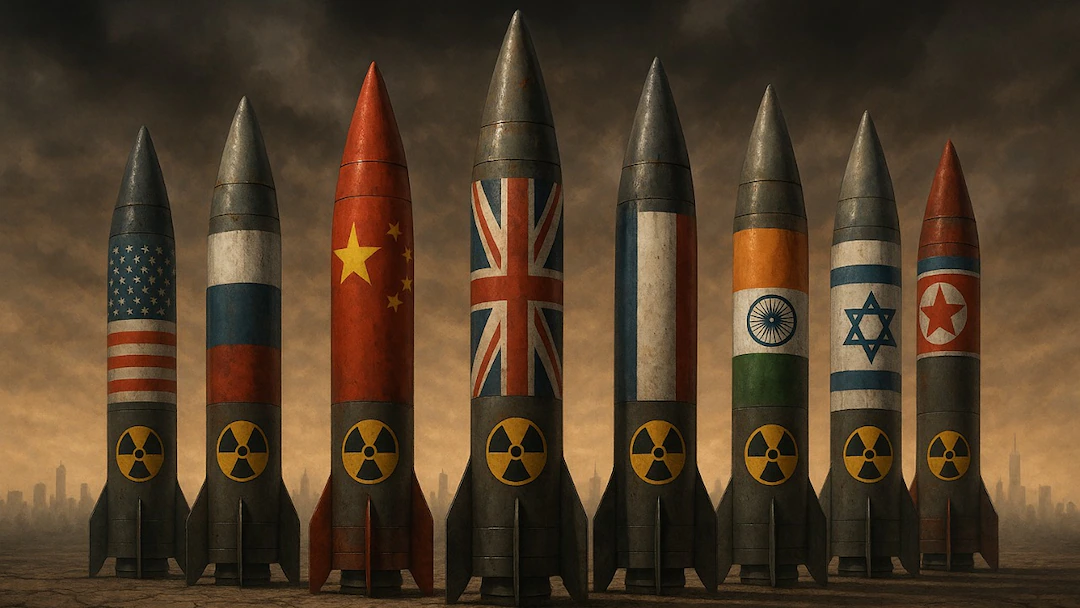
As of 2026, nine countries possess nuclear weapons, with the largest arsenals held by the United States and Russia. Together, they account for the majority of the world’s estimated 12,000+ nuclear warheads.
Other nuclear-armed nations include:
- China
- France
- United Kingdom
- India
- Pakistan
- North Korea
- Israel (widely believed, but undeclared)
While some countries have reduced their stockpiles, others are modernising and expanding their nuclear capabilities, raising long-term global security concerns.
The Role of the Nuclear Non-Proliferation Treaty (NPT)
The Treaty on the Non-Proliferation of Nuclear Weapons is the cornerstone of global efforts to prevent the spread of nuclear weapons.
The treaty allows countries to pursue nuclear technology for peaceful purposes but imposes strict safeguards to prevent weaponisation.
However, not all countries are signatories, and enforcement challenges persist, especially in politically sensitive regions.
Past Agreements and the Iran Nuclear Deal
In 2015, Iran entered into the Joint Comprehensive Plan of Action with world powers, agreeing to limit uranium enrichment in exchange for sanctions relief.
The agreement collapsed after the United States withdrew in 2018, leading Iran to gradually resume and expand its enrichment activities.
Recent negotiations aim to revive or replace the deal, but key disagreements remain unresolved, particularly around enrichment limits and sanctions.
Why Nuclear Weapons Remain a Global Threat
Nuclear weapons continue to pose one of the greatest threats to humanity due to:
- Their massive destructive power
- The risk of proliferation to more countries
- Potential use in regional conflicts
- The possibility of accidents or miscalculations
As geopolitical tensions rise, the balance between deterrence and disaster remains increasingly fragile.
FAQ
What is a nuclear weapon?
A nuclear weapon is an explosive device that releases energy through nuclear reactions, causing massive destruction and long-term radiation effects.
How is a nuclear bomb made?
It is made by enriching uranium or plutonium to a level that allows a rapid chain reaction, releasing enormous energy.
What is uranium enrichment?
Uranium enrichment is the process of increasing the concentration of U-235 isotope to make it suitable for energy production or weapons.
What level of uranium is needed for nuclear weapons?
Weapons-grade uranium typically requires about 90% enrichment of U-235.
How long does it take to build a nuclear weapon?
It depends on the starting point. If a country already has highly enriched uranium (around 60%), it could take weeks to reach weapons-grade levels.
Does Iran have nuclear weapons?
Iran does not officially possess nuclear weapons but has advanced uranium enrichment capabilities that raise global concerns.
What is the NPT treaty?
The Nuclear Non-Proliferation Treaty is an international agreement aimed at preventing the spread of nuclear weapons while allowing peaceful nuclear energy use.
Which countries have nuclear weapons?
Nine countries are known or believed to possess nuclear weapons, including the US, Russia, China, and others.
Why are nuclear weapons dangerous?
They can cause massive destruction, long-term environmental damage, and global instability.
Can nuclear weapons be eliminated globally?
While treaties aim to reduce stockpiles, complete elimination remains difficult due to geopolitical and security concerns.