
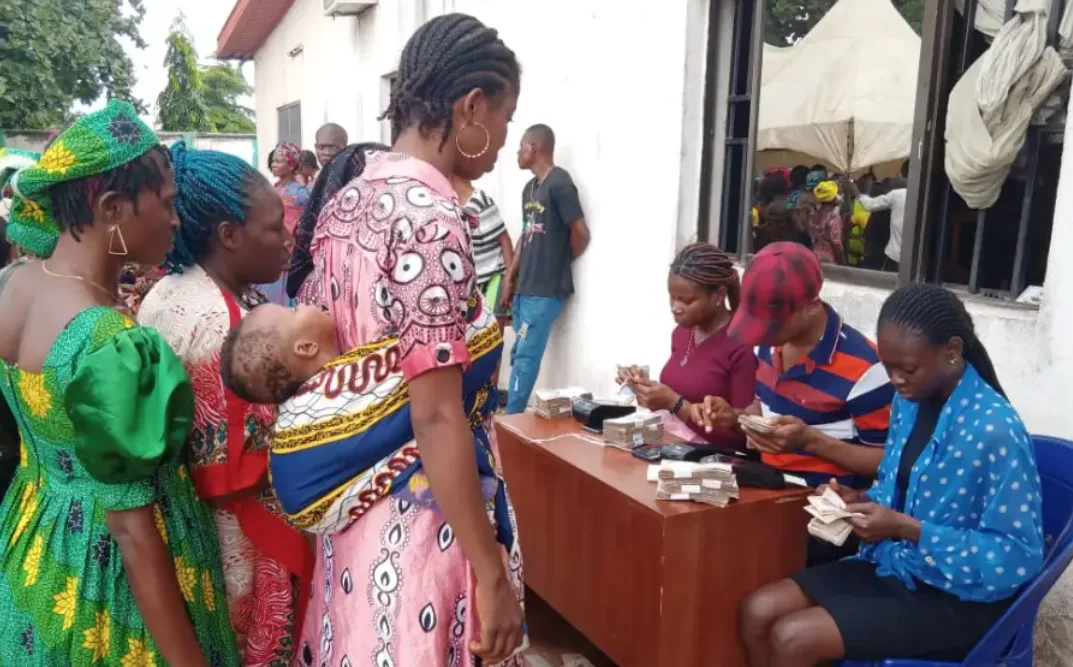
Nigerians who receive the Federal Government’s ₦50,000 relief grant do not necessarily have to withdraw the entire amount at once.
The National Emergency Relief and Stabilisation Intervention (NERSI) distributes financial assistance through mobile wallets, allowing selected beneficiaries to access their money using supported banking and payment channels.
According to the official NERSI website, beneficiaries can withdraw part of their grant, transfer money to bank accounts or spend directly from their wallets.
This means recipients have some flexibility in deciding how to use the financial assistance.
Must beneficiaries withdraw the entire ₦50,000?
No.
The government does not require recipients to withdraw the full grant immediately after payment.
Once the money is credited, beneficiaries can access it through the services provided by their designated financial institutions.
For example, a person may choose to withdraw ₦10,000 for food and retain the remaining ₦40,000 in the wallet.
Another beneficiary may withdraw ₦20,000 and leave ₦30,000 for later expenses.
These examples assume no additional transactions or charges have reduced the balance.
Can beneficiaries make several withdrawals?
The programme’s payment arrangements allow beneficiaries to access funds through supported wallet services.
However, the official FAQ does not publish a universal withdrawal limit or a fixed number of permitted transactions.
The applicable limits may depend on the payment provider, account verification requirements and the transaction channel.
Beneficiaries should therefore confirm their provider’s withdrawal rules before attempting unusually large or repeated transactions.
Will beneficiaries pay charges on each withdrawal?
The ministry says the full ₦50,000 is credited without programme deductions.
However, it acknowledges that POS agents may charge their normal withdrawal fees.
For example, a person who withdraws money on several occasions may encounter separate transaction charges.
The total cost could therefore depend on the number of withdrawals and the charges applied.
Recipients should ask about the applicable fee before authorising each transaction.
Can the money remain in the wallet?
The government says beneficiaries can retain funds in their wallets rather than withdrawing everything immediately.
However, the public FAQ does not specify how long funds can remain untouched or whether particular wallet inactivity rules apply.
Beneficiaries should therefore consult their providers about account access, inactivity and any relevant service conditions.
They should not assume that every provider has identical rules.
Can beneficiaries spend directly from the wallet?
Yes, where the provider supports the relevant transaction.
The government says recipients may use their wallets to make payments or transfer money to bank accounts.
This can reduce the need to withdraw physical cash.
For example, a beneficiary may transfer part of the grant to a family member or make a supported payment without first visiting a POS agent.
However, the available services depend on the provider.
What if a POS agent refuses a partial withdrawal?
The beneficiary should ask whether the issue concerns the agent’s available cash, the transaction amount or a provider restriction.
An individual POS agent’s inability to complete a transaction does not necessarily mean the government requires beneficiaries to withdraw the entire grant.
Recipients can contact their providers for clarification.
They should also avoid handing over their PINs or phones to strangers.
What should beneficiaries know?
NERSI is intended to provide financial relief, and recipients are not required to spend the entire amount immediately.
They may choose how to access their funds through supported channels.
However, ordinary transaction fees and provider-specific limits may apply.
The bottom line is that beneficiaries can withdraw part of their ₦50,000 grant and retain the balance, subject to the services and rules of their payment providers.