
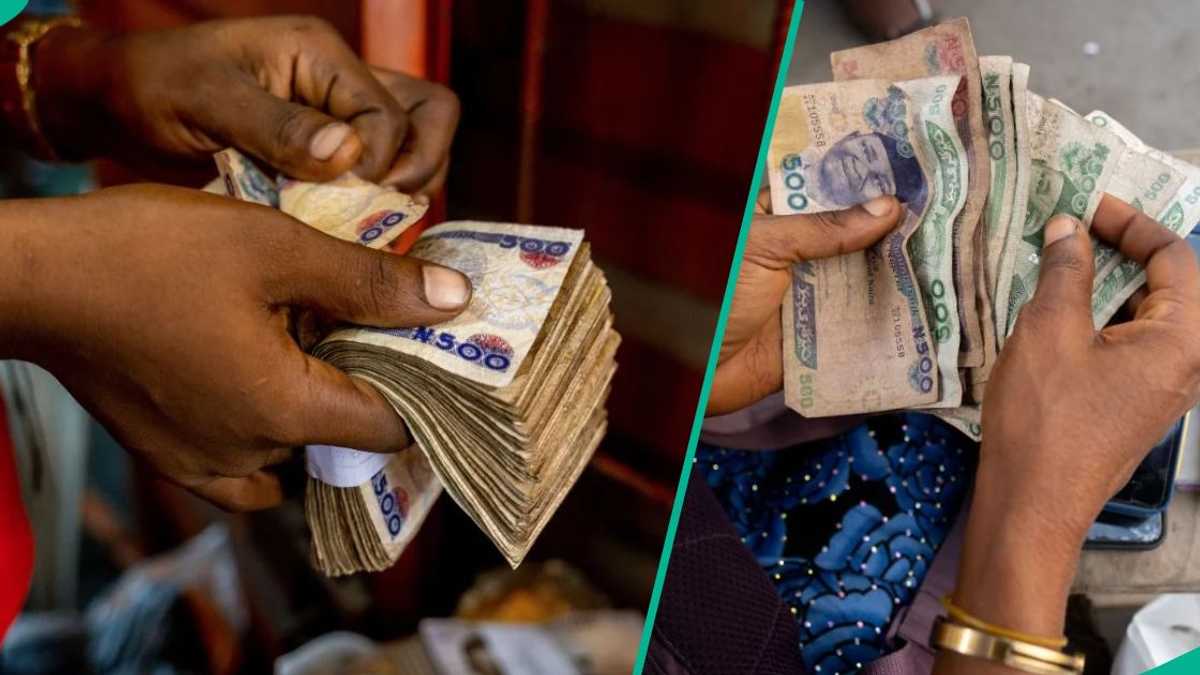
The Federal Government’s ₦50,000 relief programme has generated considerable interest among Nigerians, particularly those hoping to receive financial support amid rising living costs.
Since the National Emergency Relief and Stabilisation Intervention (NERSI) was announced on October 30, 2026, questions have emerged about who qualifies, how beneficiaries are selected, whether registration is required and what happens after a selection message arrives.
There is also confusion about the role of the National Identification Number (NIN), Bank Verification Number (BVN), mobile wallets and the five financial institutions responsible for payments.
While the Federal Ministry of Humanitarian Affairs and Poverty Reduction has published guidelines explaining the programme, some important operational questions remain unanswered.
Here are 10 things Nigerians should understand before attempting to access the grant.
1. NERSI is a grant, not a loan
The first distinction is that beneficiaries are not expected to repay the money.
According to the official NERSI frequently asked questions, each selected beneficiary receives ₦50,000 as financial support from the Federal Government.
The ministry says the full amount is credited without programme deductions.
This means beneficiaries are not required to repay the grant with interest or enter into a loan agreement.
However, the absence of a repayment obligation does not mean that every Nigerian automatically qualifies.
2. You cannot register for NERSI or pay to be selected
Unlike some government empowerment schemes that require applicants to complete online forms, NERSI does not operate a public registration portal.
The government says beneficiaries are identified through the National Social Register and verified national identity records.
Selection is based on poverty and vulnerability criteria.
This distinction is particularly important because fraudsters can exploit demand for government support by circulating fake registration links.
A website requesting an application fee, processing charge or payment to secure inclusion should not be treated as an official NERSI registration channel.
The ministry also says no politician, government official or agent can add an individual to the beneficiary list.
3. Having a NIN or BVN does not guarantee selection
The NIN plays a role in identity verification, but possessing one is not equivalent to being selected.
A Nigerian may have a valid NIN, an active bank account and a BVN without appearing among NERSI beneficiaries.
The government says selection depends on the programme’s existing records and vulnerability criteria.
It has not established BVN possession as a standalone eligibility requirement.
Neither has it guaranteed that every beneficiary can complete all wallet transactions without additional identity checks.
The practical implication is that Nigerians should distinguish between identity documentation and programme eligibility.
4. Selected beneficiaries receive SMS messages from five providers
The government has authorised five financial service providers to distribute NERSI payments.
They are ALAT by Wema Bank, MoMo PSB, NairaGram, OPay and Moniepoint.
Selected individuals are contacted through SMS messages containing instructions for accepting the support.
However, a message mentioning NERSI is not automatically genuine.
The ministry says official messages should not contain registration links or requests for PINs, OTPs or payment.
Anyone receiving a suspicious notification should verify it independently before responding.
5. These are the five official NERSI USSD codes
The ministry has published the following codes:
| Financial institution | USSD code |
|---|---|
| ALAT by Wema Bank | *945*23# |
| MoMo PSB | *671*0# |
| NairaGram | *726*00# |
| OPay | *955*20# |
| Moniepoint | *5573*27# |
These codes are intended to help beneficiaries complete the consent process and access their wallets.
Recipients should use the code belonging to their designated payment provider.
They should not assume that dialling every code increases their chances of selection.
The codes are payment-access channels, not registration portals.
6. Replying YES is not the same as receiving ₦50,000
Under the programme, beneficiaries must consent before payment.
The official NERSI website explains that the process involves receiving an SMS, replying YES, opening a linked wallet and receiving the grant.
These are separate stages.
A person who replies YES has indicated willingness to participate, but that response alone does not establish that the wallet has already been credited.
The ministry has not published a universal deadline requiring every payment to arrive within 24 or 48 hours of acceptance.
Consequently, beneficiaries should verify their wallet balances before assuming payment has been completed.
7. You do not need a smartphone or internet connection
One important feature of NERSI is that the payment system is designed to accommodate people without smartphones.
The government says beneficiaries can access the programme through USSD services.
This means an eligible person using a basic mobile phone can participate without installing an application or purchasing mobile data.
However, the phone must still be able to connect to the relevant mobile network.
Technical problems with USSD services may require assistance from the payment provider.
8. The money can be withdrawn or transferred
The government says recipients can access their grants through supported financial channels, including POS agents and bank transfers.
This gives beneficiaries flexibility to obtain cash or move funds into other accounts.
However, a distinction should be made between the government’s promise to credit the full ₦50,000 and ordinary transaction charges.
For example, a POS agent may charge a withdrawal fee.
That fee is not the same as a government deduction from the grant.
Recipients should confirm the amount they will receive before authorising any withdrawal.
They should also retain transaction records in case of disputes.
9. Selection and payment are not necessarily simultaneous
The ministry says payments are being implemented in phases.
This means some eligible individuals may receive notifications before others.
However, not being selected in an initial phase does not guarantee inclusion in a later phase.
The government has not published a comprehensive public timetable showing when every intended beneficiary will receive a notification.
It has also not provided a general mechanism through which individuals can appeal non-selection.
This creates an important limitation for Nigerians who believe they meet the vulnerability criteria but have not been contacted.
Without a public application or appeal process, such individuals have limited means of establishing why they were excluded.
10. The government has not clarified the complete monthly payment schedule
One of the biggest unanswered questions concerns the duration of the programme.
In his October 30 announcement, Humanitarian Affairs Minister Bernard Doro described NERSI as providing ₦50,000 monthly to eligible beneficiaries.
However, the ministry’s subsequent FAQ confirms the ₦50,000 amount without specifying how many monthly instalments recipients will receive.
The Foundation for Investigative Journalism reported on November 5 that the ministry removed an earlier description of the support as a one-off payment.
The Socio-Economic Rights and Accountability Project (SERAP) has also demanded clarification.
Until the government publishes a definite schedule, beneficiaries should not assume that receiving one payment guarantees another on a particular date.
What should beneficiaries do if something goes wrong?
A person who receives a genuine selection message but encounters a payment problem should first contact the designated financial institution.
They should keep relevant SMS messages and transaction references.
For general programme enquiries, the government’s published NERSI helpline is 0700-022-2222.
Beneficiaries should never disclose PINs, OTPs or passwords to individuals claiming they can accelerate payments.
NERSI’s digital payment system could reduce the need for physical distribution centres and make support more accessible to people with basic mobile phones.
However, its effectiveness depends on accurate beneficiary records, reliable payment infrastructure and transparent administration.
The programme’s biggest unanswered questions concern who is excluded, how errors are corrected and how long the financial support will continue.
For beneficiaries, the immediate priority is understanding the verified payment process.
For the government, the larger challenge is demonstrating that the programme reaches vulnerable households fairly and consistently.