

Kuwait Minimum Wage, Salary Payment Rules for Workers Explained

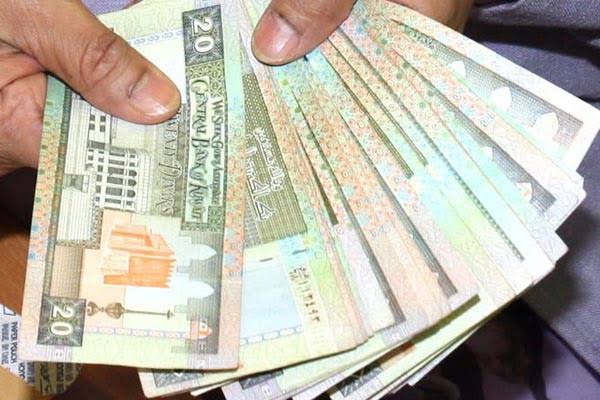
Kuwait has a minimum monthly wage of KD75 for workers covered by its private and oil sector wage regulations. The country also has rules governing when employers must pay salaries, how wages are transferred and how workers can challenge delayed payments.
The rules are relevant to Nigerian workers and other expatriates employed in Kuwait. However, the KD75 minimum wage was established in 2017, rather than introduced as a new policy in October 2026.
Kuwait’s wage regulations are also receiving renewed attention following the launch of a national system designed to monitor salary payments to private-sector employees.
Kuwait minimum wage: How much do workers earn?
Kuwait’s Ministerial Order No. 14 of 2017 established a minimum monthly wage of KD75 for workers in the private and oil sectors.
According to the International Labour Organization’s legal database, the order took effect on June 11, 2017.
KD75 is approximately ₦320,000, depending on the prevailing exchange rate. The figure represents a monthly minimum, not an annual salary.
However, workers should understand that the minimum wage does not necessarily apply uniformly across every employment category in Kuwait. Government employees and domestic workers are governed by different legal frameworks.
Workers should therefore confirm which regulations cover their employment before relying on the KD75 figure.
Kuwait salary payment rules: When must employers pay?
Article 56 of Kuwait’s Private Sector Labour Law establishes payment schedules for employees.
Workers paid monthly must receive their wages at least once a month. Other workers must receive payment at least once every two weeks.
The law also restricts salary delays. Employers cannot postpone wages for more than seven days beyond the date payment becomes due.
This means monthly-paid workers are entitled to receive their salaries according to the agreed payment schedule. Employers cannot indefinitely withhold wages without violating the applicable rules.
Article 57 also provides for salary transfers through workers’ bank accounts or local financial institutions, subject to the law’s requirements and applicable exceptions.
Workers who experience delayed payments or other wage violations can seek assistance from Kuwait’s Public Authority for Manpower.
Kuwait introduces a new wage payment monitoring system
On September 28, 2026, the Central Bank of Kuwait announced the launch of the Kuwait Wage Payment System (KWPS).
According to the Central Bank of Kuwait, the platform is designed to process and monitor private-sector wage transfers through local banks.
The system aims to improve the security, efficiency and transparency of salary payments. It also allows authorities to monitor wage transfers and identify possible non-compliance.
The Central Bank is responsible for the system’s technical and operational management, while the Public Authority for Manpower oversees compliance with applicable wage payment requirements.
The initiative is part of Kuwait’s broader effort to modernise its national payment infrastructure.
What Nigerian workers in Kuwait should know
Nigerian workers should understand their employment contracts, confirm their applicable minimum wage and keep records of salary payments.
Workers should also monitor their agreed payment dates and report suspected violations to the relevant labour authorities.
The KD75 minimum wage provides a legal benchmark for covered workers, while the salary payment rules establish when employers must pay them.
Although Kuwait’s new monitoring system is designed to improve oversight, workers should not assume that its introduction automatically resolves every wage dispute.
Understanding these rules can help Nigerian workers and other expatriates recognise their rights and identify the appropriate authorities to approach when employers fail to meet their obligations.