

Kai Sato adrift at Sea: California sailor survives 30 days in the Pacific after mast snaps, reveals incredible rescue near Hawaii

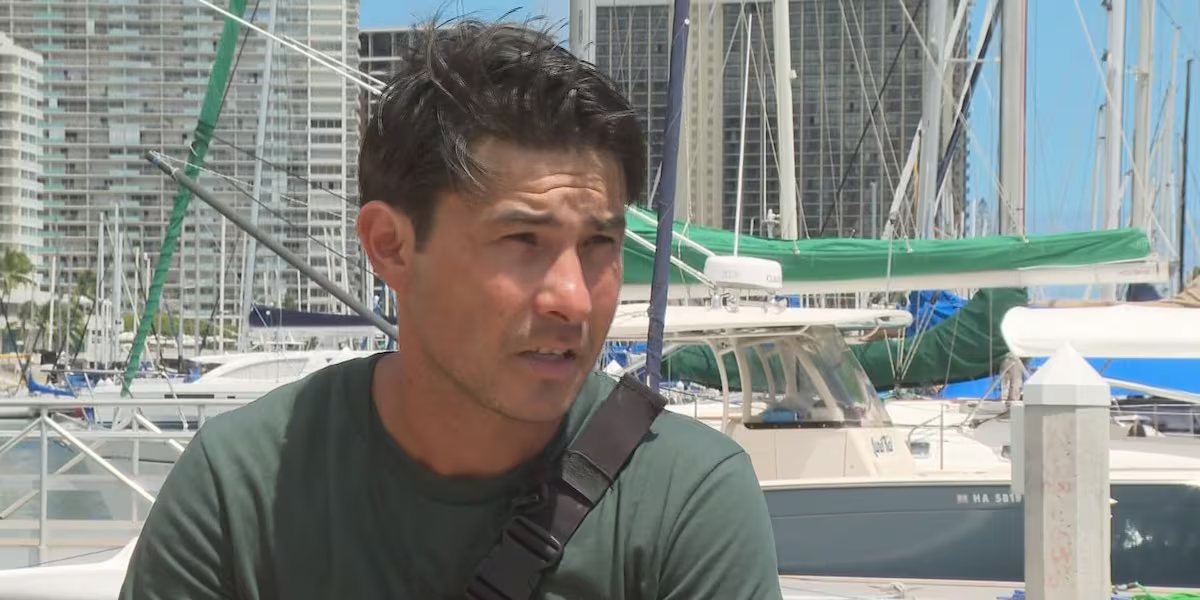
Kai Sato rescued after surviving a month adrift in the Pacific. Image Credit: Hawaii News Now
A California sailor who set out to fulfill a lifelong dream of crossing the Pacific Ocean alone instead endured one of the most remarkable survival stories of the year. Kai Sato, 39, spent more than 30 days adrift at sea after his sailboat suffered catastrophic damage during his solo voyage from California to Hawaii.
His rescue by a cargo ship near Hawaii ended weeks of uncertainty marked by dwindling food, no drinking water, failed navigation equipment, and desperate improvisation. The extraordinary story has captured international attention, highlighting both the dangers of solo ocean crossings and the resilience required to survive in one of the world’s most unforgiving environments.
Kai Sato’s Solo Pacific Journey Turned Into a Survival Mission
Sato departed California’s Catalina Islands on June 7, hoping to complete his first solo crossing of the Pacific Ocean to Hawaii.
The journey unraveled roughly two weeks later when the sailboat’s mast snapped, leaving the vessel largely powerless against strong ocean currents. His initial attempt to return to shore using the engine also failed after the boat ran out of fuel.
Without propulsion, Sato drifted farther south and increasingly off course.
He later recalled spending days overwhelmed by fear and uncertainty as he watched rescue become less likely with every passing day.
Broken Navigation Equipment Left Him Completely Isolated
The situation worsened when the smartphone Sato relied on for navigation became soaked with seawater and stopped functioning.
Without GPS guidance or reliable communication, he lost the ability to accurately determine his location while continuing to drift farther into the Pacific.
For several days, Sato admitted he struggled emotionally as he considered the possibility that he might never return home.
Eventually, he decided to focus entirely on survival.
Improvised Repairs Helped Kai Sato Reach a Busy Shipping Lane
Instead of giving up, Sato began rebuilding part of his damaged sailboat using whatever materials remained onboard.
He combined PVC pipes with kayak paddles to create a makeshift sail capable of catching enough wind to slowly steer the damaged vessel.
Although the temporary repair could not restore normal sailing performance, it allowed him to gradually work his way toward the shipping lanes connecting California and Hawaii.
That painstaking effort took approximately one month.
Food and Water Became the Greatest Challenge
As supplies diminished, Sato survived primarily on oatmeal along with fish and squid that unexpectedly landed inside the boat.
The more serious problem was fresh water.
By July 11, his drinking water had been completely exhausted.
To stay alive, he filled containers with seawater and stretched plastic bags over them, collecting condensed freshwater droplets created by the sun. He survived by licking the condensation from the plastic.
The emergency method produced only tiny amounts of water but proved enough to keep him alive until help arrived.
READ ALSO
Meditation and Family Memories Helped Him Endure
Sato said maintaining hope became just as important as finding food and water.
He spent long periods meditating while speaking aloud to the wind and ocean, using the practice to remain mentally focused during weeks of isolation.
He also drew inspiration from memories of an uncle who had previously completed the California-to-Hawaii sailing route with him when he was younger.
Those memories, he said, helped convince him to continue fighting for survival.
Cargo Ship Crew Carries Out Dramatic Pacific Rescue
After weeks without seeing another vessel, Sato finally spotted a Pasha Hawaii cargo ship.
The crew initially struggled to reach him before lowering a rope ladder during a second attempt.
Sato successfully climbed aboard, where crew members immediately provided clean clothing, food, drinking water and a private cabin.
Photographs taken after the rescue showed extensive damage to his sailboat, including destroyed rigging and damaged sails that had partially drifted into the ocean.
Recovery in Hawaii and Plans for Another Ocean Voyage
Following the rescue, Sato began recovering with relatives in Hawaii.
Despite surviving one of the most difficult experiences of his life, he has expressed interest in returning to open-water sailing.
According to Sato, his next goal is a voyage to the Philippines, though he intends to make that journey aboard a larger and better-equipped vessel.
His determination has surprised many observers, given the hardships he endured during his first solo Pacific crossing.
Kai Sato’s Story Highlights the Risks of Solo Ocean Sailing
Long-distance solo sailing remains one of the world’s most demanding forms of adventure travel.
Mechanical failures, unpredictable weather, equipment breakdowns, limited communication and isolation can quickly transform routine voyages into life-threatening emergencies.
Maritime experts frequently recommend redundant navigation systems, emergency communications equipment, water-making devices and distress beacons for offshore passages.
Sato’s survival demonstrates how improvisation, mental resilience and persistence can prove critical when professional rescue is not immediately available.
FAQ
Who is Kai Sato?
Kai Sato is a 39-year-old California sailor who attempted his first solo voyage across the Pacific Ocean from the Catalina Islands to Hawaii before becoming stranded for more than a month.
What happened to Kai Sato?
His sailboat’s mast snapped about two weeks into the journey. After running out of fuel and losing navigation equipment, he drifted in the Pacific Ocean for over 30 days before being rescued.
How long was Kai Sato adrift at sea?
Kai Sato spent more than one month drifting in the Pacific Ocean before a cargo ship rescued him near Hawaii.
Where was Kai Sato rescued?
He was rescued in the Pacific Ocean near Hawaii by a Pasha Hawaii cargo ship after managing to steer his damaged vessel back toward a shipping lane.
How did Kai Sato survive at sea?
He survived by eating oatmeal along with fish and squid that landed on his boat. After running out of drinking water, he collected freshwater condensation from seawater using plastic bags.
What caused Kai Sato’s emergency?
The emergency began when his sailboat’s mast broke during the voyage. He later ran out of fuel while attempting to return to shore, leaving him stranded.
How did Kai Sato repair his damaged sailboat?
He constructed a makeshift sail using PVC pipes and kayak paddles, allowing him to slowly navigate toward a busy shipping route.
Who rescued Kai Sato?
Crew members aboard a Pasha Hawaii cargo ship rescued Sato after spotting his damaged sailboat in the Pacific Ocean.
What happened after the rescue?
The crew provided him with food, water, clothing, and accommodation aboard the ship before he reunited with relatives in Hawaii.
Is Kai Sato planning another sailing trip?
Yes. Despite the ordeal, Sato has said he hopes to attempt another ocean crossing in the future using a larger and better-equipped sailboat.
Why is Kai Sato’s survival story attracting global attention?
His experience highlights the dangers of solo offshore sailing while showcasing extraordinary resilience, resourcefulness, and determination under life-threatening conditions.