

itel Energy Unveils PowerTank 1000: What It Can Power During Blackouts

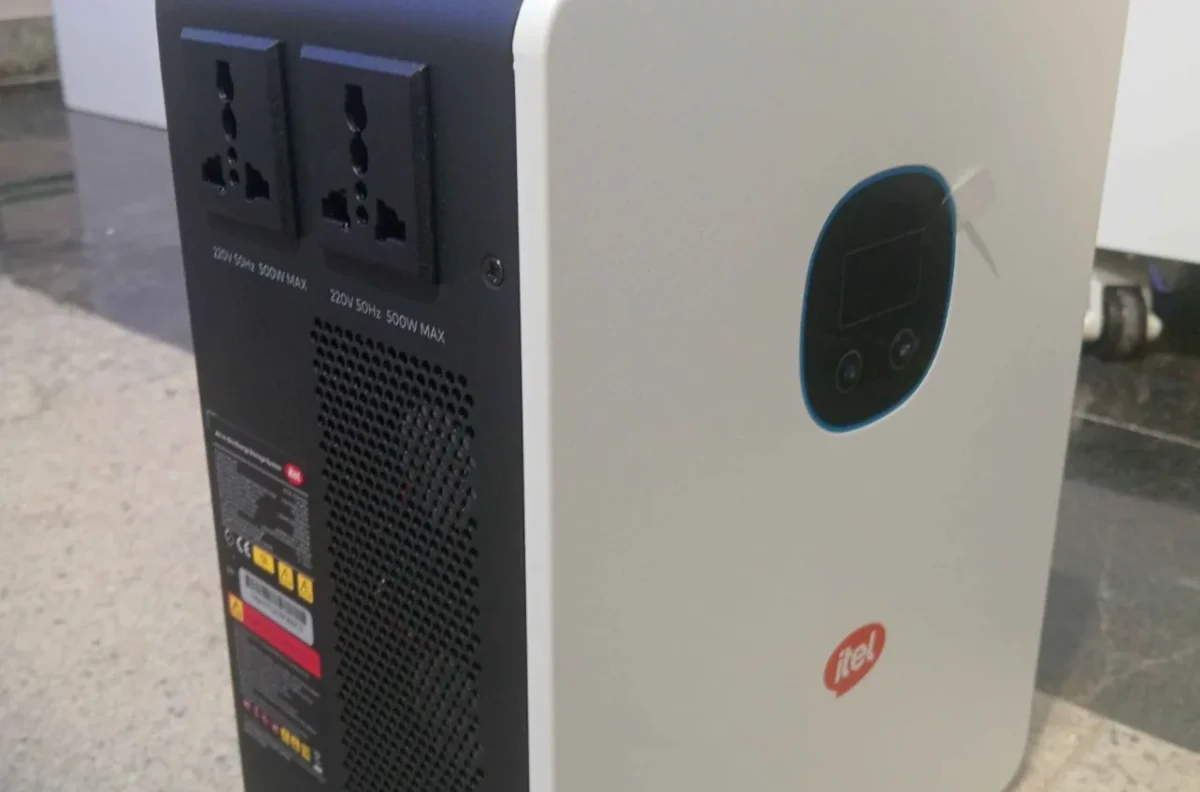
Nigerians looking for ways to keep their lights, televisions and other essential devices running during blackouts have another option to consider. itel Energy has introduced the PowerTank 1000, a portable power unit that can store electricity and recharge using solar energy.
The product was unveiled in Lagos on October 8, 2026, alongside a larger hybrid inverter designed for homes and businesses with higher electricity needs.
The PowerTank 1000 has a 2,000Wh battery and a maximum output of 1,000 watts. These specifications determine how much electricity it can store and the appliances it can power at the same time.
But what does that mean for someone looking for backup electricity at home or in a small business?
What Can the PowerTank 1000 Run?
The PowerTank 1000 is designed for essential appliances rather than heavy electricity users.
It can power devices such as fans, televisions, laptops, internet routers, mobile phones and energy-saving bulbs, provided their combined power consumption stays within its 1,000W limit.
For example, someone working from home could use it to keep a laptop, router, fan and a few lights running during an outage.
A shop owner could also use it to power lighting and a computer without relying on a petrol generator.
However, the unit is not suitable for every appliance. Electric cookers, pressing irons and many air conditioners require more power than the unit can provide. Users should check their appliances’ power ratings before connecting them.
How Long Can the Battery Last?
The unit’s 2,000Wh battery stores 2 kilowatt-hours of electricity.
According to itel Energy, the PowerTank 1000 can provide eight hours or more of backup power, depending on the appliances connected and how much electricity they consume.
In practical terms, a household using only a few lights, a fan and a router could get more operating time than one running several devices with higher power demands.
The battery uses lithium iron phosphate technology, commonly known as LiFePO4. itel Energy rates it for up to 8,000 charging cycles.
The stated runtime is not a guarantee that every household will get eight hours of electricity. Actual performance depends on usage and operating conditions.
Can It Charge With Solar Energy?
Yes. The PowerTank 1000 supports both grid and solar charging.
It accepts solar input of up to 1,200W, allowing users with compatible solar panels to recharge the battery using sunlight.
itel Energy says the unit can recharge fully in about 2.5 hours under suitable conditions.
It also supports an input voltage range of 90V to 280V, which the company says helps it handle fluctuations in electricity supply.
The unit operates at a reported noise level below 45 decibels, offering a quieter alternative to petrol generators.
itel Energy Also Launches an 11kW Inverter
Alongside the portable PowerTank 1000, itel Energy introduced the IPV-11K48T, an 11kW hybrid inverter for households and businesses with greater electricity demands.
The inverter supports solar input of up to 16.5kWp and uses dual maximum power point tracking technology to manage energy from solar panels.
It can also operate alongside up to 12 compatible units, allowing users to expand their system’s capacity.
itel Energy said the inverter comes with a three-year warranty and features an IP54-rated enclosure designed to provide protection against dust and water splashes.
Unlike the portable PowerTank, the hybrid inverter is intended for a larger power setup rather than simply providing a compact source of electricity.
What Buyers Should Consider
The PowerTank 1000 may suit people who need electricity for essential devices during blackouts. However, its 1,000W output means buyers must choose carefully which appliances to run.
Anyone who needs to power an entire home, including high-consumption appliances, may require a larger system.
itel Energy also announced after-sales support, including a 48-hour service resolution commitment and more than 150 service points across over 60 cities.
The company did not disclose the PowerTank 1000’s price in the launch report.
For prospective buyers, the key consideration is whether the unit can meet their daily power needs. Its battery capacity, maximum output and solar charging support provide a starting point for making that decision.