

Israel Election: 5 Things to Know as Netanyahu Fights to Retain Power

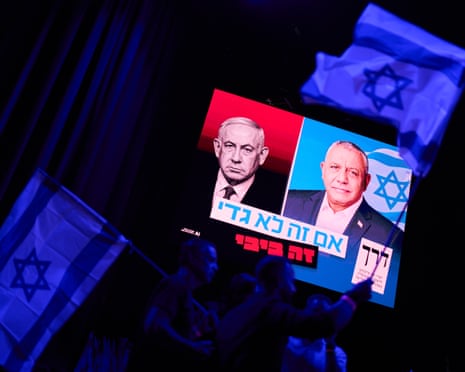
Benjamin Netanyahu faces an uncertain political future after Israel’s October 27 election produced no clear winner in exit polls, leaving the prime minister and his opponents struggling to secure the parliamentary support needed to form a government.
Israel’s election has left Prime Minister Benjamin Netanyahu facing a difficult battle to retain power, with exit polls showing his governing bloc falling short of a parliamentary majority.
The election, held on Tuesday, October 27, 2026, pitted Netanyahu’s Likud-led right-wing bloc against an opposition alliance led by Gadi Eisenkot, a former military chief of staff.
Initial exit polls gave the opposition bloc a narrow advantage. However, subsequent projections put both major blocs at approximately 51 seats each, leaving neither with the 61 seats required to control Israel’s 120-member parliament, known as the Knesset.
According to Al Jazeera’s election report, Arab-led parties could collectively win 18 seats, potentially making them important players in negotiations to form the next government.
Here are five things to know about the election and what happens next.
1. Netanyahu’s political future remains uncertain
Netanyahu is seeking to retain power after years of political controversy, security challenges and conflict across the Middle East.
His Likud party was projected to remain the largest individual party in parliament. However, its expected seat count was insufficient to give the governing bloc a majority.
The election is particularly significant because it is the first since the Hamas-led October 7, 2023, attacks on Israel and the subsequent war in Gaza.
Netanyahu’s handling of the attacks, the conflicts that followed and other domestic issues has featured prominently in the political debate.
Although the exit polls suggest a setback for his coalition, they do not establish that he has lost the premiership. His political future will depend on the final results and the ability of rival parties to assemble a government.
2. The opposition has yet to secure a majority
The opposition bloc, led by Gadi Eisenkot’s Yashar party, emerged as a major challenger to Netanyahu’s government.
However, the projected seat distribution presents a problem for both sides.
Israel’s parliament has 120 seats, meaning a coalition generally needs the support of at least 61 lawmakers to command a majority.
Initial exit polls placed Netanyahu’s bloc at 50 seats and the opposition at 52 or 53. Later projections put the two camps closer together, with each receiving approximately 51 seats.
These figures leave both sides short of the required majority.
Consequently, even if the opposition finishes ahead of Netanyahu’s bloc, its leaders must still negotiate with other parties to establish a government.
3. Arab-led parties could influence the next government
Arab-led parties have emerged as potentially important players in the election.
Exit polls project that the Joint List and Ra’am could collectively secure approximately 18 seats in the Knesset, a substantial showing that could influence negotiations over the next government.
Their potential importance stems from the narrow gap between the two major political camps.
However, securing their support may prove difficult. Several opposition leaders campaigned against forming a coalition with Arab-led parties, creating a possible conflict between their campaign promises and the parliamentary arithmetic.
According to Al Jazeera’s report on Arab parties, Ra’am leader Mansour Abbas said his party hoped the final results would allow the anti-Netanyahu bloc to reach the 61-seat threshold.
The final results and subsequent negotiations will determine whether the parties can reach an agreement.
4. Voter turnout reached its highest level in decades
The election recorded exceptionally high voter participation.
Israel’s Central Elections Committee reported turnout of 77.7 per cent by the close of polling, the highest level since 1999.
Participation among Palestinian citizens of Israel also surged, with early indications suggesting turnout of approximately 80 per cent in Arab communities.
The figures highlight the importance of voter mobilisation in an election that could reshape the country’s political leadership.
The strong participation also comes amid debates over national security, military service exemptions for ultra-Orthodox Jews, judicial independence and the government’s handling of the wars that followed the October 2023 attacks.
However, high turnout alone does not determine which bloc will form the next government. The distribution of seats and the willingness of parties to cooperate will remain decisive.
5. Official results and coalition negotiations will determine what happens next
The exit polls are projections rather than final results. The eventual distribution of seats could change as election officials complete the counting process.
According to Al Jazeera, the official results are scheduled for publication on November 4, 2026.
Once the results are established, Israel’s president, Isaac Herzog, will consult party leaders and assess who has the strongest chance of forming a government.
The candidate selected will then need to negotiate sufficient parliamentary support to establish a governing coalition.
If neither Netanyahu nor his opponents can assemble the required support, the country could face another election. In that situation, Netanyahu would remain prime minister in a caretaker capacity while the political deadlock continued.
For now, the election has produced uncertainty rather than a decisive transfer of power. Netanyahu’s ability to remain in office will depend not only on his party’s performance but also on whether his opponents can overcome their differences and secure enough parliamentary backing to replace him.