

Is your state on the list? FG issues fresh flood warning to 24 states, FCT

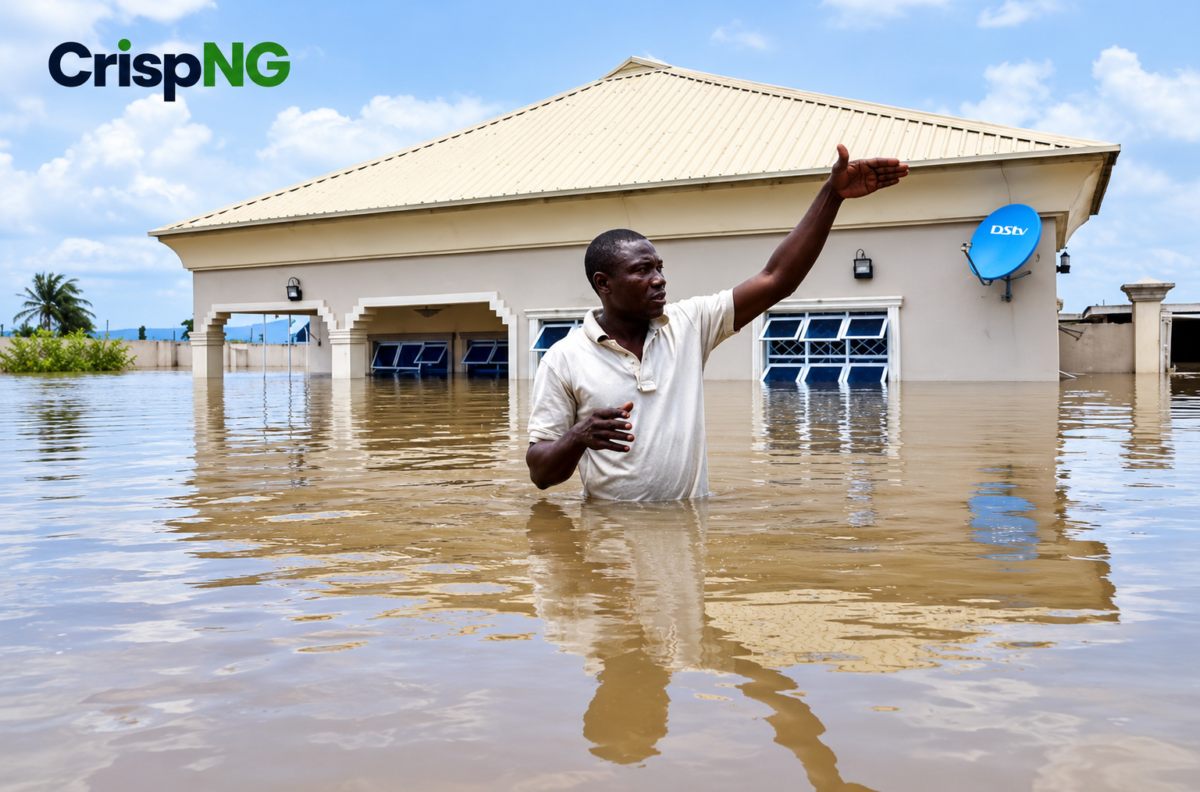
A fresh flood warning has been issued for 24 states and the Federal Capital Territory, with residents in several communities advised to prepare for possible flooding between September 27 and October 10, 2026.
The alert, issued by the National Flood Early Warning Systems Centre under the Federal Government’s Erosion, Flood and Coastal Zone Management Department, cited heavy rainfall, rising river levels, saturated soil and increased surface runoff as factors that could trigger flooding.
The warning covers several major cities, including Makurdi, Lokoja, Minna, Port Harcourt, Benin City, Asaba, Calabar, Uyo, Aba, Onitsha, Enugu, Owerri, Ado-Ekiti, Lagos, Abeokuta, Akure, Osogbo and Ibadan.
Which states are affected by the flood warning?
The states identified in the critical-risk category are Benue, Kogi, Kwara, Niger, Adamawa, Bauchi, Taraba, Rivers, Edo, Delta, Cross River, Bayelsa, Akwa Ibom, Abia, Anambra, Ebonyi, Enugu, Imo, Ekiti, Lagos, Ogun, Ondo, Osun and Oyo.
The Federal Capital Territory is also covered by the warning.
The advisory specifically highlighted riverine and coastal communities in Rivers, Delta, Bayelsa, Cross River and Akwa Ibom because of their exposure to flooding.
Residents in these areas have therefore been urged to pay close attention to local conditions and official emergency instructions during the forecast period.
What areas in Abuja are at risk?
The flood warning also covers several parts of the FCT.
Areas identified include Abuja Municipal, Asokoro, Bwari, Garki, Gwagwalada, Gwarinpa, Kubwa, Kuje, Kwali, Lugbe, Maitama, Nyanya and Wuse.
The warning also identifies the FCT alongside Nasarawa, Plateau, Bauchi, Taraba, Adamawa and Kebbi in its high-risk assessment.
Residents in low-lying areas and places close to waterways are advised to pay particular attention to changes in rainfall and water levels.
Why is there a new flood warning?
The Federal Government’s latest advisory comes as rainfall and river conditions continue to create flood risks across parts of Nigeria.
The National Flood Early Warning Systems Centre said the combination of heavy rainfall, rising river levels, saturated soil and increased surface runoff could trigger widespread flooding during the September 27 to October 10 period.
The warning is also consistent with the broader work of the Nigeria Hydrological Services Agency (NIHSA), which monitors water levels and provides flood forecasts and early warnings.
NIHSA’s 2026 Annual Flood Outlook provides flood predictions across Nigeria and is intended to help communities and authorities prepare before flooding occurs.
What are residents being asked to do?
People living in communities classified as being at critical risk have been advised to begin an immediate flood watch.
Residents are also encouraged to identify evacuation routes before flooding occurs and move vulnerable people and essential belongings to safer locations where necessary.
The advisory warned against settling, parking vehicles, trading or storing goods on floodplains, riverbanks, wetlands and low-lying drainage areas.
People in high-risk areas have also been asked to clear drains and monitor culverts and waterways, while reporting heavy rainfall, unusual water accumulation, dam releases and changes in river levels.
The warning also applies to communities classified as having moderate risk because prolonged or consecutive rainfall could quickly worsen local conditions.
What should people do if flooding starts?
Residents are advised not to wait until floodwaters become severe before taking precautions.
The authorities have advised people to disconnect electricity where flooding is imminent and keep children away from floodwater.
People should also avoid walking or driving through moving water, as the depth and speed of floodwater can be difficult to judge.
Essential items such as medicines, important documents, food and clean drinking water should be secured in advance, particularly by people living in areas identified as vulnerable.
The authorities have also called for greater monitoring of rivers, streams, bridges, culverts, drains, estuaries, reservoirs and erosion-prone locations.
Which cities are covered by the flood warning?
Several major urban centres are specifically mentioned in the latest advisory.
They include Makurdi in Benue, Lokoja in Kogi, Minna in Niger, Port Harcourt in Rivers, Benin City in Edo, Asaba in Delta, Calabar in Cross River, Uyo in Akwa Ibom, Aba in Abia, Onitsha in Anambra, Enugu, Owerri in Imo, Ado-Ekiti, Lagos, Abeokuta, Akure, Osogbo and Ibadan.
This does not mean every part of each city will experience flooding. The advisory is a risk forecast, and conditions can vary between communities depending on rainfall, drainage, proximity to waterways and local terrain.
What happens next?
The flood warning is expected to be used alongside real-time observations and further emergency directives from relevant authorities.
The National Flood Early Warning Systems Centre said the forecast should be read together with actual conditions on the ground. Information from state governments and community flood focal persons will also be used to update the flood-risk database.
The message for residents in the affected areas is therefore to remain alert throughout the forecast period rather than treating the advisory as a prediction that flooding will occur everywhere on the list.
For communities in flood-prone locations, early preparation remains particularly important as authorities continue monitoring rainfall, river levels and other conditions that could increase the risk of flooding.