

Iran launches fresh missile barrage at U.S. sorces as American-Saudi strikes hit Tehran-backed militias

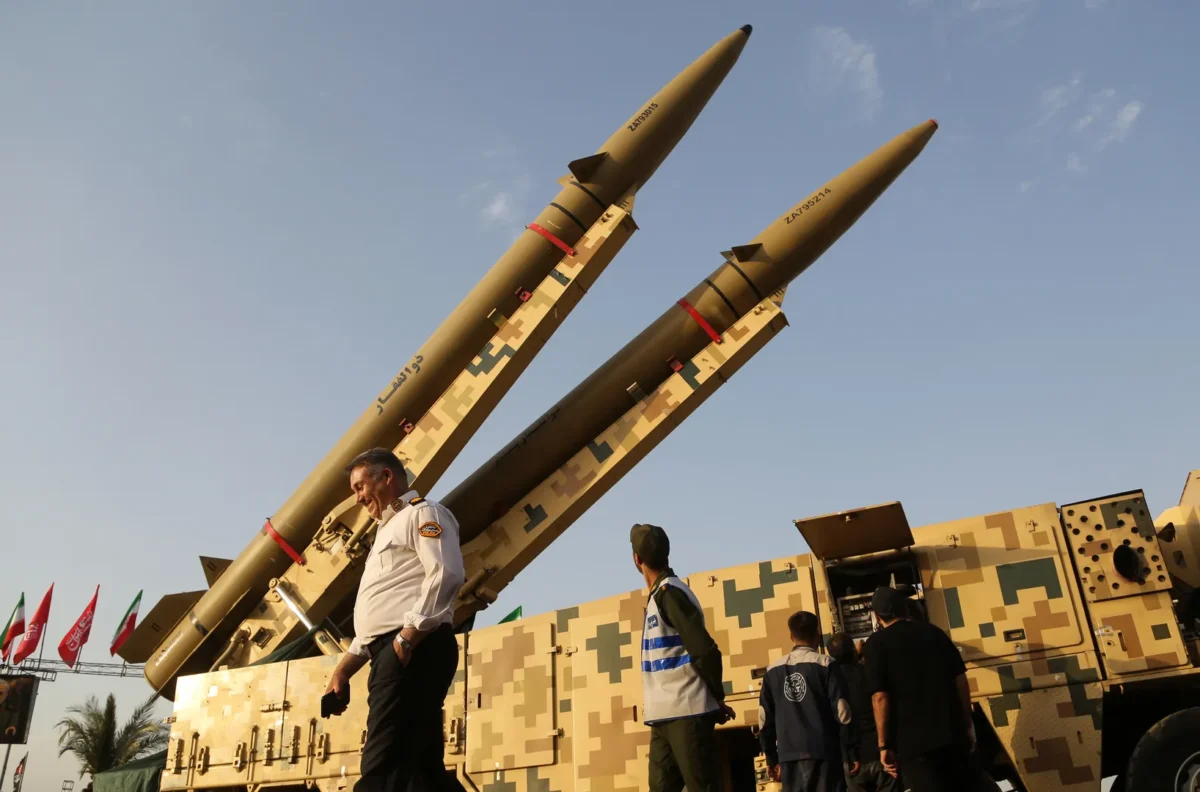
Iranian ballistic missiles displayed in Azadi Square in Tehran on July 24. Photo: Fatemeh Bahrami/Anadolu via Getty Images
A fragile pause in the Middle East conflict has collapsed after Iran launched a fresh barrage of ballistic missiles targeting U.S. military positions, prompting a swift military response from the United States and Saudi Arabia. The renewed exchange has reignited fears of a broader regional war, disrupted energy markets, and increased concerns over the security of vital global oil shipping routes.
The latest escalation comes after several days of relative calm, with diplomatic efforts previously offering hope that Washington and Tehran could return to negotiations. Instead, military operations have resumed across multiple fronts, placing the region back on high alert.
Iran Fires Ballistic Missiles Toward U.S. Military Positions
Iran’s Islamic Revolutionary Guard Corps (IRGC) announced that it launched ballistic missiles targeting the Muwaffaq Salti Air Base and the headquarters of U.S. Central Command (CENTCOM) in Jordan.
Jordan’s military confirmed that its air defense systems successfully intercepted and destroyed five incoming Iranian missiles, preventing casualties and significant damage. Authorities continue to monitor the situation amid concerns that additional attacks could follow.
The strikes marked one of the most significant direct confrontations involving Iranian forces since tensions intensified months ago.
U.S. and Saudi Arabia Respond With Airstrikes in Iraq
Hours after the missile launches, the United States and Saudi Arabia carried out coordinated airstrikes against logistics hubs and weapons facilities linked to Iran-backed militias operating in eastern Iraq.
The targeted groups belong to the Popular Mobilization Forces (PMF), a coalition of predominantly Shiite armed factions officially recognized within Iraq’s security structure but widely known for maintaining close ties with Tehran.
According to PMF officials, the overnight strikes killed at least 20 fighters and injured 32 others.
Saudi Arabia said the operation was conducted in response to recent drone attacks against its oil infrastructure, emphasizing that it does not seek further escalation but would continue defending its territory against future attacks.
Iraq Condemns Military Action on Its Territory
The Iraqi government strongly criticized the joint U.S.-Saudi operation, describing it as a violation of the country’s sovereignty.
President Nizar Amidi’s office called the strikes an unacceptable assault on Iraq’s official security institutions and urged all regional powers to pursue dialogue rather than military confrontation.
Prime Minister Ali al-Zaidi convened an emergency National Security Council meeting following the attacks. Officials also confirmed that his planned diplomatic visit to Saudi Arabia has been postponed indefinitely as Baghdad reassesses the rapidly changing security situation.
READ ALSO
Trump says he’s “close” to ordering massive new attack on Iran as Middle East teeters on the brink
Oil Infrastructure Remains a Major Target
Regional energy infrastructure continues to sit at the center of the conflict.
Saudi Arabia recently accused Iran-backed groups of launching drones against several oil facilities, while Yemen’s Houthi movement claimed responsibility for separate attacks targeting Saudi energy sites.
Satellite imagery reportedly showed fresh damage at Saudi Aramco’s Abqaiq oil processing facility, one of the world’s most important crude processing centers capable of handling nearly seven million barrels of oil per day.
Another refinery in Jazan has temporarily halted operations following damage from earlier drone attacks, adding further pressure to global energy markets.
As investors reacted to the renewed fighting, Brent crude oil prices climbed more than 3%, reflecting growing concerns over future supply disruptions.
Strait of Hormuz Dispute Deepens Global Concerns
The conflict has once again focused international attention on the Strait of Hormuz, one of the world’s busiest and most strategically important maritime trade routes.
Iran rejected a proposal from Oman aimed at jointly managing shipping through the narrow waterway, instead proposing temporary passage through Iranian territorial waters under its own conditions.
Before the conflict intensified, the Strait of Hormuz handled a substantial share of the world’s seaborne crude oil exports. Continued instability around the passage has fueled fears of prolonged disruptions to global energy supplies.
Regional Tensions Threaten Diplomatic Progress
The renewed hostilities represent a setback for international mediators who had recently expressed optimism about restarting negotiations between Washington and Tehran.
Military analysts warn that the combination of missile exchanges, drone attacks, and retaliatory airstrikes significantly increases the possibility of further escalation involving additional countries across the Middle East.
Defense experts have also raised concerns over the continued use of advanced missile defense systems, as prolonged operations place increasing pressure on U.S. stockpiles of sophisticated interceptor missiles needed to protect military bases and regional allies.
What Happens Next?
While neither side has signaled a willingness to pursue immediate large-scale military operations beyond the latest strikes, the current situation remains highly volatile.
Regional governments continue strengthening air defenses, monitoring shipping lanes, and preparing for additional attacks as diplomatic efforts struggle to regain momentum.
With global oil markets already reacting sharply and international shipping routes under growing pressure, the coming days may determine whether the conflict moves back toward negotiations or enters another dangerous phase of sustained military confrontation.
FAQ
Why did Iran launch missiles at U.S. forces?
Iran said the missile launches were part of its response to ongoing military tensions in the Middle East. The attacks came as the United States and Saudi Arabia increased military operations against Tehran-backed armed groups in Iraq.
Where did Iran target its missile attacks?
Iran said it targeted the Muwaffaq Salti Air Base and the headquarters of U.S. Central Command (CENTCOM) in Jordan.
Were the Iranian missiles intercepted?
Yes. Jordan’s military announced that its air defense systems intercepted and destroyed five Iranian ballistic missiles before they reached their intended targets.
Why did the United States and Saudi Arabia launch airstrikes in Iraq?
The joint strikes targeted logistics and weapons facilities belonging to Iran-backed militias after Saudi Arabia accused the groups of carrying out drone attacks against its oil infrastructure.
How many people were killed in the Iraq airstrikes?
Officials from the Popular Mobilization Forces (PMF) said at least 20 fighters were killed and 32 others were wounded during the overnight attacks.
What are the Popular Mobilization Forces (PMF)?
The PMF is a coalition of mainly Shiite armed groups officially integrated into Iraq’s security forces. Several factions maintain close ties with Iran and have previously been accused of attacking U.S. military installations.
Did Iraq support the U.S.-Saudi airstrikes?
No. The Iraqi government condemned the strikes, describing them as a violation of Iraq’s sovereignty and calling for dialogue instead of military escalation.
Why is the Strait of Hormuz important?
The Strait of Hormuz is one of the world’s most important oil shipping routes, with a significant share of global crude exports passing through it. Any disruption can have a major impact on international energy markets.
Why did oil prices increase after the attacks?
Oil prices rose because investors feared that renewed fighting could disrupt crude oil exports from the Middle East, particularly if shipping through the Strait of Hormuz remains restricted.
Could the conflict lead to a wider regional war?
Security analysts warn that continued missile attacks, retaliatory airstrikes, and disruptions to regional shipping increase the risk of a broader Middle East conflict involving additional countries.
Are diplomatic negotiations between Iran and the U.S. still ongoing?
Recent diplomatic efforts had shown signs of progress, but the renewed military exchanges have significantly reduced hopes for an immediate return to negotiations.
What could happen next?
Regional governments remain on high alert as military forces strengthen defenses and diplomats continue seeking ways to prevent the conflict from escalating further. The coming days are expected to be critical for regional stability and global energy markets.