

Idowu Sobowale dies at 85: The life and legacy of veteran communication scholar

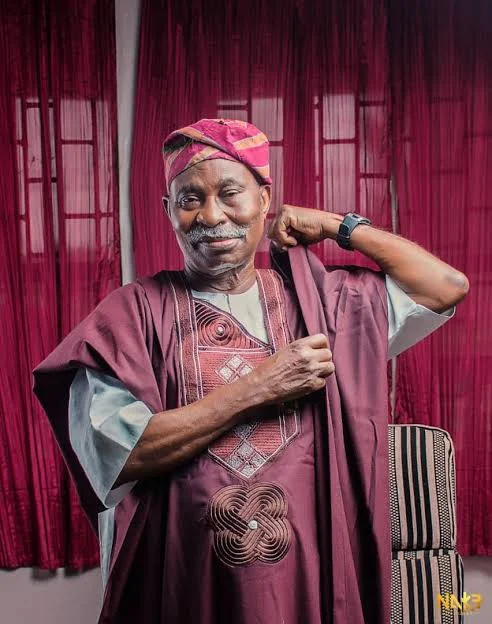
Professor Idowu Akanbi Sobowale, a veteran journalist and communication scholar, has died at the age of 85.
Sobowale died on Thursday, October 8, 2026.
His family announced his death in a statement signed by Akinniyi Sowunmi.
The death of the professor marks the end of a career that spanned journalism, education, research and public service.
Sobowale worked at the Daily Times before moving into academia. He later became a professor at Lagos State University (LASU).
He also served as Lagos State Commissioner for Education.
Idowu Sobowale’s early life
Sobowale was born on January 4, 1941, in Ashipa near Abeokuta, Ogun State.
His father was a peasant farmer. His mother was a petty trader.
Sobowale did not begin formal education as a young child.
He entered school in January 1954 at about 13 years old.
Before then, he had spent part of his childhood helping with farming. He also had plans to become a mechanic.
His educational journey later took a different direction.
Sobowale attended Lagos Baptist Academy and completed his secondary education in 1964.
After leaving school, he secured a job as a health inspector with the Lagos City Council.
He stayed there for only six days.
How Sobowale became a journalist
A chance meeting changed Sobowale’s career.
He met his former schoolmate, Bisi Onabanjo, who introduced him to the famous newspaper editor Babatunde Jose.
Jose was then associated with the Daily Times.
The introduction helped Sobowale secure a place at the Daily Times Training School.
He was among the pioneer students of the school.
Sobowale stood out during his training. Leslie W. Riley, the Australian director of the school, recommended that he join the newsroom before completing the expected 12-month training.
That decision marked the beginning of his long career in journalism.
At the Daily Times, Sobowale worked in several roles.
He was a reporter and correspondent. He also worked as a war correspondent.
He later moved into editorial positions.
His career eventually took him to the position of assistant editor.
From the newsroom to the university
Sobowale did not abandon education after entering journalism.
He studied at the University of Lagos and obtained a diploma and a bachelor’s degree in Mass Communication.
He later joined the university as an assistant lecturer in 1975.
A year later, he travelled to Syracuse University in the United States for further studies.
He returned to Nigeria in 1978 with master’s and PhD degrees.
His doctoral specialisation was Precision or Scientific Journalism.
His academic career would later become one of the most important parts of his professional life.
How Sobowale introduced opinion polling to journalism
One of Sobowale’s major contributions was his work in opinion polling.
He established a Public Opinion Polling Desk at The Punch.
The initiative was created under the leadership of Sam Amuka.
The first set of survey findings was published by The Punch on April 11, 1979.
The work reflected Sobowale’s interest in using research to understand public opinion.
He continued to promote the use of research in journalism and communication.
In 2005, he delivered his inaugural lecture at LASU.
The lecture was titled “Opinion Polling in Nigeria: The Neglected Route to National Development.”
Sobowale’s role at LASU
Sobowale played an important role in the development of communication studies at LASU.
He was part of the team involved in the establishment of the university’s School of Communication.
He later became its pioneer dean.
His work at LASU went beyond administration.
He taught and mentored several generations of communication students.
He also served as head of department at different points in his academic career.
His influence later extended to other institutions.
He worked with the Nigerian Institute of Journalism, Olabisi Onabanjo University and Covenant University, among others.
At Olabisi Onabanjo University, he helped develop a postgraduate programme in Mass Communication.
Sobowale’s career in government
Sobowale also had a career in public service.
He served as Special Adviser on Education to the Lagos State Government.
He first held the position during the administration of the late Governor Lateef Jakande.
He later served as Special Adviser during the first term of Bola Tinubu as Lagos State governor.
Sobowale eventually became Commissioner for Education in Lagos State.
He served in the position between 1999 and 2003.
His public service career gave him an opportunity to apply his experience in education outside the university environment.
Books written by Idowu Sobowale
Sobowale also contributed to journalism through his books.
His works include Scientific Journalism and Journalism as a Career.
He later wrote his autobiography, Unexpected Turns.
The book was unveiled during his 80th birthday celebrations in 2021.
The autobiography reflected on his unusual journey from his childhood in Ashipa to journalism, academia and public service.
Awards and recognition
Sobowale received several honours during his lifetime.
The Federal Government conferred on him the national honour of Officer of the Order of the Niger, OON.
He also received the DAME Lifetime Achievement Award for his contribution to media development and journalism.
His contribution to communication education was also recognised by Caleb University.
The university named its Faculty of Communication and Media Studies after him.
The legacy of Idowu Sobowale
Sobowale’s career crossed several parts of Nigeria’s media and education sectors.
He started as a journalist.
He became an editor.
He later moved into teaching and research.
He became a professor and helped develop communication education at LASU.
He also introduced opinion polling to Nigerian journalism.
Beyond the newsroom and classroom, Sobowale served in government and contributed to education policy in Lagos State.
His career was therefore built across journalism, academia, research and public service.
His journey was also notable because of his early struggles with education.
He did not enter school until he was about 13.
Yet he eventually earned a PhD and became a professor.
He went from the Daily Times newsroom to the university classroom and later to government.
His influence also extended to the students and journalists he trained.
As Nigeria’s communication community mourns his death at 85, Sobowale leaves behind a career that helped shape journalism and communication education in the country.
His legacy lives on through the institutions he helped build, the students he taught and the work he left behind.