

How much will Nigeria’s 12 US attack helicopters cost and what comes with the deal?

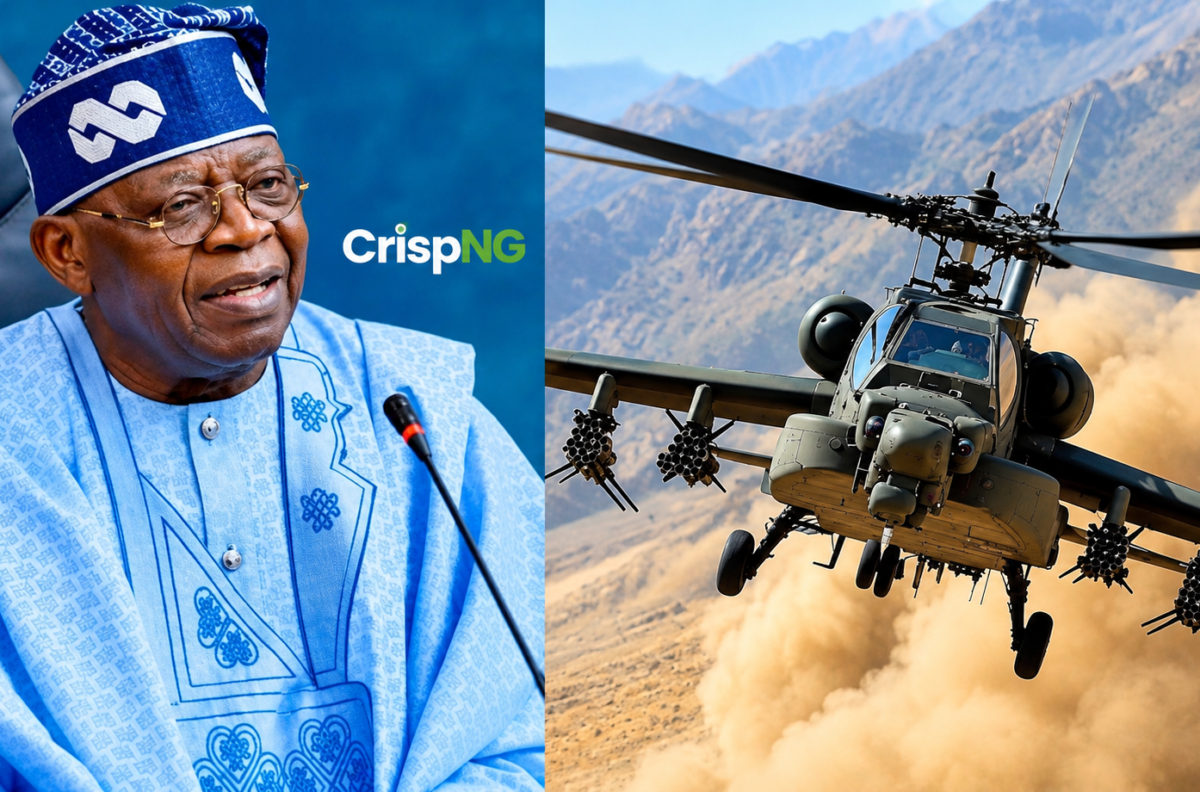
Nigeria’s acquisition of 12 US attack helicopters has moved into the production stage, with Bell Textron now building the AH-1Z Viper aircraft for the Nigerian Air Force.
The programme has attracted attention because its headline value is nearly $1 billion. However, the $997 million figure does not represent the price of the 12 helicopters alone. It covers a wider package that includes engines, weapons, training, spare parts, logistics and other support.
So, how much are the helicopters costing, what exactly is included in the deal and when will Nigeria receive them?
How much will Nigeria’s US attack helicopters cost?
The United States approved a possible Foreign Military Sale to Nigeria with an estimated value of $997 million.
The package covers 12 AH-1Z Viper attack helicopters and several related items needed to operate them. The US government broke the estimated value into $521 million for major defence equipment and $476 million for other equipment and services.
However, a separate $455 million contract was awarded to Bell in 2024 for the manufacture and delivery of the 12 helicopters, along with engineering, programme management and logistics support.
Therefore, the two figures refer to different parts of the programme.
The $455 million contract should not be treated as the total cost of the entire acquisition. The $997 million figure covers the broader military package.
What comes with Nigeria’s US attack helicopters?
The acquisition includes much more than the 12 aircraft.
According to the US government’s notification, the package includes 28 T700-GE-401C engines. Twenty-four engines are intended for installation, while four are spare engines.
Nigeria is also acquiring 2,000 Advanced Precision Kill Weapon System guidance sections.
The package includes other equipment and services such as:
- Night-vision equipment
- Communication equipment
- Electronic warfare systems
- M197 20mm guns
- Targeting systems
- Spare parts
- Support equipment
- Tools and testing equipment
- Technical data
- Pilot and personnel training
- Mission-planning systems
- Engineering support
- Logistics support
The US package also includes assistance for Nigeria’s Air Ground Integration programme, including support for developing targeting processes that comply with international humanitarian law and the laws of armed conflict.
This means the programme is designed to provide Nigeria with an operational capability rather than simply deliver 12 airframes.
What is the AH-1Z Viper?
The AH-1Z Viper is an attack helicopter developed by Bell for military operations.
Bell describes the aircraft as a multi-mission platform capable of using both precision-guided and unguided weapons. The helicopter is designed to operate from forward facilities while maintaining a relatively small logistical footprint.
The Viper can support missions that require close air support, armed escort and other forms of aerial assistance to ground forces.
Its weapons and targeting systems are among the major reasons the aircraft is different from a conventional transport helicopter.
For Nigeria, the aircraft is expected to become part of the Nigerian Air Force’s attack helicopter fleet.
Why is Nigeria buying the US attack helicopters?
The Nigerian Air Force says the AH-1Z Viper will strengthen its ability to conduct counterterrorism and counterinsurgency operations.
Air Commodore Ehimen Ejodame, the NAF spokesperson, said the aircraft would play an important role in those operations and help improve the military’s ability to protect citizens.
Nigeria has continued to rely on air operations as part of its response to armed groups, particularly in areas affected by insurgency and other forms of insecurity.
The Viper will join other aircraft already operated by the Nigerian Air Force, giving the service another specialised attack platform.
CrispNG has previously examined Nigeria’s wider security challenges, including the operations of ISWAP and the continuing threat from armed groups in parts of the country.
When will Nigeria receive the US attack helicopters?
Production of the Nigerian aircraft has already started.
Bell held a ceremony at its Amarillo Assembly Center in Texas on September 16, 2026, to mark the beginning of production of the first AH-1Z Viper for Nigeria.
A Nigerian delegation led by Chief of the Air Staff, Air Marshal Sunday Aneke, visited the facility and participated in a beam-signing ceremony on the first aircraft.
Bell currently expects production of the 12 aircraft to be completed in early 2029.
That timeline means Nigeria will not receive the entire fleet immediately. The aircraft still have to pass through manufacturing, testing and the required delivery process.
The production timeline also shows why major military acquisitions can take several years from approval to operational deployment.
Is the $997 million only for the helicopters?
No.
The $997 million figure represents the estimated value of the wider acquisition package.
It includes the aircraft, engines, weapons-related equipment, training, logistics, spare parts and other support.
The $455 million figure is linked to Bell’s contract for manufacturing and delivering the 12 AH-1Z aircraft, together with associated engineering, programme management and logistics support.
This distinction matters because dividing $997 million by 12 and describing the result as the price of each helicopter would give a misleading picture.
Much of the programme value comes from the systems and services required to make the aircraft usable by the Nigerian military.
What does the deal mean for the Nigerian Air Force?
The acquisition will add a specialised attack helicopter platform to Nigeria’s existing fleet.
The Nigerian Air Force says the Viper will support counterterrorism and counterinsurgency operations. Bell also describes the aircraft as capable of carrying precision-guided and unguided weapons.
However, receiving the aircraft is only one part of establishing the capability.
Nigeria will also need trained pilots and technicians, maintenance support, spare parts, weapons and reliable logistics to keep the helicopters operational.
The wider US package therefore includes training, technical assistance and logistical support alongside the aircraft.
For now, the immediate milestone is production. Bell has started building the first Nigerian Viper, while the company expects all 12 aircraft to be completed in early 2029.