

Gabon rig sinking: one reported dead, four missing

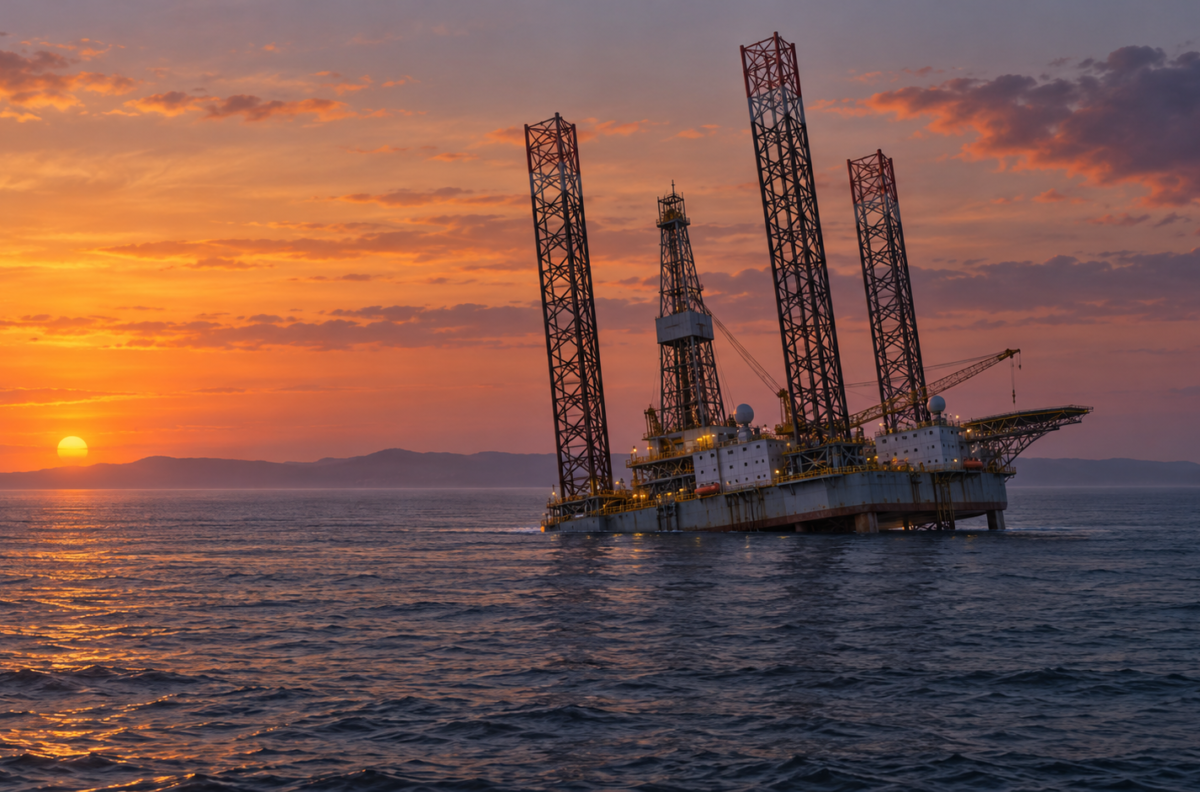
The Gabon rig sinking has left five people unaccounted for in the latest published statements from the rig owner and field operator, while newer reporting says one worker has died and four remain missing. The Prospector 5 went down off Mayumba during preparations for a drilling campaign, putting the search, the cause of the accident and environmental monitoring under scrutiny.
Gabon rig sinking: the timeline and rescue
Borr Drilling, which owned and operated the jack-up rig, said the incident happened at about 20:37 local time on 24 October in the Dussafu Marin permit. The rig was contracted to support BW Energy’s operations and was preparing for a planned campaign; drilling had not started. Borr’s first account said the rig lost stability during jacking operations and sank.
On 25 October, Gabon’s Petroleum and Gas Ministry said 110 of the 115 people on board had been rescued and five were missing. Borr’s 26 October update gave the same figures and said sea and air searches were continuing. Reuters later reported, citing three people familiar with the matter, that one worker had been found dead and four remained missing. Gabon Media Time reported a similar update attributed to the Navy chief of staff and based on survivors’ testimony. The operator and ministry have not publicly reconciled those reports with their earlier count of five unaccounted for.
The distinction matters because “unaccounted for” is a provisional status, not a final roll call. The newer reports describe one death and four people still missing, but neither company nor ministry statements have confirmed that change. The ministry said families were receiving updates through the response operation.
What “punch-through” means on a jack-up rig
A jack-up rig has a floating hull and long legs lowered to the seabed. Once the legs are set, jacks raise the hull above the water. Before drilling, crews may preload the legs by applying weight to test whether the seabed can support the rig. A “punch-through” is the preliminary mechanism Borr says may have occurred: one support suddenly penetrates a weaker layer beneath the seabed, tipping the structure and causing a rapid loss of stability. Offshore Magazine’s explanation describes this general engineering risk.
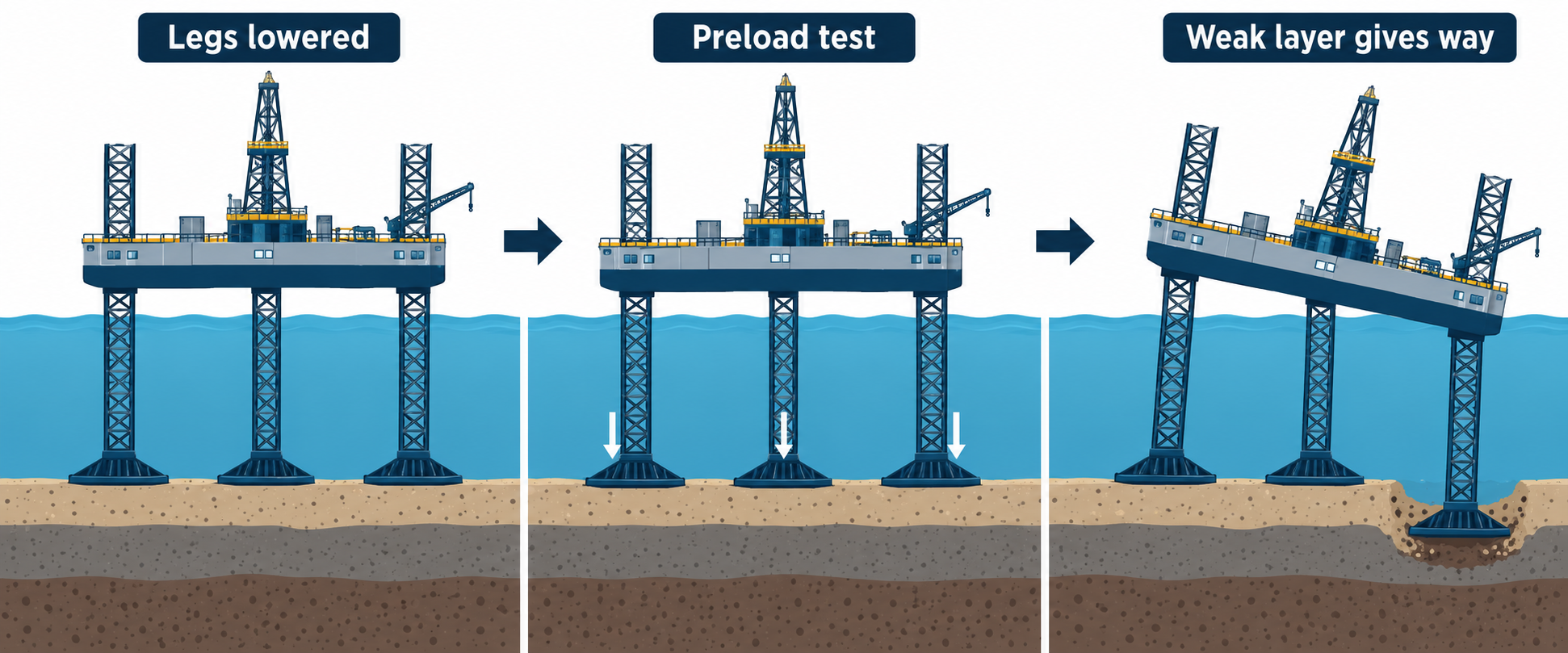
The mechanism explains how a rig can sink before a well is drilled, but it is not a final finding about why the seabed failed or whether a procedure, equipment or site assessment was at fault. Gabon’s ministry has ordered a technical investigation into the circumstances and responsibilities; Borr says it is working with the authorities and BW Energy on its own investigation. The findings will need to distinguish a sudden seabed failure from any operational factors that may have contributed.
Environmental checks and the MaBoMo facility
The accident occurred near BW Energy’s MaBoMo production facility. BW Energy said production there had been shut down under its standard procedure during drilling preparations. It had received no report of damage to the facility or related equipment, or of a harmful release from that facility. Those statements concern MaBoMo; they do not establish the condition of the sunken rig or rule out pollution from it.
Gabon’s ministry said no harmful substance had been observed in the sea at the time of its 25 October statement. It also said the area was under continuous monitoring and pollution-response resources remained mobilised to protect the coast and Mayumba National Park. An initial absence of visible pollution is a snapshot; monitoring is intended to identify any later change. The official statement did not provide a measured water-quality result or a map of the observation area.
What we don’t know yet
The exact number of people still missing has not been settled publicly across the latest company, government and media accounts. Authorities have not published a complete account of the rescue or the circumstances of the reported death. The investigation must establish what happened beneath the rig’s legs, how the operation was planned and whether the preliminary punch-through explanation is confirmed.
Officials have not given a timetable for concluding the search, completing environmental checks or restarting MaBoMo production. No public technical data yet shows the seabed layers under each leg, the preload readings or the sequence in which the rig lost stability. The next useful update will be an official casualty reconciliation and initial findings from Gabon’s technical investigation, alongside any change in coastal monitoring results.
Sources
- Borr’s first statement and 26 October update
- BW Energy statement
- Gabon ministry statement, carried by Gabon24
- Reuters report on the reported death and four missing
- Gabon Media Time on the Navy briefing
- Offshore Magazine on the preliminary mechanism