

FIFA Takes Over NFF: 5 Things to Know About Nigeria’s Football Normalisation Committee

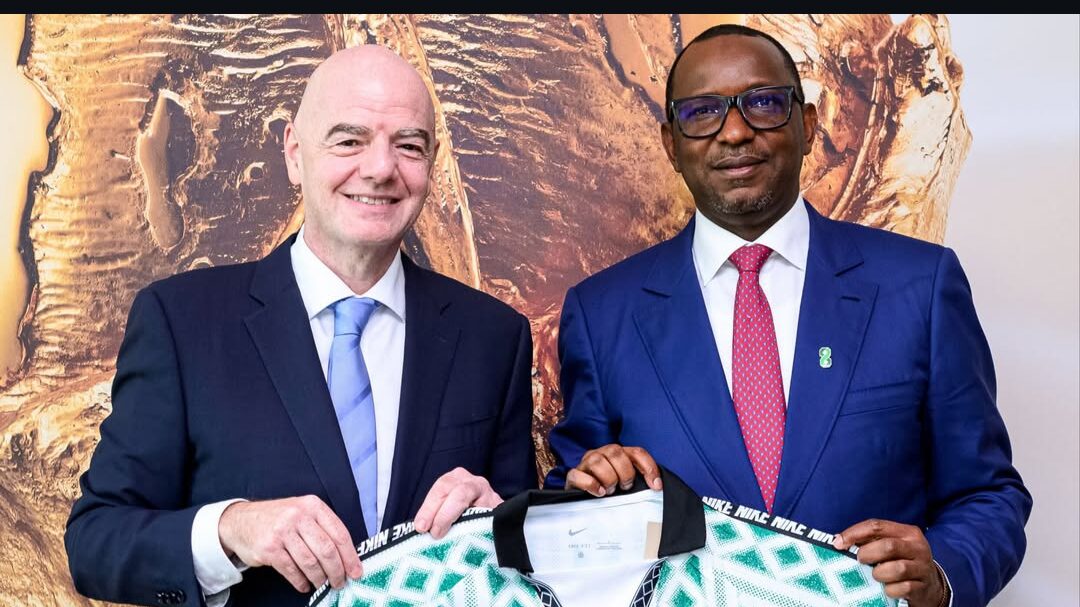
FIFA has approved a Normalisation Committee to oversee the Nigeria Football Federation (NFF) following a leadership crisis that disrupted plans for fresh elections. The committee must complete its assigned tasks by May 31, 2027.
FIFA has approved a Normalisation Committee to manage the affairs of the Nigeria Football Federation (NFF) pending fresh elections into its Executive Committee.
The decision follows months of uncertainty after the federation’s leadership resigned in August 2026. FIFA and the Confederation of African Football (CAF) will jointly appoint the committee members to oversee the transition.
However, the committee has not yet been constituted. Here are five things Nigerians need to know about FIFA’s decision and what comes next.
1. FIFA and CAF will appoint the committee members
FIFA and CAF will jointly select the people who will serve on the Normalisation Committee.
According to a letter signed by FIFA Secretary-General Mattias Grafström, both organisations will appoint a suitable number of members as soon as possible.
Their selection will determine who oversees the federation during the transition. FIFA has not yet announced the names of the appointees.
The committee’s appointment also raises questions about the broader direction of Nigerian football administration and the kind of reforms required to restore confidence in the system.
Read Also: Pinnick at CAF: Opportunity for Reform or More of the Same?
2. The committee has until May 31, 2027, to complete its work
The Normalisation Committee will serve temporarily rather than replace an elected NFF leadership permanently.
FIFA has stated that the committee’s mandate will end once it completes its assigned tasks, but no later than May 31, 2027.
The committee is expected to oversee the federation pending fresh elections into the NFF Executive Committee. Its work will therefore include helping to establish a path towards a new elected leadership.
The deadline gives the transition a defined endpoint. However, the effectiveness of the arrangement will depend on how quickly the committee is constituted and how it handles its responsibilities.
3. Committee members cannot contest the forthcoming elections
FIFA has ruled that members of the Normalisation Committee will not be eligible to contest positions in the forthcoming NFF elections.
The restriction separates the committee’s temporary responsibilities from the competition for permanent leadership. Members cannot use their appointments as a route into elected office during the electoral process.
The rule is intended to ensure that the people overseeing the transition do not benefit electorally from their interim positions.
The forthcoming elections will be an important test of whether Nigerian football can move beyond the current leadership crisis and establish a stable governance structure.
Read More: FIFA’s Iron Hand: Countries Barred from World Cup Glory
4. The NFF Secretariat will continue running football for now
FIFA’s approval does not mean the new committee has already taken over the federation’s daily operations.
Until its members are appointed, the NFF Secretariat will continue handling routine administration and the day-to-day running of Nigerian football.
Emmanuel Ikpeme, the federation’s acting General Secretary, is overseeing the Secretariat during the transition.
The existing administrative structure will therefore remain responsible for daily operations while FIFA and CAF complete the appointment process.
The immediate change is the approval of a temporary governance arrangement. The committee’s actual work will begin once its members have been named and formally assume their responsibilities.
5. The decision follows a leadership crisis and calls for reform
The crisis followed the mass resignation of NFF President Ibrahim Musa Gusau, General Secretary Mohammed Sanusi and members of the federation’s Executive Committee on August 27, 2026.
Their departures disrupted preparations for an elective congress scheduled for September 27 in Lafia, Nasarawa State. The electoral process was suspended as FIFA and CAF consulted stakeholders about the federation’s future.
The crisis unfolded during a difficult period for Nigerian football. The Super Eagles failed to qualify for the 2026 FIFA World Cup, while the Super Falcons missed out on the 2027 Women’s World Cup. The latter ended Nigeria’s record of appearing at every edition of the women’s tournament since it began in 1991.
President Bola Tinubu also called for comprehensive reforms of Nigerian football, including improvements to governance, administration, stakeholder representation, development pathways, domestic competitions and accountability.
The National Sports Commission subsequently engaged with FIFA, CAF and football stakeholders to discuss the crisis and possible reforms.
Read More: Making Nigerian Football Attractive in a Digital Age
FIFA’s approval of the Normalisation Committee marks a new phase in the effort to restore elected leadership at the NFF. The next major steps are the announcement of the committee members and the process leading to fresh elections.
The committee’s success will depend on its ability to stabilise the federation, address governance concerns and provide a credible path towards a new elected leadership before its mandate expires.