
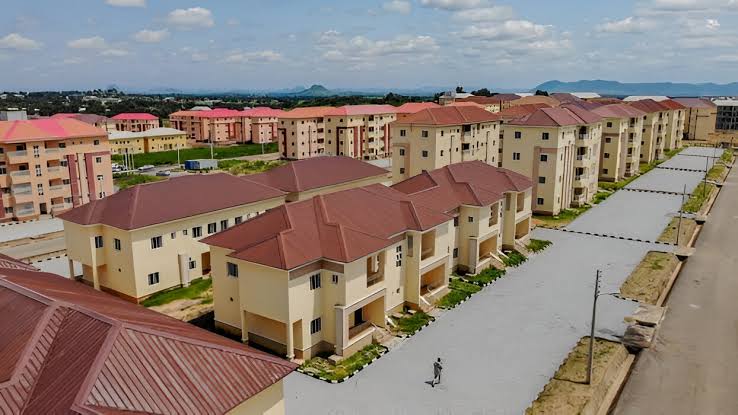
The Federal Government’s ₦100 million housing mortgage allows eligible Nigerians to finance home purchases. However, the programme has specific property requirements that exclude some buyers who want to acquire land or construct houses.
Nigerians interested in the Federal Government’s ₦100 million housing mortgage may wonder whether they can use the facility to purchase land, complete an unfinished building or construct a house from scratch.
The mortgage operates under the Ministry of Finance Incorporated Real Estate Investment Fund (MREIF), which provides long-term housing finance through participating financial institutions.
Although the programme allows eligible applicants to access up to ₦100 million, it does not cover every type of property transaction.
According to information published by MREIF and its fund manager, ARM Investment Managers, the standard mortgage is designed for Nigerians purchasing completed residential properties for personal occupation.
Here is what prospective applicants should understand.
Can Nigerians use the FG housing loan to buy land?
No. The standard MREIF mortgage does not finance the purchase of undeveloped land.
Its primary purpose is to help Nigerians acquire completed residential properties rather than provide money for future construction.
This means someone who wants to purchase a plot of land for future development cannot use the standard ₦100 million mortgage for that transaction.
However, interested buyers can explore other financing arrangements offered by financial institutions for land acquisition.
Can applicants use the mortgage to build houses?
The standard facility also does not provide construction financing to individuals who already own land.
For instance, someone who owns a plot in Enugu, Lagos or Abuja cannot simply apply for the mortgage to obtain money to begin building a bungalow or duplex.
The programme’s published guidelines also exclude financing for applicants who want to complete ongoing residential construction projects.
This distinction is important because buying a completed house and financing a building project are two different transactions.
Read also: FG’s ₦10 Billion Housing Loan Scheme for Civil Servants: What Workers Should Know
What types of houses can Nigerians buy?
Although the mortgage excludes land acquisition and individual construction projects, it covers different categories of completed residential properties.
According to ARM’s published MREIF programme information, eligible properties include:
- Detached houses: Standalone residential buildings occupied by individual households.
- Flats: Completed apartments within multi-unit residential buildings.
- Terraced houses: Residential properties arranged in connected units.
These properties must meet the programme’s requirements and be intended for owner occupation.
The mortgage is not designed to finance property purchases primarily for investment or rental purposes.
Must applicants choose houses listed on the MREIF website?
No. Applicants are not necessarily restricted to properties advertised on the programme’s online platform.
An ARM MREIF webinar question-and-answer document explains that prospective buyers can select properties from the available listings or present their preferred properties for consideration.
However, a property selected outside the platform must still undergo the necessary checks before a mortgage can be approved.
These include property valuation, legal title verification and the lender’s assessment of the transaction.
Consequently, finding a house outside the advertised listings does not automatically make it eligible for financing.
What happens if the house is still under construction?
The standard MREIF mortgage covers completed residential properties.
Therefore, applicants should not assume they can use the facility to purchase a building that is still at an early construction stage.
However, there is an important distinction.
Stanbic IBTC Bank separately lists an off-plan mortgage solution for purchasing semi-completed properties or houses under construction from approved developers.
The bank describes this as a separate product with its own conditions, including a minimum 30 per cent equity contribution.
This arrangement should not be confused with the standard MREIF completed-property mortgage. Applicants must confirm the specific product and terms available through their chosen lender.
What documents must applicants check before buying?
Before accepting a property offer, prospective borrowers should ensure that the seller has the necessary title documents.
Stanbic IBTC Bank’s MREIF mortgage information lists acceptable documents including:
- Certificate of Occupancy (C of O).
- Deed of Assignment.
- Deed of Sublease.
- Deed of Transfer.
- Deed of Consent.
- Deed of Conveyance.
- Deed of Assent.
Other registered property titles may also be considered, subject to the bank’s requirements.
The financial institution will also conduct relevant legal and property assessments before approving the mortgage.
How much deposit must Nigerians provide?
The standard MREIF mortgage requires applicants to contribute at least 10 per cent of the property’s value as equity.
For example, someone purchasing a completed house worth ₦50 million would need to provide at least ₦5 million upfront.
The remaining ₦45 million could be financed through the mortgage, subject to approval.
The facility carries an annual interest rate of 9.75 per cent and a repayment period of up to 20 years.
Interested Nigerians can visit the official MREIF website to explore the programme and its application requirements.
Read also: FG’s ₦10 Million Tertiary Institutions Staff Support Fund: How to Apply
What Nigerians should understand
The Federal Government’s ₦100 million housing mortgage is primarily a homeownership facility, not a general-purpose property development loan.
Eligible Nigerians can use it to purchase completed residential properties, including detached houses, flats and terraced homes.
However, those seeking financing to buy undeveloped land, construct houses from scratch or complete ongoing projects must explore other financing options.
Understanding this distinction can help prospective borrowers avoid choosing an unsuitable property or making financial commitments before confirming their eligibility.