

Federal Judge slams Trump DOJ ‘retaliatory’ subpoenas against Tim Walz and Minnesota Democrats, blocks immigration probe

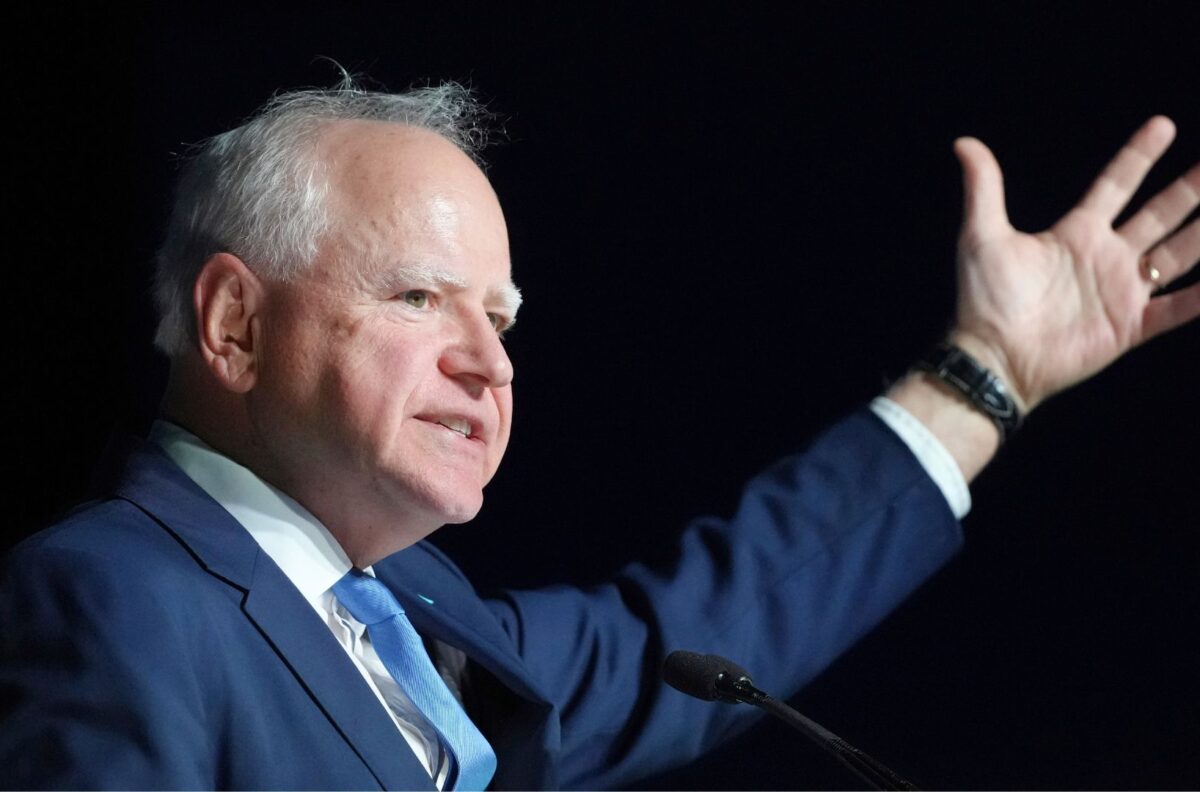
Minnesota Gov. Tim Walz speaks at the California Democratic Party’s 2025 State Convention at the Anaheim Convention Center in Anaheim, Calif., on Saturday, May, 31, 2025. Image Credit: AP Photo/Damian Dovarganes
A federal judge has halted a controversial Justice Department effort to obtain records from Minnesota Governor Tim Walz and other Democratic officials, delivering a significant legal setback to the Trump administration’s immigration enforcement campaign.
In a strongly worded ruling issued on June 23, U.S. District Judge Patrick Schiltz declared that subpoenas issued by the Department of Justice (DOJ) were unconstitutional and appeared designed to harass political opponents rather than advance a legitimate criminal investigation.
The decision immediately voids subpoenas directed at Governor Tim Walz, Minnesota Attorney General Keith Ellison, Minneapolis Mayor Jacob Frey, St. Paul Mayor Kaohly Her, and officials in Ramsey and Hennepin counties. The ruling has intensified the national debate over immigration enforcement, states’ rights, and allegations of political retaliation by federal authorities.
Judge Says DOJ Used Grand Jury Process to Target Political Opponents
Judge Schiltz issued a 30-page opinion sharply criticising the Justice Department’s actions.
According to the ruling, the subpoenas were part of an effort to pressure Minnesota officials into supporting federal immigration enforcement policies and to punish them for publicly opposing those policies.
The judge wrote that there was “no doubt” the subpoenas were intended to harass President Donald Trump’s political opponents. He further stated that the DOJ failed to demonstrate a credible investigative purpose and appeared to be using the grand jury process for objectives unrelated to a legitimate criminal inquiry.
Schiltz concluded that the federal government had struggled to identify even a single plausible reason why the records were necessary, describing the evidence supporting the subpoenas as overwhelmingly weak.
Immigration Crackdown in Minnesota Sparked Political Clash
The legal battle stems from a major immigration enforcement operation carried out by federal authorities in Minnesota earlier this year.
The Trump administration launched a months-long immigration surge across the Twin Cities region, deploying thousands of federal agents to detain undocumented immigrants. According to federal officials, more than 4,000 undocumented migrants were arrested during the operation.
The enforcement campaign triggered widespread demonstrations and political backlash from state and local leaders. Governor Walz and other Democratic officials openly criticised the federal effort, arguing that it created fear within immigrant communities and strained local resources.
President Trump and administration officials responded by accusing Minnesota leaders of undermining federal law enforcement efforts and contributing to unrest surrounding the operations.
Why the DOJ Wanted Records From Tim Walz and Other Officials
Federal prosecutors sought documents and communications from Minnesota officials as part of an investigation into whether state and local leaders obstructed immigration enforcement efforts.
The DOJ argued that it needed information regarding public statements, internal communications, and actions taken by local governments during the immigration crackdown.
However, Judge Schiltz rejected the government’s position, emphasising that states are not constitutionally required to dedicate their resources to enforcing federal civil immigration laws.
The ruling reinforced long-established legal principles that prevent the federal government from forcing states to carry out federal policy objectives, particularly in areas where state cooperation is voluntary.
READ ALSO
Why Tim Walz won’t run again, and how a growing fraud scandal reshaped Minnesota politics
Jeff Johnson: Who stabbed Minnesota governor’s daughter? Shocking details to know
Tim Walz Celebrates Court Victory
Governor Tim Walz welcomed the court’s decision, calling the investigation politically motivated and legally baseless.
In a statement following the ruling, Walz argued that the case represented a broader pattern of federal efforts to target political opponents.
He described the subpoenas as unconstitutional and meritless, while urging continued support for democratic institutions and the rule of law.
Minneapolis Mayor Jacob Frey also praised the ruling, stating that targeting elected officials because they spoke on behalf of their constituents violated democratic principles and basic standards of fairness.
DOJ Signals It May Continue Investigating
Despite the court defeat, the Department of Justice indicated it is not abandoning its broader scrutiny of state and local resistance to immigration enforcement.
In a statement released after the ruling, DOJ officials maintained that obstruction of federal law enforcement operations remains a serious concern and pledged to continue acting within the bounds of the law.
The department has not yet announced whether it plans to appeal Judge Schiltz’s decision.
Legal experts note that an appeal could potentially elevate the dispute to a federal appellate court, where broader questions about federal authority and state autonomy may be examined.
What the Ruling Means for Federal-State Immigration Disputes
The decision represents one of the most significant judicial rebukes of the Trump administration’s immigration enforcement strategy in 2026.
Beyond Minnesota, the ruling could influence ongoing disputes involving so-called sanctuary jurisdictions and states that have resisted cooperation with federal immigration authorities.
The court’s opinion reinforces constitutional protections that limit federal power over state governments while raising fresh concerns about whether investigative tools can be used against elected officials for political purposes.
As immigration remains a defining issue in American politics, the outcome of this case may shape future conflicts between Washington and state governments nationwide.
FAQ
Why did the federal judge block the DOJ subpoenas?
Judge Patrick Schiltz ruled that the subpoenas lacked a legitimate investigative purpose and appeared intended to pressure and retaliate against Minnesota officials for opposing federal immigration policies.
Who was targeted by the DOJ subpoenas?
The subpoenas were directed at Governor Tim Walz, Attorney General Keith Ellison, Minneapolis Mayor Jacob Frey, St. Paul Mayor Kaohly Her, and officials from Ramsey and Hennepin counties.
What was the DOJ investigating?
The DOJ was examining whether Minnesota officials obstructed federal immigration enforcement efforts during a large-scale immigration crackdown in the state.
What did the judge say about the subpoenas?
The judge stated there was overwhelming evidence the subpoenas were issued to harass political opponents and coerce state officials into assisting federal immigration enforcement.
Are states required to help enforce federal immigration laws?
Generally, no. Constitutional principles prevent the federal government from compelling states to use their resources to enforce federal civil immigration laws.
What are sanctuary policies?
Sanctuary policies are state or local measures that limit cooperation with federal immigration authorities, particularly in civil immigration enforcement matters.
How many people were arrested during the Minnesota immigration operation?
Federal authorities reported that more than 4,000 undocumented immigrants were arrested during the enforcement surge in Minnesota.
Did Governor Tim Walz respond to the ruling?
Yes. Walz called the investigation politically motivated, unconstitutional, and without merit, while praising the court’s decision.
Will the DOJ appeal the decision?
The Justice Department has not announced an appeal but indicated it will continue reviewing what it considers obstruction of federal law enforcement activities.
Why is this ruling important?
The decision could shape future disputes between federal and state governments over immigration enforcement and establish limits on the use of investigative powers against elected officials.
Could this affect other states?
Yes. The ruling may influence similar legal battles involving states and cities that have resisted federal immigration enforcement efforts.
What constitutional issue is at the center of the case?
The core issue is whether the federal government can use investigative powers to pressure states into enforcing federal immigration policies, potentially violating constitutional protections for state autonomy.