

B.C. election: What a projected Conservative majority means as final count continues

AI-generated illustration; it does not depict the real election night or a specific location.
British Columbia’s first count points to a decisive change of government, but the official count is still preliminary. The key question for voters is what the projected Conservative majority means—and what can still change before results are final.
What the latest official count shows
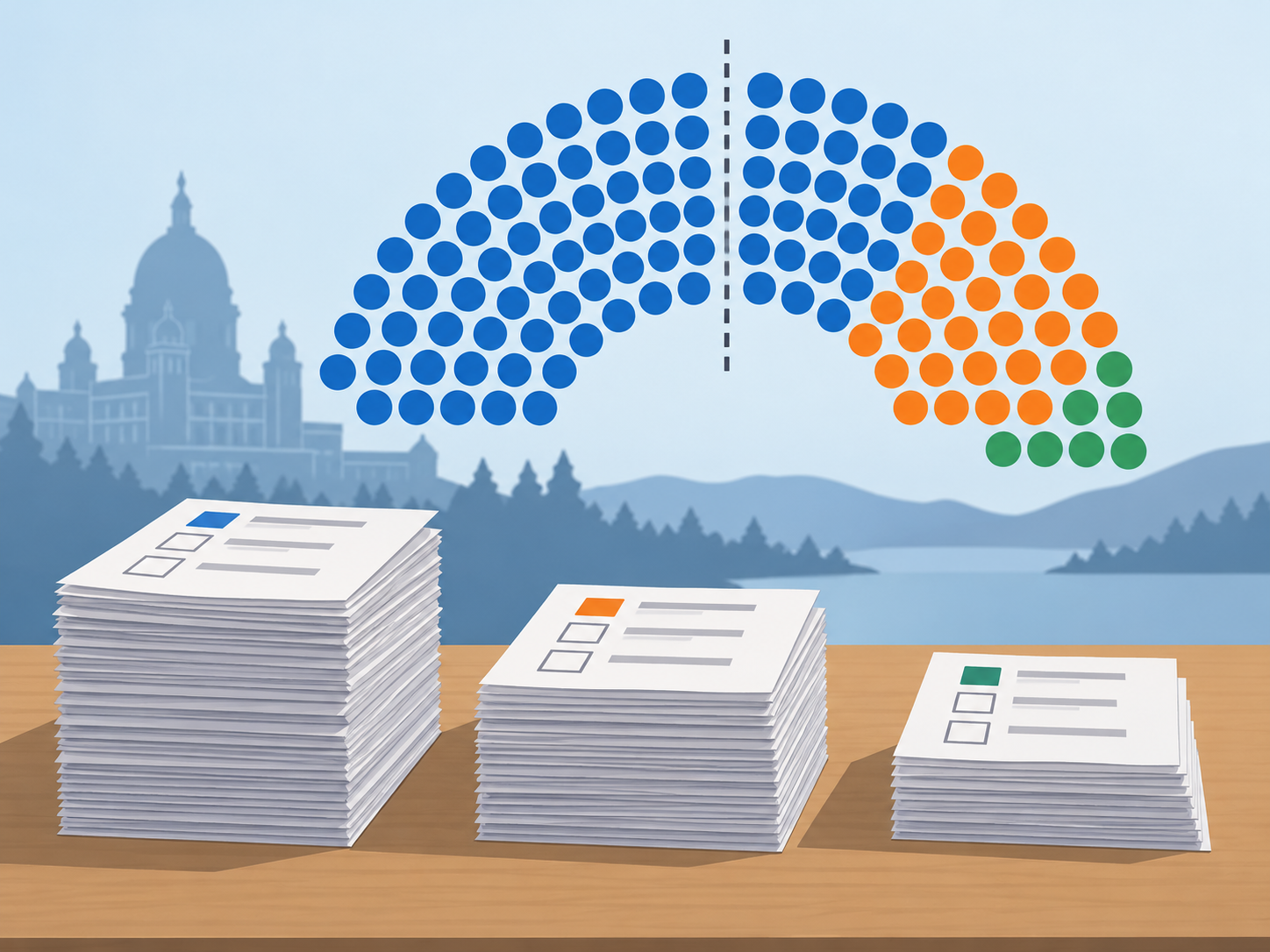
In its latest available snapshot, dated 1:49 a.m. Pacific on Oct. 25, Elections BC said 99.57 per cent of ballot boxes had reported. The Conservative Party was leading in 64 districts, the BC NDP in 27 and the BC Greens in two. The agency labels the results preliminary and the initial count “in progress.”
A majority in the 93-seat legislature requires 47 seats. The Conservative leads were therefore 17 above that threshold in the snapshot. The Canadian Press and CTV News both called a Conservative majority overnight, while Elections BC’s seat table continues to distinguish preliminary leads from a completed final count.
Why the final count still matters
Election-night totals do not include every ballot. Elections BC says vote-by-mail ballots, assisted telephone ballots and some absentee ballots arrive at a later stage. Election staff then run additional integrity checks on those ballots, and the agency’s calendar plans the final count for Nov. 6 to 10.
That matters most in close districts, where a small number of later-counted ballots can change which candidate leads. The later count does not erase the size of the Conservative advantage in the last official snapshot, but Elections BC has not certified the seat-by-seat outcome. A lead during the initial count should not be described as a final declaration.
For readers, the practical distinction is simple: a projected majority means the Conservatives can govern with enough seats to pass ordinary legislation without relying on opposition votes. The final count will settle the official district results and confirm the legislature’s exact balance.
What happens to the party leaders?
After the NDP’s defeat, David Eby said he had offered his resignation as party leader and accepted responsibility for the result, according to The Canadian Press. He won his own Vancouver-Point Grey seat, the wire service reported. If the projected result holds, interim Conservative leader Lorne Doerkson will become premier.
The vote also leaves the Greens with two leading seats in the preliminary count, enough to form a small opposition caucus alongside the NDP. The election changes who can command a majority; the final count and the next steps in the legislature will determine the precise shape of the transition.
When will the results be final?
Elections BC plans its final count for Nov. 6–10. Until then, the agency’s results page is the place to check updated preliminary totals and the status of individual districts. A useful comparison for readers following election shifts elsewhere is CrispNG’s explainer on Brazil’s presidential runoff.
Sources: Elections BC preliminary results and counting notes; Elections BC election calendar; The Canadian Press report; CTV News’ majority call.