

What hidden wonders lurk in Argentina’s deep sea? Scientists discover giant corals, new species and a whale fall

What hidden wonders lurk in Argentina’s deep sea? Scientists discover giant corals, new species and a whale fall
Scientists exploring the deep waters off the coast of Argentina have uncovered a breathtaking underwater world that is rewriting what we know about life in the deep ocean. Researchers from the Schmidt Ocean Institute have revealed a series of extraordinary discoveries, including the largest known Bathelia candida coral reef on Earth, 28 previously unknown animal species, and Argentina’s first-ever recorded deep-water whale fall.
The findings were made during a series of deep-sea expeditions using the institute’s advanced remotely operated vehicle (ROV), SuBastian, which allowed scientists to explore extreme depths that remain largely inaccessible to humans.
A Rare Giant From the Deep
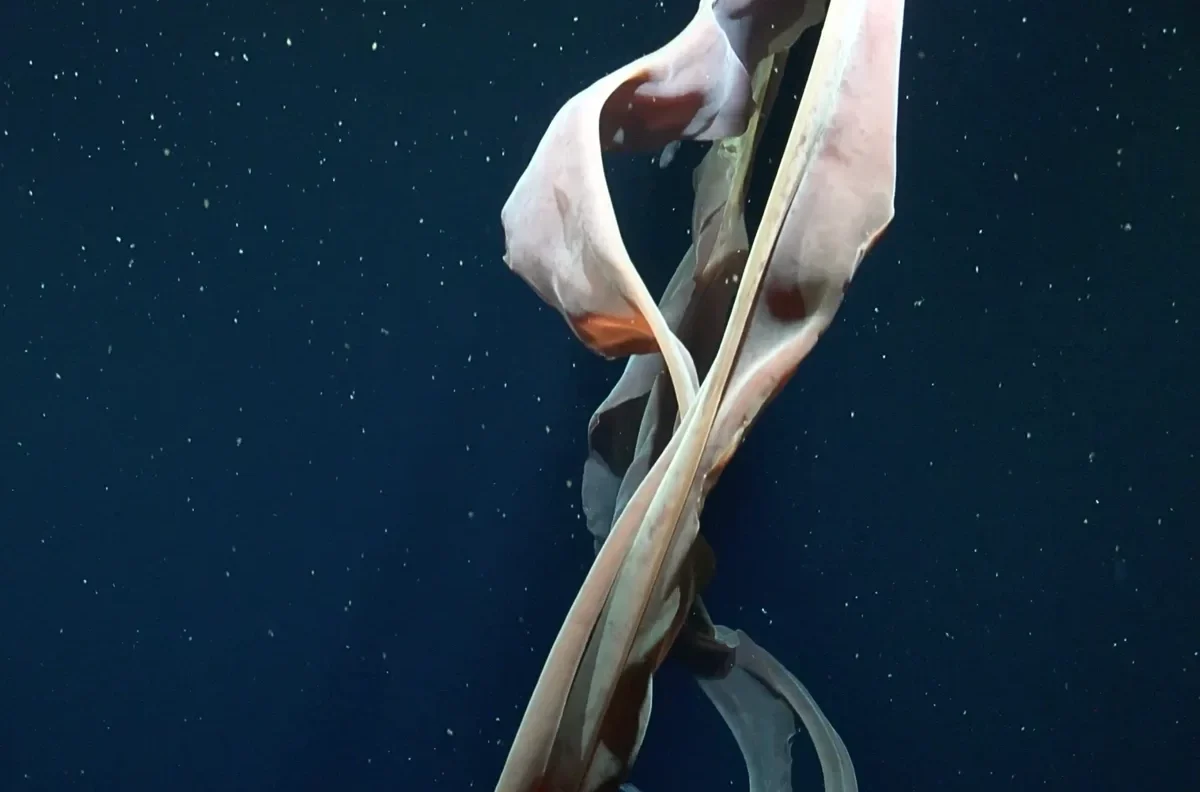
Among the most astonishing encounters was the sighting of a giant phantom jellyfish (Stygiomedusa gigantea)—one of the ocean’s most elusive creatures. Often referred to as a “ghost of the deep,” this jellyfish is rarely seen alive.
The species is notable for its sheer size. It possesses four ribbon-like arms that can extend up to 10 metres long, roughly the length of a school bus, while its bell can grow to one metre in diameter. Footage captured by SuBastian shows the massive jelly drifting silently through the pitch-black depths, a reminder of just how alien the deep ocean remains.
A Window Into a Thriving Deep-Sea Ecosystem
According to María Emilia Bravo, the expedition’s chief scientist, the richness of life encountered far exceeded expectations.
Researchers were stunned to find such high levels of biodiversity in Argentina’s deep waters, describing the experience as opening a window into an ecosystem that had remained largely hidden. The discoveries highlighted not just individual species, but entire interconnected systems working together far below the surface.
Argentina’s First Deep-Sea Whale Fall
One of the most scientifically significant discoveries was the country’s first documented deep-water whale fall, found at a depth of 3,890 metres. A whale fall occurs when a dead whale sinks to the ocean floor, creating a temporary ecosystem that can sustain marine life for decades.
These carcasses become vital food sources for deep-sea creatures such as octopuses, sharks, crabs, and specialised microbes, supporting life in an environment where food is otherwise scarce.
Cold Seeps the Size of a City
The research team surveyed waters stretching from Buenos Aires to Tierra del Fuego, with a primary focus on locating cold seeps—areas where methane and other chemicals seep from the seabed.
Cold seeps act as energy hubs for deep-sea ecosystems. Microbes feed on the chemicals, forming the foundation of food chains that support organisms like tube worms, mussels, and clams. One massive cold seep discovered during the expedition was estimated to be almost the size of Vatican City, underscoring its ecological importance.
Record-Breaking Coral Reefs
Another headline-making find was an enormous reef composed of Bathelia candida, a stony cold-water coral species. While Bathelia candida is known in the South Atlantic, the newly discovered reef extends its known range 600 kilometres further south than previously recorded.
These coral reefs provide critical shelter and breeding grounds for fish, crustaceans, and octopuses, making them biodiversity hotspots in the deep ocean.
Ancient Gardens Beneath the Waves
At the bottom of the Malvinas Trough, nearly 3,000 metres deep, scientists also documented towering sponges protecting delicate bubblegum coral gardens (Paragorgia arborea). These corals grow at an incredibly slow pace—about one centimetre per year—meaning large colonies may be hundreds of years old.
The vibrant white, red, and salmon-coloured corals form complex habitats that support a wide range of deep-sea species.
Why These Discoveries Matter
Researcher Melisa Fernández Severini emphasised that the expedition yielded an unprecedented collection of chemical, physical, and biological samples. These will help scientists understand how deep-sea ecosystems are connected and how vulnerable they may be to environmental change.
Schmidt Ocean Institute’s executive director Jyotika Virmani noted that the ocean contains 98% of Earth’s living space, yet remains largely unexplored. Each expedition continues to show that life in the ocean rivals—and may even exceed—the diversity found on land.
Frequently Asked Questions (FAQ)
What is a whale fall?
A whale fall occurs when a whale dies and sinks to the ocean floor, creating a temporary ecosystem that supports marine life for years or decades.
How deep were these discoveries made?
Some discoveries were made at depths of nearly 4,000 metres.
What is the giant phantom jellyfish?
Stygiomedusa gigantea is a rare deep-sea jellyfish with tentacles up to 10 metres long.
Why are cold seeps important?
Cold seeps provide energy for microbes that form the base of deep-sea food chains.
Why is the coral reef discovery significant?
It is the largest known Bathelia candida reef and extends the species’ known range far south.