

APC chieftain Igbokwe is worried about Obi, Atiku ahead of 2027 — here’s why

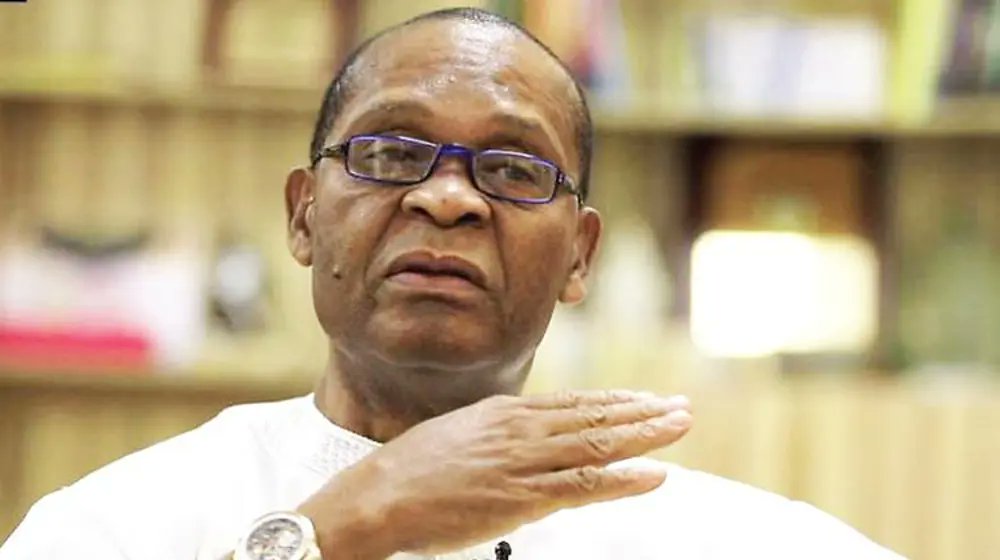
An All Progressives Congress (APC) chieftain, Joe Igbokwe, says he is worried about the politicians preparing to challenge President Bola Tinubu in the 2027 presidential election.
But rather than warning about a particular opposition candidate, Igbokwe’s comments point to something more specific: the possibility that the opposition could underestimate Tinubu’s support base while trying to build a coalition around Peter Obi and Atiku Abubakar.
In a Facebook post on Monday, Igbokwe named Obi and Atiku among those challenging the president and said he was concerned about the opposition’s assessment of Tinubu.
“I am worried about those who are challenging PBAT. They are underrating his capacity, the grace of God following him and the unlimited followers,” Igbokwe wrote.
He added: “If all Tinubu’s supporters move to vote that day, I can tell you that by 12 noon it will be over. PBAT is an enigma. If you know, you know.”
Why would an APC chieftain say he is worried?
At first glance, Igbokwe’s statement appears unusual because it comes from a member of the president’s party.
But the concern expressed in his post is not that Obi or Atiku has already established an advantage over Tinubu.
Rather, Igbokwe appears to be drawing attention to the opposition’s attempt to build a political force capable of challenging the APC, while arguing that such a challenge should not be based on an assumption that Tinubu’s supporters will stay home.
That distinction is important because opposition politicians have spent months discussing ways of avoiding the fragmentation that characterised the 2023 election.
Obi and Atiku are no longer simply 2023 rivals
The political situation surrounding Obi and Atiku has changed considerably since the last presidential election.
In 2023, Atiku contested for the Peoples Democratic Party (PDP), while Obi ran under the Labour Party. Tinubu won the election with 8,794,726 votes, followed by Atiku with 6,984,520 and Obi with 6,101,533.
The three candidates also drew their strongest support from different parts of the country.
But ahead of 2027, Atiku and Obi are now associated with different political platforms. Atiku is the presidential candidate of the African Democratic Congress (ADC), while Obi is the candidate of the Nigeria Democratic Congress (NDC).
That makes the question of opposition cooperation particularly important.
The part that may explain Igbokwe’s concern
There has been renewed discussion about whether opposition parties can eventually settle on a single candidate against Tinubu.
In September, opposition parties began discussions aimed at producing a common presidential candidate, although both Atiku and Obi were absent from the initial summit. The talks were presented as an attempt to avoid the division that affected the opposition in 2023.
The issue, however, is far from settled.
Obi recently said that any possible alliance with Atiku would have to be negotiated by their respective political parties rather than by the two candidates personally. He stressed that both men are already candidates of different parties.
At the same time, reports have indicated that both camps remain open to discussions over opposition cooperation, while questions remain about who would ultimately lead any unified platform.
This is where Igbokwe’s warning becomes relevant to the broader political contest.
If the opposition succeeds in reducing the number of major candidates competing against Tinubu, the political calculations for 2027 would be different from those of 2023.
But if the major opposition figures remain divided among different parties and tickets, they would again be competing for support separately.
Why Igbokwe mentioned Tinubu’s supporters
The strongest part of Igbokwe’s argument was not actually about Obi or Atiku.
It was about turnout.
His claim that the election would be “over” by noon if Tinubu’s supporters all came out to vote was not based on polling data or an electoral projection. It was his political assertion about the size and mobilisation of Tinubu’s support base.
That matters because elections are ultimately decided by votes cast and counted, rather than by the size of a candidate’s perceived support base.
A candidate may have a large following, but turnout, voter preferences, the strength of competing candidates and the distribution of votes across states all affect the eventual result.
Igbokwe’s statement therefore cannot by itself establish what will happen in 2027.
The opposition has a different problem this time
For Obi and Atiku, the challenge is not simply gaining support individually.
It is also determining whether the different political constituencies behind them can work together.
The 2023 election demonstrated how votes can be divided among several major candidates. Any attempt to build a single opposition platform would therefore have to deal with questions over the candidate, party structures, regional support, policy differences and the willingness of supporters to accept whatever arrangement emerges.
Those issues have already surfaced in the current coalition discussions.
For example, the ADC’s national publicity secretary previously said differences between Atiku and Obi over petrol subsidy policy could create difficulties for a proposed opposition coalition.
That shows why simply combining the names or supporters of opposition politicians does not automatically create a single electoral bloc.
So, what exactly is Igbokwe worried about?
His Facebook post does not identify a specific threat from Obi or Atiku.
Instead, it highlights what he considers a potential miscalculation by the opposition: underestimating the level of support and mobilisation available to Tinubu.
His reference to Obi and Atiku also comes at a time when both remain central to discussions about whether the opposition can unite behind a single presidential platform.
Whether that happens, and what effect it would have on the 2027 contest, remains unresolved.
For now, Igbokwe’s “worry” is best understood as a warning from within the APC camp: the opposition may be concentrating on how to unite against Tinubu without fully accounting for the support base it would have to overcome.