

Who was Abdussamad Ohida, the ISWAP leader killed in Ondo?

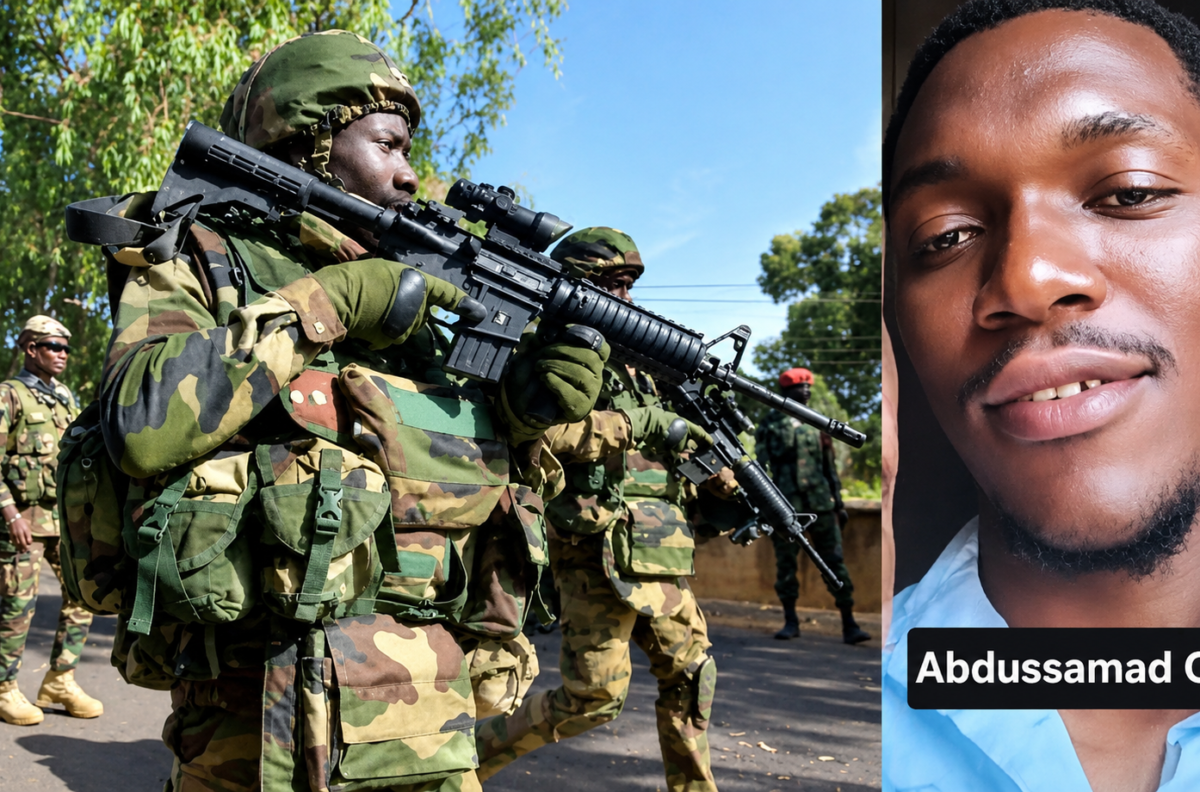
AI enhanced image from Channels TV
IThe Nigerian Army, Department of State Services (DSS) and Amotekun have killed a senior Islamic State West Africa Province (ISWAP) commander in Ondo State, in an operation that security sources said may have disrupted planned attacks in southern Nigeria.
The commander, identified as Abdussamad Ohida, also known as Anwar, was killed alongside several other suspected members of the terrorist group in Owo forest during a joint operation at the weekend.
The operation has drawn attention because of Ohida’s alleged role in ISWAP’s activities across the North-Central and southern parts of Nigeria.
Security sources also said intelligence gathered by the DSS uncovered plans to attack civilians during the forthcoming festive period and disrupt the 2027 general elections. The intelligence was reportedly corroborated by UK security partners.
But who was Ohida, how did he rise within ISWAP, and what attacks have security sources linked to him?
Who was Abdussamad Ohida?
Abdussamad Ohida was identified by security sources as a senior ISWAP commander operating across parts of North-Central and southern Nigeria.
He was also known as Anwar.
According to the sources, Ohida previously served as deputy to Abu Ikrimah, also known as Abu Uwais, who was identified as ISWAP’s leader for its Central Nigeria operations.
The DSS arrested Abu Ikrimah in 2023.
Following his arrest, Ohida reportedly assumed greater responsibility for ISWAP’s activities across parts of the country.
Security sources said he subsequently became involved in planning, coordinating and executing terrorist operations in the affected regions.
His alleged position within the group helps explain why his death has been described by security sources as a significant blow to ISWAP’s activities in central and southern Nigeria.
How did the security agencies locate him?
The operation appears to have resulted from intelligence gathering rather than a routine military patrol.
According to security sources, information obtained from the interrogation of Abu Ikrimah after his arrest helped the DSS uncover Ohida’s activities and alleged plans.
The intelligence reportedly indicated that Ohida was preparing attacks against civilians during the festive period.
The sources further alleged that the plans were connected to an attempt to disrupt the 2027 general elections.
The intelligence was subsequently corroborated by UK intelligence partners, according to the security sources.
The information eventually led security agencies to Ohida’s hideout in Owo forest.
A combined team of Nigerian Army troops, DSS personnel and Amotekun operatives then carried out the operation.
The Army’s 32 Artillery Brigade in Akure has confirmed that Ohida was killed during the joint operation.
Why was Ohida in Ondo?
Ohida’s reported presence in Owo is significant because it illustrates the security concerns surrounding the movement of terrorist networks beyond Nigeria’s traditional conflict zones.
ISWAP is primarily associated with the insurgency in the North-East.
However, security sources said Ohida was responsible for activities extending into parts of the North-Central and southern regions.
His reported operation from a forest in Ondo State therefore raises questions about how terrorist groups establish networks outside their traditional strongholds.
The security agencies’ discovery of the hideout also highlights the importance of intelligence sharing between national and sub-national security organisations.
In this operation, the Nigerian Army and DSS worked with Amotekun, the Western Nigeria Security Network established by states in the South-West.
What attacks have been linked to Ohida?
Security sources have attributed several previous attacks to Ohida.
One of the most recent was the December 31, 2025 invasion of Ipele Divisional Police Station in Owo, Ondo State.
According to the sources, attackers reportedly stole eight AK-47 rifles from the station before destroying the facility with explosives.
Ohida was also allegedly linked to an attack on a military checkpoint along the Suleja-Zuba Road in Niger State on July 28, 2022.
The attack reportedly resulted in the deaths of soldiers, other security personnel and civilians.
Security sources also attributed to him attacks on the Kuje Correctional Centre in Abuja in July 2022, Ogaminana Police Station in Kogi State in April 2022 and the Okene Area Command police station in February 2022.
A December 2020 attack on a naval checkpoint in Okene, Kogi State, was also attributed to him.
These claims came from security sources and have been reported by multiple Nigerian media organisations.
What was Ohida allegedly planning?
The most immediate concern, according to the security sources, was a planned attack during the festive period.
The sources said Ohida was preparing to attack civilians in parts of southern Nigeria.
They also alleged that the planned attacks were intended to create disruption ahead of the 2027 general elections.
That allegation has not been independently established beyond the security sources cited in reports about the operation.
However, it provides the context for why security agencies moved against Ohida before the alleged plans could be carried out.
The operation therefore was not presented simply as an attempt to eliminate an existing terrorist commander.
It was also described as a pre-emptive action based on intelligence about possible future attacks.
Why is the operation important?
The operation brings together three layers of Nigeria’s security architecture.
The Nigerian Army provides the military component.
The DSS provides domestic intelligence and counter-intelligence capabilities.
Amotekun provides a regional security presence across the South-West.
Their joint operation in Owo demonstrates how intelligence and local knowledge can be combined with military capability when security threats cross traditional boundaries.
It also highlights the importance of intelligence-led operations in dealing with terrorism.
Finding and disrupting a terrorist commander before an alleged attack occurs can prevent casualties and deny the group weapons, personnel and operational space.
Does Ohida’s death mean ISWAP has been defeated in the South?
No.
The killing of a senior commander can disrupt an organisation, but it does not automatically eliminate its network.
Terrorist groups can replace commanders, change tactics and move their operations to other locations.
Security sources described Ohida’s death as a significant disruption to ISWAP’s leadership structure and expansion efforts in central and southern Nigeria.
The more important test will be whether security agencies can identify and dismantle the wider network that supported his operations.
That could include recruiters, financiers, weapons suppliers, informants and other operatives.
It will also require continued intelligence gathering after the operation.
What does the operation mean for security in southern Nigeria?
The incident is a reminder that terrorism is not confined to one part of Nigeria.
The reported presence of an ISWAP commander in Owo forest shows why security agencies continue to monitor forests and other difficult-to-access areas.
It also reinforces the importance of cooperation between federal security agencies and state-based security structures.
For residents, the most important issue is not simply the identity of the commander killed.
It is whether the operation will prevent terrorist groups from establishing deeper networks in the South.
The answer will depend on what happens next.
Security agencies will need to determine whether Ohida’s alleged network has been dismantled, whether other members remain active and whether the intelligence that led to the operation can be used to prevent future attacks.
For now, the killing of Abdussamad Ohida represents a significant counter-terrorism operation.
But the wider security challenge remains: preventing terrorist groups from replacing one commander, rebuilding their networks and expanding into new parts of the country.