

Zenith Bank posts ₦1.26tn profit, raises dividend to ₦10: What it means for shareholders in 2026

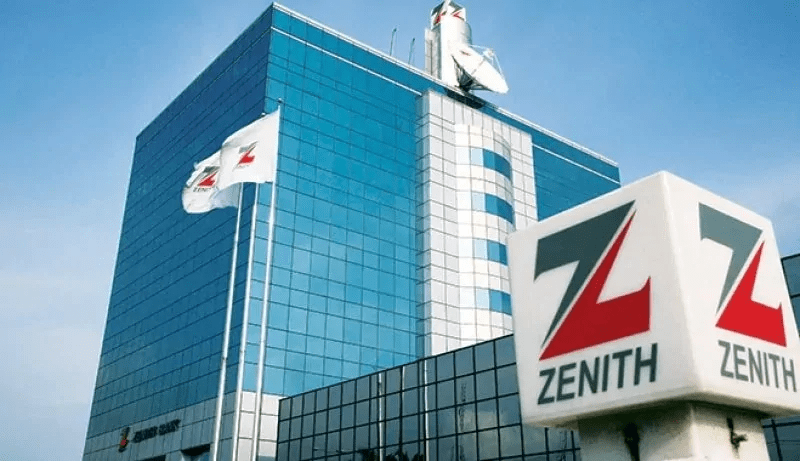
Zenith Bank posts ₦1.26tn profit, proposes ₦10 dividend
Zenith Bank Plc has once again reinforced its position among Nigeria’s most profitable lenders after posting a profit before tax of ₦1.26 trillion for the 2025 financial year, while also proposing a total dividend of ₦10 per share for shareholders.
Although the bank’s pre-tax profit came in slightly below the ₦1.33 trillion recorded in 2024, its audited 2025 results show that profit after tax edged higher to ₦1.04 trillion, underlining resilience in a year marked by foreign exchange volatility, shifting equity valuations, and a tough macroeconomic environment.
For investors, the biggest talking point is not just the trillion-naira profit, it is the sharp increase in dividend payout, which signals confidence in the bank’s liquidity strength, capital position, and earnings quality. Here is a breakdown of Zenith Bank’s 2025 financial results, what drove the numbers, and what the higher dividend means for shareholders in Nigeria’s banking sector.
Zenith Bank Reports ₦1.26tn Profit Before Tax for 2025
Zenith Bank’s audited financial statement for the year ended December 31, 2025, showed that the lender delivered a profit before tax (PBT) of ₦1.26 trillion. While this was lower than the ₦1.33 trillion achieved in 2024, the result still places the bank firmly in the league of Nigeria’s strongest-performing financial institutions.
The slight moderation in pre-tax earnings suggests that while Zenith Bank continued to generate substantial revenue, the bank also faced pressures from the broader economic landscape. These include valuation swings, exchange rate instability, and other external market risks that affected several top-tier lenders in the period under review.
Despite that dip at the PBT level, the bank maintained a strong profitability profile, proving that its operating model remains resilient even as market conditions become more unpredictable.
Profit After Tax Rises to ₦1.04tn Despite Challenging Market Conditions
One of the most notable highlights in Zenith Bank’s 2025 financial results is that profit after tax (PAT) increased slightly to ₦1.04 trillion, compared to ₦1.03 trillion in 2024.
This marginal improvement at the bottom line was largely driven by a decline in tax expenses, which dropped significantly from ₦293.96 billion in 2024 to ₦222.82 billion in 2025. In simple terms, even though Zenith Bank earned slightly less before tax than it did the previous year, it paid less tax, which helped preserve and slightly improve its net profit.
For shareholders and analysts, this is important because net profit is the figure that ultimately reflects how much value the company retained after all costs and taxes. It also provides a stronger basis for dividend decisions.
Gross Earnings Climb to ₦4.19tn as Core Revenue Remains Strong
Zenith Bank’s gross earnings rose to ₦4.19 trillion in 2025, up from ₦3.97 trillion in 2024. This increase indicates that the bank’s core revenue streams remained strong, even in a volatile environment.
Rising gross earnings typically point to sustained activity across key income lines such as interest income, fees, commissions, and other banking operations. For a large lender like Zenith Bank, this kind of growth suggests that customer activity, lending performance, and transaction volumes remained healthy.
The growth in top-line earnings also offers reassurance that the bank’s profitability was not achieved through one-off gains alone, but was supported by operational strength.
Why Total Comprehensive Income Fell Despite Strong Profit
While Zenith Bank posted strong profits, not every metric moved upward. The bank’s total comprehensive income declined sharply to ₦1.11 trillion, down from ₦1.52 trillion in 2024.
This drop was mainly caused by a foreign exchange translation loss of ₦82.13 billion in 2025. That is a major reversal from the ₦220.29 billion foreign exchange gain recorded in 2024.
Additionally, fair value gains on equity instruments fell significantly to ₦7.38 billion, compared to ₦151.01 billion in the previous year.
What this means is that while Zenith Bank remained profitable from its normal banking business, the market-related and valuation-based gains that boosted overall performance in 2024 were much weaker — or even negative — in 2025. This is a critical distinction because it shows the bank’s core business stayed strong, but external financial market factors reduced the broader total return picture.
READ ALSO
Who is Kennedy Okwudili? Meet the Zenith Bank Executive Director appointed in Major Leadership move
Zenith Bank’s Balance Sheet Expands to ₦31.46tn
Zenith Bank also recorded solid balance sheet growth, with total assets increasing to ₦31.46 trillion from ₦29.96 trillion in 2024.
This growth reflects the bank’s continued expansion in scale and financial strength. Larger assets generally mean the bank has increased its holdings in areas such as loans, investments, cash reserves, and other financial instruments.
Even more significant for long-term investors is the growth in retained earnings, which rose to ₦2.81 trillion, as well as other reserves, which climbed to ₦1.50 trillion. As a result, total shareholders’ equity increased strongly to ₦4.92 trillion, up from ₦4.03 trillion a year earlier.
This jump in equity is a strong signal of internal capital generation and balance sheet resilience, both of which matter in a period when Nigerian banks are under pressure to strengthen capital buffers and prepare for regulatory and economic shocks.
Zenith Bank Proposes ₦10 Dividend: What the Increase Means
Perhaps the most headline-grabbing aspect of Zenith Bank’s 2025 results is the board’s proposal of a final dividend of ₦8.75 per share, which is more than double the ₦4.00 final dividend paid for the 2024 financial year.
When combined with the interim dividend of ₦1.25 per share, Zenith Bank’s total dividend for 2025 comes to ₦10.00 per share.
What does an increase in dividend mean?
A higher dividend means the bank is proposing to return more cash to shareholders from its profits than it did in the previous year.
For shareholders, this can mean:
- Higher direct cash returns on the shares they hold
- A sign that the bank’s board is confident in liquidity and future earnings stability
- Improved investor sentiment, especially among income-focused investors
- Potentially stronger demand for the stock if the market views the payout as sustainable
In simple terms, if you own Zenith Bank shares, an increased dividend means you stand to receive more money per share than in the previous year, subject to shareholder approval and qualification dates.
However, investors should also understand that a bigger dividend does not automatically mean the company had a better year across all metrics. In Zenith Bank’s case, profit before tax was slightly lower, but the bank still chose to reward shareholders more aggressively because of its strong capital position, liquidity strength, and stable bottom-line performance.
Why Zenith Bank’s 2025 Results Matter for Investors
Zenith Bank’s 2025 audited results matter because they offer a clear picture of how a top-tier Nigerian bank is navigating a difficult economy.
The bank delivered:
- ₦1.26tn profit before tax
- ₦1.04tn profit after tax
- ₦4.19tn gross earnings
- ₦31.46tn total assets
- ₦4.92tn shareholders’ equity
- ₦10 total dividend per share
These numbers suggest that Zenith Bank remains fundamentally strong, even as foreign exchange-related losses and weaker fair value gains weighed on comprehensive income.
For market watchers, the results also reinforce a broader trend: Nigeria’s biggest banks are still generating strong earnings, but investors must now pay closer attention to the quality of those earnings, the impact of FX movements, and how much of the profit is being returned to shareholders.
Strong Earnings, Bigger Shareholder Reward
Zenith Bank’s 2025 financial results paint the picture of a lender that remains highly profitable, well-capitalised, and confident enough to significantly raise shareholder payouts despite a tougher operating climate.
While the slight dip in pre-tax profit and the decline in total comprehensive income may raise some analytical questions, the bank’s higher net profit, stronger equity base, expanding asset size, and increased dividend are likely to be viewed positively by many investors.
In a year where market volatility has tested financial institutions across Nigeria, Zenith Bank’s ₦10 dividend proposal may be the clearest signal yet that the bank intends to reward shareholders while preserving its reputation as one of the country’s strongest banking franchises.
FAQ
1. What is Zenith Bank’s profit for 2025?
Zenith Bank reported a profit before tax of ₦1.26 trillion for the 2025 financial year. This was slightly lower than the ₦1.33 trillion posted in 2024.
2. What is Zenith Bank’s profit after tax in 2025?
The bank posted a profit after tax of ₦1.04 trillion in 2025, up slightly from ₦1.03 trillion in 2024. The increase was helped by lower tax expenses.
3. How much dividend did Zenith Bank propose for 2025?
Zenith Bank proposed a total dividend of ₦10.00 per share for the 2025 financial year. This includes:
- Interim dividend: ₦1.25 per share
- Final dividend: ₦8.75 per share
4. What does Zenith Bank’s increased dividend mean for shareholders?
An increased dividend means shareholders are set to receive more cash per share than in the previous year. It often signals:
- Strong liquidity
- Management confidence
- Stable earnings
- Better shareholder returns
For Zenith Bank investors, the jump to ₦10 per share means a significantly higher payout compared to the prior year.
5. Why did Zenith Bank increase its dividend despite lower pre-tax profit?
Even though profit before tax fell slightly, Zenith Bank still increased its dividend because:
- Profit after tax improved
- Tax expenses declined
- Gross earnings grew
- Shareholders’ equity strengthened
- The bank maintained strong liquidity and internal capital generation
This suggests the board believes the higher payout is sustainable.
6. What was Zenith Bank’s gross earnings in 2025?
Zenith Bank recorded gross earnings of ₦4.19 trillion in 2025, up from ₦3.97 trillion in 2024. This reflects continued growth in the bank’s main revenue streams.
7. Why did Zenith Bank’s total comprehensive income fall in 2025?
Total comprehensive income fell from ₦1.52 trillion in 2024 to ₦1.11 trillion in 2025 mainly because:
- The bank recorded a ₦82.13 billion FX translation loss
- This reversed the ₦220.29 billion FX gain seen in 2024
- Fair value gains on equity instruments also dropped sharply
So, the decline was more about market and valuation effects than weakness in core operations.
8. What was Zenith Bank’s earnings per share in 2025?
Zenith Bank’s earnings per share (EPS) for 2025 stood at ₦25.32, down from ₦32.87 in 2024.
9. Did Zenith Bank grow its assets in 2025?
Yes. Zenith Bank’s total assets rose to ₦31.46 trillion in 2025, up from ₦29.96 trillion in 2024, showing continued balance sheet expansion.
10. How much is Zenith Bank shareholders’ equity in 2025?
Zenith Bank’s total shareholders’ equity increased to ₦4.92 trillion in 2025, compared to ₦4.03 trillion in 2024. This is a strong indicator of capital strength.
11. Is Zenith Bank still one of Nigeria’s most profitable banks?
Yes. With ₦1.26 trillion in pre-tax profit and ₦1.04 trillion in net profit, Zenith Bank remains one of Nigeria’s most profitable and strongest banking institutions.
12. Should investors be worried about the drop in comprehensive income?
Not necessarily. While the drop in comprehensive income is worth monitoring, it was largely caused by FX-related losses and lower fair value gains, not a collapse in core banking performance. Investors should focus on:
- Profit quality
- Dividend sustainability
- Capital strength
- Asset growth
- Future FX exposure
13. What does Zenith Bank’s 2025 result mean for the Nigerian stock market?
Zenith Bank’s results could boost investor confidence in:
- Banking stocks on the NGX
- Dividend-paying equities
- Large-cap financial institutions in Nigeria
The higher dividend may attract both retail and institutional investors looking for income and stability.