

Mexico, Korea Republic & Europe’s best: What South Africa must do to reach the knockouts

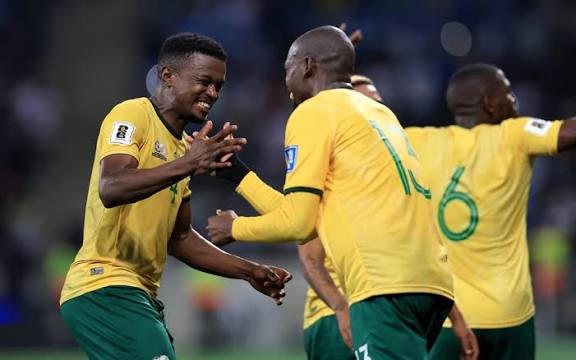
Bafana Bafana of South Africa qualified for their first World Cup since 2010. Photo Credit- www.standard.co.uk
South Africa will face a challenging but intriguing path at the 2026 FIFA World Cup after being drawn into Group A alongside Mexico, Korea Republic and the winner of the European Play-off D, which features Czechia, Denmark, North Macedonia and the Republic of Ireland. The expanded 48-team format slightly widens the knockout pathway, but the fundamentals remain unchanged: South Africa must defeat the weaker opponents and take at least one positive result off the favourites. With contrasting football styles and varying levels of international pedigree in the group, Bafana Bafana enter a contest that will demand tactical discipline, physical endurance and ruthless efficiency.
Mexico stand out as the natural favourites in the group. As co-hosts, they will enjoy packed stadiums, familiar conditions and the overwhelming advantage that historically comes with playing at home. Mexico’s World Cup experience far exceeds that of South Africa, and their squad depth remains one of their biggest strengths. Bafana Bafana will likely open their campaign against them in Mexico City, a fixture that places massive demands on conditioning due to altitude. A disciplined defensive structure, quick transitions and set-piece sharpness will be essential if South Africa hopes to secure anything from this match. A point against Mexico on their soil would be considered an outstanding outcome, but even a narrow loss could be manageable if the team maximises results elsewhere.
Korea Republic present a different kind of challenge. Renowned for their discipline, work rate and ability to play with both organisation and speed, the Koreans thrive on quick forward movement and exploiting spaces behind defence lines. Their experience on the world stage is considerable, with multiple consecutive World Cup appearances shaping a squad that knows how to manage tournament pressure. For South Africa, avoiding large gaps between midfield and defence will be crucial. Korea’s wide players and midfield creators can punish any lapse in positioning. Bafana Bafana must attempt to disrupt Korea’s rhythm early, impose physical battles in midfield and slow the tempo where possible. This fixture is winnable, but only with flawless concentration and clinical finishing.
The European play-off winner brings another layer of unpredictability to Group A. Denmark or Czechia would provide South Africa with a formidable European test. Both nations possess strong tactical structures, ball retention ability, set-piece expertise and the physical profile typical of European football. These opponents would require South Africa to remain compact, disciplined and selective in pressing triggers. On the other hand, North Macedonia or the Republic of Ireland represent more favourable matchups. Ireland, while physical and organised, have struggled for consistent results. North Macedonia have produced memorable upsets in recent years but lack the depth and stability of top-tier European sides. Securing victory against whichever team emerges from Play-off D will be essential for South Africa’s hopes of reaching the knockout stages.
Head-to-head history provides limited guidance, although it offers context. South Africa memorably drew 1–1 with Mexico in the opening match of the 2010 World Cup in Johannesburg. Encounters with Korea Republic have been fewer, and the Koreans generally hold the edge tactically. Meetings with the European playoff contenders are sparse and too distant to offer meaningful predictive value. The emphasis for Bafana Bafana must therefore fall on preparation, scouting and flexibility rather than historical results. Adaptability will be a decisive factor in navigating such diverse styles of play.
Current form and rankings indicate that South Africa enter the tournament as underdogs. Recent FIFA ranking windows place Mexico and Korea Republic comfortably ahead of Bafana Bafana. Yet South Africa’s recent performances offer cause for optimism. A convincing 3–1 victory over Zambia in late 2025 reflected growing cohesion and confidence within the team. Momentum, belief and tactical clarity will play significant roles heading into the tournament, especially against technically superior opposition.
To progress from the group, South Africa must adopt a clear tactical blueprint. The most realistic pathway involves securing three points against the European play-off winner, targeting a draw or narrow win against Korea Republic, and remaining compact enough against Mexico to avoid conceding heavily. Compact defending, mastery of set-pieces and intelligent in-game adjustments will shape South Africa’s chances. Squad rotation will also be important due to the travel distances and climatic variations expected across the North American venues.
Realistically, South Africa’s ceiling ranges from a second-place finish with an upset result to a fourth-place exit if concentration wavers. But the group is not unwinnable. The margins between success and disappointment will depend on execution, discipline and the ability to take chances when they come. Bafana Bafana have the underdog spirit and recent form to make a statement on the world stage.
Confirming the identity of the European play-off opponent in March will sharpen South Africa’s preparations further. In addition, the pre-tournament friendlies and domestic league form of key players will influence the final squad balance. As 2026 approaches, South Africa must refine its tactical identity, strengthen its transitions and prepare mentally for three very different styles of football. Group A promises drama, unpredictability and opportunity—and Bafana Bafana will believe they can rise to the moment.
FAQ Section
1. Who are South Africa’s opponents in Group A at the 2026 World Cup?
South Africa will face Mexico, Korea Republic and the winner of the European Play-Off D (Czechia, Denmark, North Macedonia or the Republic of Ireland).
2. What are South Africa’s chances of qualifying from Group A?
South Africa can qualify if they beat the European play-off winner and take at least one positive result from Mexico or Korea Republic. Progress is possible but requires disciplined tactics.
3. How does South Africa’s head-to-head history compare with Mexico?
The most famous meeting was the 1–1 draw in the 2010 World Cup opener. Mexico, however, traditionally boast stronger World Cup experience and squad depth.
4. How tough is the match against Korea Republic likely to be?
Korea Republic are disciplined, fast and experienced in major tournaments. South Africa must be tactically disciplined and clinical to get a result.
5. Which European playoff team would be the hardest opponent for South Africa?
Denmark and Czechia would pose the biggest challenges due to their tactical structure and physicality. North Macedonia and Ireland are more favourable matchups.
6. How is South Africa performing ahead of the tournament?
Bafana Bafana’s recent 3–1 victory over Zambia suggests growing confidence and cohesion. Their form shows promise ahead of the 2026 tournament.
7. What style of play must South Africa adopt to progress?
South Africa must remain defensively compact, maximise set-pieces, control transitions and avoid leaving spaces behind the midfield. Efficiency in finishing will be crucial.
8. When will the final European playoff opponent be confirmed?
The winner of Play-Off D will be announced following the UEFA playoff finals in early 2026.
9. What is South Africa’s biggest obstacle in Group A?
Mexico’s home advantage and Korea Republic’s physical, structured approach present major challenges. Depth and discipline will determine Bafana’s survival.
10. Can South Africa spring a surprise in this group?
Yes — World Cups often produce unexpected results. If South Africa maintain momentum, avoid conceding early, and convert chances, a second-place finish is achievable.