

Why did Starbucks Baristas go on Strike, and Why are many now Returning to Work?

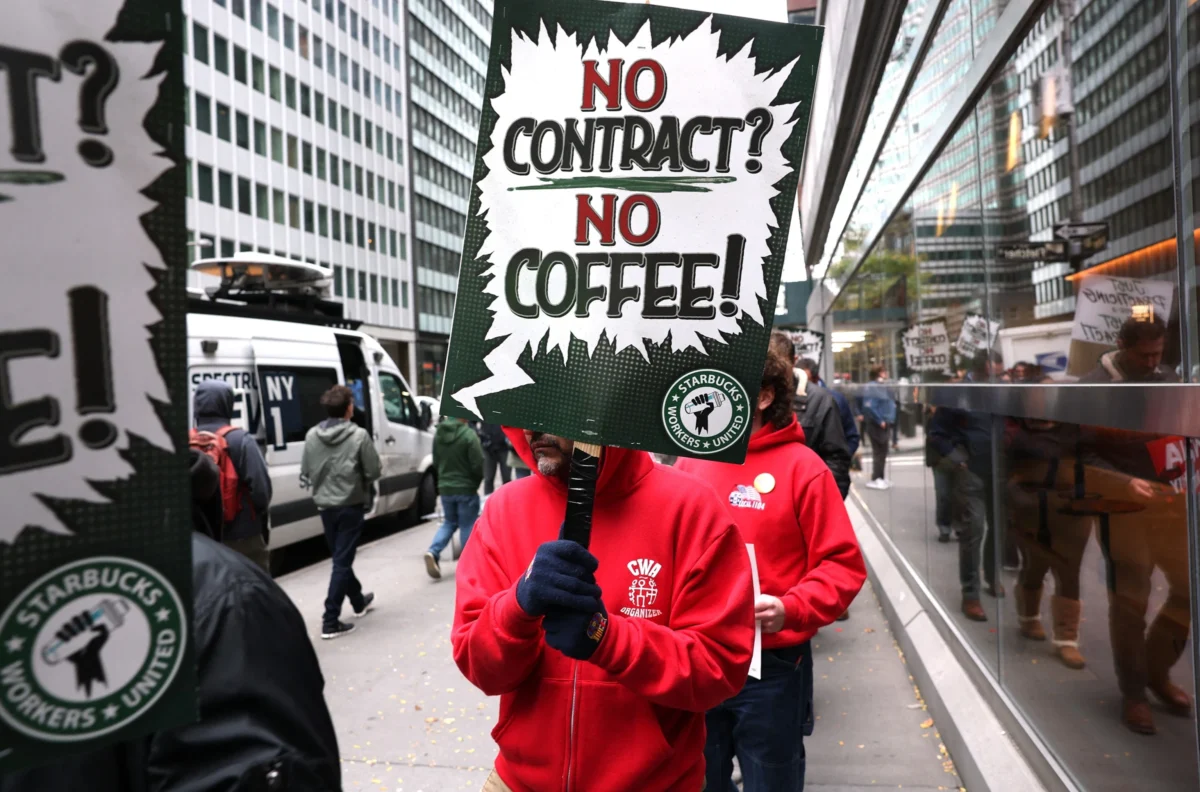
Starbucks workers strike at some stores nationwide in ‘Red Cup rebellion,’ union says. Image Credit: Timothy A. Clary/AFP via Getty Images, FILE
After nearly six weeks of nationwide labor action, the majority of Starbucks baristas who walked off the job are beginning to return to work, but the reasons behind the strike remain unresolved. The labor dispute, which began on Nov. 13, has highlighted long-running tensions between Starbucks and its unionized workforce over pay, scheduling, and alleged labor law violations.
While Starbucks and the union representing baristas, Starbucks Workers United, confirm that many employees are resuming duties, roughly one-quarter of striking workers remain on strike, signaling that the conflict is far from settled.
What Sparked the Starbucks Strike in November?
The Starbucks strike began on Red Cup Day, one of the company’s busiest promotional events of the year, when thousands of unionized baristas walked out in protest. Workers say the timing was intentional, designed to draw attention to stalled contract negotiations that have dragged on for years without producing a first collective bargaining agreement.
According to Starbucks Workers United, baristas went on strike over:
- Low take-home pay
- Insufficient and unpredictable work hours
- Unresolved unfair labor practice allegations
- Slow progress in contract negotiations
The union says it has filed more than 1,000 unfair labor practice charges against Starbucks, alleging violations of federal labor law.
READ ALSO
Are Post Offices open on Christmas Eve and Dec. 26? What Trump’s New Holiday Order means for USPS
Why Are Starbucks Baristas Returning to Work Now?
Starbucks Chief Partner Officer Sara Kelly told employees in a letter that the union recently issued a return-to-work notice. According to the company, workers at 166 of the 215 stores originally listed for strike action asked to return to work unconditionally, meaning under existing employment terms.
The union confirmed the move, describing it as a strategic shift rather than an end to the strike.
Christi Gomoljak, a striking barista in California, characterized the return as “a shift change on the strike line,” explaining that some workers are returning to stabilize their finances and organize internally while negotiations continue.
How Many Starbucks Workers Are Still on Strike?
Despite the return of many employees, Starbucks Workers United says about 25% of baristas remain on strike, with the possibility that more workers could rejoin picket lines in January if bargaining does not advance.
As of last week, the union said more than 4,500 baristas nationwide were participating in an unfair labor practice strike.
Political Support and ‘Camp Contract’ Protests
The strike has drawn growing political attention, particularly in Starbucks’ hometown of Seattle. Elected officials including Seattle City Council members, Washington state Democratic leaders, and U.S. Rep. Pramila Jayapal publicly joined rallies outside Starbucks headquarters.
These demonstrations led to the formation of “Camp Contract,” a temporary protest encampment near the company’s corporate offices. The camp disbanded earlier this week due to weather conditions, but union leaders say public pressure has helped keep negotiations in the spotlight.
Starbucks’ Response to the Strike
Starbucks maintains that progress has been made, citing more than 30 tentative agreements reached with Workers United. However, no comprehensive contract has yet been finalized.
Kelly suggested that the reduced strike activity may indicate the union is ready to return to negotiations. She also raised concerns about safety incidents during protests, including blocked entrances and delivery disruptions, allegations the union strongly disputes, insisting all actions have been peaceful and legally protected.
What Happens Next for Starbucks and Its Workers?
Despite the partial return to work, union activity continues to expand. On Tuesday alone, workers at 19 additional Starbucks locations filed petitions to hold union elections. More than 560 Starbucks stores nationwide are now unionized, underscoring the growing labor movement within the company.
For now, the strike remains open-ended, with workers and management still divided over key issues at the bargaining table.
FAQ
Why did Starbucks baristas go on strike?
Baristas struck over pay, insufficient work hours, alleged labor law violations, and delays in reaching a first union contract.
When did the Starbucks strike start?
The strike began on Nov. 13, coinciding with Starbucks’ Red Cup Day promotion.
Are Starbucks workers still on strike?
Yes. While most have returned to work, about 25% remain on strike, with the possibility of renewed action.
Why are some baristas returning to work?
Workers are returning to stabilize their income, organize internally, and continue pressuring management while negotiations continue.
Has Starbucks reached a union contract yet?
No. Despite dozens of tentative agreements, a final collective bargaining agreement has not been signed.
How many Starbucks stores are unionized?
More than 560 U.S. Starbucks locations are currently unionized.
Could the Starbucks strike resume in 2026?
Yes. The union says additional strike actions could occur if talks do not progress.