

Why Godswill Akpabio represented Tinubu in Lagos finally explained as Senate President speaks at Sanwo-Olu project commissioning

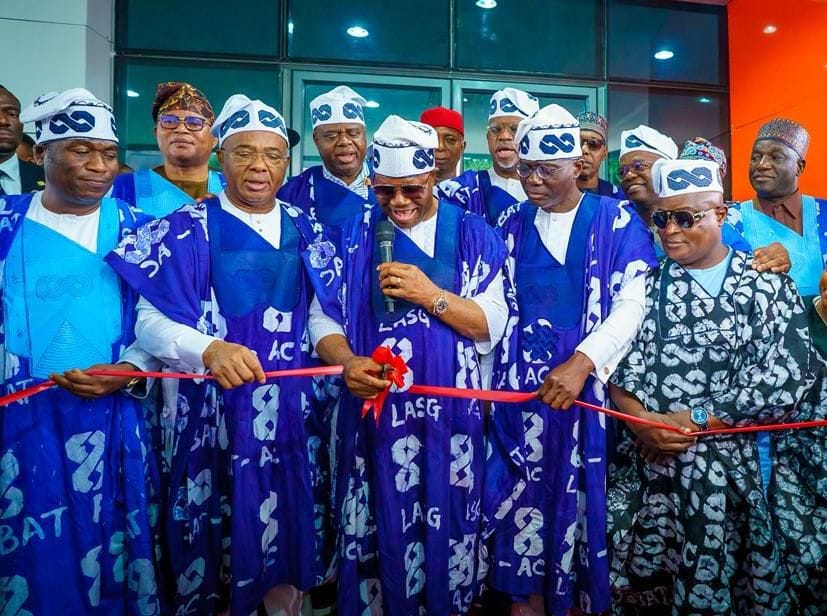
Godswill Akpabio explains Tinubu’s absence at Lagos project commissioning
Senate President Godswill Akpabio has explained why he represented President Bola Ahmed Tinubu at the commissioning of major infrastructure projects executed by Lagos State Governor Babajide Sanwo-Olu, ending speculation over the president’s absence at a high-profile event in Nigeria’s commercial capital.
Akpabio spoke on Wednesday, April 8, 2026, during the inauguration of the Opebi-Ojota Link Bridge and the e-GIS complex in Lagos, where many political observers had expected President Tinubu to appear in person. Instead, the Senate President attended as the president’s official representative and used the platform to explain both Tinubu’s absence and his own role at the ceremony.
The event immediately drew public attention, especially after Governor’s Advisory Council (GAC) Chairman, Prince Tajudeen Olusi, publicly noted that he would have loved to see Tinubu at the project commissioning. Akpabio responded directly, saying the demands of the presidency often make it impossible for Tinubu to attend every event, no matter how important.
Akpabio Says Tinubu’s Presidential Duties Made His Presence Impossible
According to Akpabio, the key reason he represented Tinubu was simple: the “exigencies” of the president’s office.
Addressing guests at the event, the Senate President said that while many in Lagos would naturally want to see Tinubu at such a major commissioning, becoming president means he now belongs not only to Lagos but to the entire country and the global community. Akpabio noted that the office of the president carries enormous responsibilities, making it unrealistic to expect Tinubu to be physically present at every public function.
In his remarks, Akpabio referenced Olusi’s emotional comment about wanting to see “his son” Tinubu, then explained that if Lagos leaders had long predicted and supported Tinubu’s rise to the presidency, they also had to accept that the office would inevitably make him less accessible for local appearances. The statement was both political and symbolic, framing Tinubu’s absence not as a snub, but as a consequence of national duty.
This explanation is likely to resonate with many within the ruling All Progressives Congress (APC), especially at a time when Tinubu’s public schedule remains under intense scrutiny due to ongoing governance, economic, and political engagements across the country.
Why Akpabio Said He Was the Best Person to Represent Tinubu in Lagos
Beyond explaining the president’s absence, Akpabio also offered a striking reason for why he personally was chosen to represent Tinubu at the Lagos event.
The Senate President said his strong personal and professional connection to Lagos made him uniquely qualified to stand in for the president. In a remark that quickly attracted attention, Akpabio described himself as “a Lagosian”, stating that he has lived in Lagos for decades and is deeply familiar with the city’s development journey.
Akpabio said he has lived “right behind Bourdillon” for the past 30 years and has worked in areas such as Ajose-Adeogun, adding that he knows key parts of Lagos including Opebi and Allen. By invoking these locations, he positioned himself not merely as a federal official sent to represent Tinubu, but as someone with a long-standing personal understanding of Lagos and its transformation.
This arguement formed the core of his justification: if a major infrastructure project showcasing democratic dividends was being unveiled in Lagos, then the Senate President, someone familiar with both the national political context and the city’s growth, was, in his view, the right person to deliver the president’s message.
The Lagos Projects Akpabio Commissioned on Tinubu’s Behalf
Akpabio represented Tinubu at the commissioning of two major Lagos State projects: the Opebi-Ojota Link Bridge and the e-GIS complex.
The Opebi-Ojota Link Bridge is a significant transport infrastructure project expected to improve mobility and reduce traffic pressure in a critical part of Lagos. Given the city’s long-standing congestion challenges, the bridge has been framed by the Sanwo-Olu administration as a major intervention in urban connectivity and quality of life.
The e-GIS complex, on the other hand, reflects the state government’s push toward digital governance and land administration modernization. The project is seen as part of Lagos State’s broader efforts to improve planning, mapping, documentation, and service delivery through technology-driven systems.
By commissioning both projects, Akpabio effectively delivered the federal endorsement of Sanwo-Olu’s infrastructure agenda, while reinforcing the political alignment between Lagos State and the presidency.
READ ALSO
Tinubu approves ₦3.3tn power debt plan: Will Nigerians finally get more stable electricity?
What Akpabio’s Representation Signals in Lagos and National Politics
Politically, Akpabio’s appearance in Lagos carries significance beyond the ceremonial commissioning of projects.
As Senate President, Akpabio is one of the most powerful figures in the current federal political structure. His presence at a Lagos event in place of Tinubu signals continuity within the ruling establishment and reinforces the close ties between the presidency, the National Assembly leadership, and Lagos political power brokers.
The event itself brought together several influential figures, including governors, lawmakers, and top Lagos political leaders such as Prince Tajudeen Olusi, Mudashiru Obasa, Senator Wasiu Eshinlokun, and Abike Dabiri-Erewa. That lineup suggests the ceremony was not just about infrastructure—it was also a visible display of elite political unity within Tinubu’s orbit.
At a time when political messaging matters deeply ahead of future alignments and governance narratives, Akpabio’s role can be read as both practical and strategic. Practically, he filled in for the president. Strategically, he helped ensure the event still carried federal weight and national attention.
Why Tinubu’s Absence Still Sparked Public Interest
Despite Akpabio’s explanation, Tinubu’s absence from the Lagos event still became a talking point because of the symbolic importance of the projects and the political meaning attached to Lagos.
Lagos remains Tinubu’s most important political base and a city where his presence often carries deep symbolic value. So, when a high-profile Sanwo-Olu project was being commissioned, many naturally expected the president to attend in person—especially with key party elders and political stakeholders present.
That expectation is why Akpabio’s remarks quickly made headlines. His explanation was not just about logistics; it was also about managing political perception. By stressing that Tinubu now serves a national mandate, Akpabio sought to reframe the absence as a sign of the presidency’s broader responsibilities rather than any political distance from Lagos or the Sanwo-Olu administration.
Akpabio’s ‘Lagosian’ Comment Adds a Personal Twist
One of the most memorable moments from the event was Akpabio’s declaration that the “Senate President himself is a Lagosian.”
That comment added a personal and somewhat unexpected layer to the story. While Akpabio is widely known for his political roots in Akwa Ibom State, he used his long residency and working history in Lagos to underscore his closeness to the city. This rhetorical move helped him bridge the gap between a federal representation role and the local significance of the event.
In political communication terms, it was a smart line: it made his presence feel less like a substitute and more like a familiar voice speaking on behalf of the president in a city both men are strongly associated with in different ways.
What This Means Going Forward
Akpabio’s explanation appears designed to settle questions about why Tinubu did not personally attend the commissioning of Sanwo-Olu’s projects in Lagos. The message from the Senate President was clear: Tinubu’s absence was due to the heavy demands of the presidency, while his own deep connection to Lagos made him a fitting representative.
For political watchers, however, the moment will likely continue to be analysed beyond the official explanation. In Nigeria, ceremonial appearances often carry meaning far beyond the podium, especially when they involve Lagos, the presidency, and key figures within the APC power structure.
FAQ
1. Why did Godswill Akpabio represent President Tinubu in Lagos?
Godswill Akpabio said he represented President Bola Tinubu at the commissioning of Sanwo-Olu’s Lagos projects because of the “exigencies of the president’s office.” According to him, Tinubu’s responsibilities as president make it difficult for him to attend every engagement personally.
2. Why was Tinubu absent from the Lagos project commissioning?
Tinubu was absent because, according to Akpabio, the demands of the presidency and his broader national obligations prevented him from attending the event in person. Akpabio said that once Tinubu became president, he effectively became accountable to the whole nation and global community, not just Lagos.
3. What did Akpabio say about representing Tinubu in Lagos?
Akpabio said he was a suitable representative because he understands Lagos well, has lived there for decades, and knows areas such as Bourdillon, Ajose-Adeogun, Opebi, and Allen. He argued that he was in a strong position to appreciate and communicate the significance of the projects to a wider audience.
4. Did Akpabio really say he is a Lagosian?
Yes. During the event, Akpabio described himself as “a Lagosian”, explaining that he has lived in Lagos for about 30 years and has a long personal and professional connection to the state.
5. What projects did Akpabio commission on Tinubu’s behalf?
Akpabio commissioned the Opebi-Ojota Link Bridge and the e-GIS complex in Lagos on behalf of President Tinubu. Both projects were executed by the Lagos State government under Governor Babajide Sanwo-Olu.
6. What is the Opebi-Ojota Link Bridge?
The Opebi-Ojota Link Bridge is a major Lagos infrastructure project designed to improve urban connectivity and reduce traffic congestion in key parts of the city. It is one of the flagship projects recently unveiled by the Sanwo-Olu administration.
7. What is the e-GIS complex in Lagos?
The e-GIS complex is part of Lagos State’s digital governance and land administration modernization drive. It is expected to support improved mapping, planning, documentation, and digital service delivery in the state.
8. What did Tajudeen Olusi say at the event?
Prince Tajudeen Olusi, the Chairman of the Governor’s Advisory Council (GAC), reportedly said he would have loved to see President Tinubu at the event. Akpabio responded to that remark by explaining why the president could not attend.
9. Who attended the Lagos project commissioning apart from Akpabio?
The event was attended by several top political figures, including governors, federal lawmakers, and Lagos political leaders such as Prince Tajudeen Olusi, Mudashiru Obasa, Senator Wasiu Eshinlokun, and Abike Dabiri-Erewa.
10. Is there any political meaning behind Akpabio representing Tinubu?
Yes, many analysts may interpret it as both practical and political. Practically, Akpabio stood in for Tinubu. Politically, his presence reinforced the close relationship between the presidency, the National Assembly leadership, and Lagos political structures within the APC. However, the official reason given was the president’s schedule and office demands.
11. Why did Akpabio’s statement trend online?
Akpabio’s explanation trended because many Nigerians were curious about Tinubu’s absence from a major Lagos event. His comments about the president belonging to “Nigeria and the global community,” as well as his claim of being “a Lagosian,” made the moment especially newsworthy.
12. What does this mean for Sanwo-Olu and Lagos politics?
The event suggests continued political alignment between Governor Sanwo-Olu’s administration and the Tinubu-led federal structure. Akpabio’s presence helped preserve the significance of the commissioning and reinforced federal support for the Lagos projects.