

Who’s the next Olubadan — how is he selected? Here’s all to know
- Features Top Stories
crispng
- August 24, 2025
- 1157
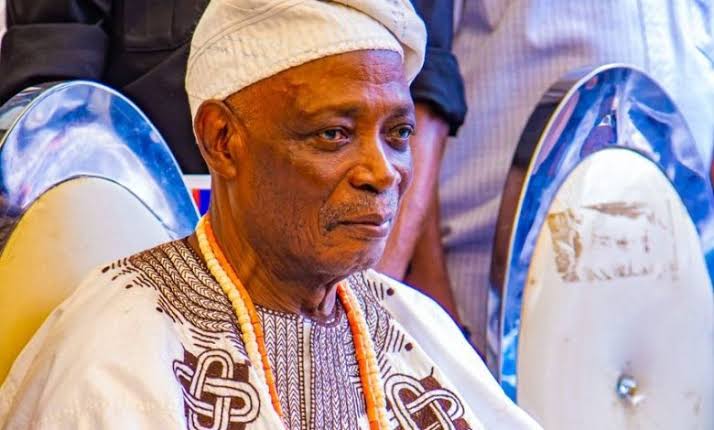
The ancient city of Ibadan has once again been thrown into a moment of reflection, cultural anticipation, and subtle political maneuvering following the demise of the Olubadan of Ibadanland, His Imperial Majesty Oba Lekan Balogun. As mourning begins, the focus also shifts to one of Nigeria’s most fascinating and transparent traditional succession systems — the Olubadan chieftaincy arrangement — a structure that uniquely blends seniority, nobility, and historical legacy. At the centre of unfolding events is the name of former Oyo State Governor and respected High Chief, Rashidi Ladoja, a prominent figure in the royal line whose ascension, many believe, is imminent — but not without controversy.
The Olubadan Succession System: A Tradition of Merit and Structure
Unlike many other Yoruba monarchies where royal families engage in competitive selection or ruling houses take turns, Ibadan boasts a rare linear chieftaincy system rooted in a two-line rotation: the Egbe Agba (civil) line and the Balogun (military) line. These two lines ascend alternately through 22 rungs of high chiefdom before culminating in the Olubadan stool.
Each candidate climbs the ranks through years of service, patience, and community recognition, meaning succession is less about royal birth and more about sustained dedication to Ibadan’s socio-political fabric. This method reduces succession crises and ensures that every Olubadan has undergone a long leadership tutelage before ascending the throne.
At the demise of an Olubadan, the next most senior high chief from the alternate line becomes the natural successor. This system is codified under the Ibadan Chieftaincy Declaration and has earned Ibadan national admiration for its clarity.
Who is Next? Spotlight on Rashidi Ladoja
With Oba Balogun from the Balogun line now deceased, the succession rotates back to the Egbe Agba (civil) line, where High Chief Rashidi Adewolu Ladoja, the current Otun Olubadan, is the most senior chief and next in line.
Ladoja is no stranger to power. A former governor of Oyo State (2003–2007), he is also a businessman, political strategist, and respected elder statesman. His long-standing position on the Olubadan line, currently Otun Olubadan (the highest position before becoming Olubadan from the civil line), technically places him as the heir apparent.
However, Ladoja’s road to the throne has not been entirely smooth. His past rejection of the 2017 Ibadan chieftaincy reforms — which attempted to elevate high chiefs to crown-wearing monarchs — pitched him against then-Governor Abiola Ajimobi and some of his fellow high chiefs, including the late Oba Balogun. Though the Supreme Court eventually nullified the controversial reforms, that moment carved a complex wedge in Ibadan’s traditional council.
READ ALSO
Oba Olakulehin: What to know about the late Olubadan
Olubadan of Ibadanland, Oba Olakulehin, dies at 90
The Ladoja Dilemma: Tradition vs Politics
While tradition clearly supports Ladoja’s emergence, there are lingering questions:
Will Ladoja accept the crown now, given past criticisms about the politicization of the stool?
Will his earlier opposition to the 2017 reform influence the position of other high chiefs or the Oyo State government?
Could political undercurrents attempt to delay or contest his ascendancy despite his traditional right?
Sources within the Ibadan traditional council suggest that the process is already in motion and that the Olubadan-in-Council will soon formally present Ladoja’s nomination to the Oyo State Governor for approval. While the Governor cannot outrightly appoint or reject a nominee, he is empowered to give formal consent in line with the Chiefs Law.
The State’s Role and Possible Delays
Under Oyo State law, once the next Olubadan is selected by the council, the state governor must approve and present the staff of office. Historically, this is procedural. However, given past frictions and the political identity of the incoming candidate, observers worry that state influence could delay or politicise what is typically a straightforward cultural process.
Governor Seyi Makinde, known for his respect for traditional institutions, has yet to make any public comment since the passing of Oba Balogun. Analysts believe his next steps — particularly toward Ladoja, who has at times been politically opposed to him — will send strong signals about the future of traditional authority in Oyo State.
A Legacy of Peaceful Transitions
Despite potential tensions, Ibadan remains one of the few traditional settings in Nigeria where royal succession rarely ends in crisis. Since the reign of Oba Isaac Akinyele in 1955, the Olubadan stool has seen a structured, almost mechanical, transition process.
Ibadan’s people remain confident that their city’s legacy of peaceful royal succession will continue — and that, should tradition prevail, High Chief Rashidi Ladoja may soon be addressed as Oba Rashidi Ladoja, Olubadan of Ibadanland.
More Than Just a Crown
The emergence of a new Olubadan is not merely a ceremonial replacement. It represents the continuity of history, the dignity of a people, and the strength of a well-thought-out traditional system. As Ibadan prepares to bury one king and enthrone another, the entire Yoruba race — and indeed Nigeria — watches with interest, eager to witness whether politics or protocol will prevail in the historic city once again.