

UTME/JAMB 2026: 7 courses Nigerian students should avoid

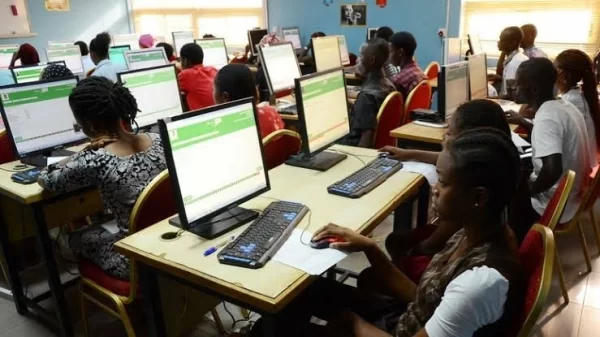
JAMB fixes June 28 for mop-up UTME exam nationwide.
Ahead of the 2026 Unified Tertiary Matriculation Examination (UTME), thousands of Nigerian students are carefully selecting courses that will shape their future careers. While passion remains important, the realities of today’s rapidly evolving global economy demand that students also consider relevance, employability, technological advancement, and adaptability.
It is important to state clearly that no course is entirely “useless.” However, some fields—if studied without modernization, specialization, or complementary skills—may limit opportunities in today’s digital and innovation-driven age. Below is a comprehensive guide to courses students should approach with caution, especially if they lack a clear strategy for adapting them to current realities.
Purely Theoretical Social Science Degrees (Without Technical Skills)
Courses such as Sociology, Anthropology, Political Science (without data or policy specialization), and Philosophy remain intellectually valuable and socially important. They help students understand society, governance, ethics, and human behavior. However, in Nigeria’s current job market, many graduates struggle because these degrees are often pursued without adding practical, in-demand skills.
The labor market increasingly rewards measurable and technical competencies. Graduates who lack skills in data analysis, public policy evaluation, digital research tools, project management, or strategic communication may find themselves competing for limited administrative or clerical roles. To remain competitive, students in these fields should consider combining their studies with data science, public policy analytics, media strategy, or development studies to increase their employability.
Library and Information Science (Without Digital Focus)
Library and Information Science is another course that requires careful consideration. Traditional library systems are shrinking as institutions move toward digital repositories and automated cataloguing systems. While information management is still relevant, the structure of the profession has changed significantly.
Students who study this course without focusing on digital archiving, information technology, database management, or cybersecurity may face limited job prospects. As automation replaces many traditional library roles, graduates must position themselves within digital knowledge management systems and emerging information technologies to remain relevant.
Home Economics (Without Entrepreneurship or Food Technology)
In many institutions, Home Economics is still taught in traditional formats that may not align with modern industry needs. Without integration into nutrition science, hospitality management, food technology, interior design, or fashion entrepreneurship, graduates may find limited structured employment opportunities.
The course itself is not outdated, but its presentation must evolve beyond basic domestic training. Students who modernize this field through entrepreneurship, branding, product development, or agribusiness innovation are more likely to thrive than those who rely solely on traditional academic pathways.
Mass Communication (Without Digital Media Skills)
Mass Communication remains one of the most popular courses among UTME candidates. However, the media industry has undergone a major transformation due to digital disruption. Traditional print journalism roles are shrinking, and media organizations now prioritize digital content creation and multimedia storytelling.
Students who study Mass Communication without acquiring skills in multimedia editing, data journalism, digital marketing, search engine optimization (SEO), and content analytics may struggle to compete. To remain relevant, aspiring media professionals must align themselves with digital platforms, strategic communication, and technology-driven storytelling models.
Religious Studies (Without Academic or Clerical Path)
Courses such as Christian Religious Studies and Islamic Studies are valuable for spiritual growth, ethical understanding, and cultural awareness. However, outside religious institutions or academic environments, career paths can be limited.
Unless students combine Religious Studies with counseling, education, nonprofit management, philosophy, or social development work, employment opportunities may be narrow. Students considering these fields should have a clear career trajectory in mind before making their choice.
History and Diplomatic Studies (Without International Relations Skills)
History plays a crucial role in understanding societal development and national identity. However, studying History or Diplomatic Studies without integrating international relations, security studies, policy analysis, or research methodology may restrict job opportunities.
Modern diplomacy and governance increasingly require data intelligence, economic policy knowledge, and security expertise. Students who fail to combine historical knowledge with contemporary global skills may find it difficult to compete in today’s international and policy-driven job market.
Education Degrees (Without STEM or Technical Focus)
Education remains one of the most important professions in any society. However, general education degrees in oversaturated subject areas may face employment limitations. In Nigeria, there is already underemployment among teachers in certain disciplines.
At the same time, there is growing demand for STEM educators, special needs education specialists, and technical and vocational instructors. Students who choose education-related courses should carefully examine market demand and consider specializing in high-need subject areas to improve their career prospects.
The Bigger Issue: Skill Gap, Not Just Course Choice
The central issue is not necessarily the course itself, but the widening skill gap between university education and industry needs. Many curricula remain outdated and disconnected from the demands of modern employers. Certificates alone no longer guarantee employability.
In today’s economy, skills often matter more than degrees. A student studying Philosophy who acquires coding or data analysis skills may be more employable than a Computer Science graduate without practical competence. Adaptability, continuous learning, and technical proficiency are now essential.
Courses with Stronger Market Relevance in 2026
As UTME 2026 approaches, students may consider exploring fields aligned with emerging global trends. Courses related to Artificial Intelligence, Data Science, Software Engineering, Cybersecurity, Renewable Energy Engineering, Mechatronics, Health Technology, Digital Marketing, Agritech, Financial Technology, and Environmental Sustainability reflect the direction of the global and Nigerian economies.
These sectors are shaped by digital transformation, automation, climate change adaptation, and technological innovation. Students who align their studies with these evolving industries may have stronger employment prospects in the coming years.
Final Advice to UTME Candidates
Before selecting a course, students should research job market trends, consider global technological shifts, and think beyond immediate passion toward long-term sustainability. Planning for complementary certifications and digital skills is essential, regardless of the field chosen.
The world is changing rapidly. Automation, artificial intelligence, and digital transformation are reshaping industries across sectors. Students who choose courses without considering relevance may find themselves needing to retrain soon after graduation.
As UTME 2026 approaches, candidates must move beyond tradition and sentiment. The goal is not just to gain admission into a university, but to secure a future that is competitive, adaptable, and economically viable. In this age, the smartest choice is not merely what to study—but how strategically and innovatively it is studied