

USS Tripoli rushed to Middle East as U.S. sends Marines, warships and F-35s toward Iran

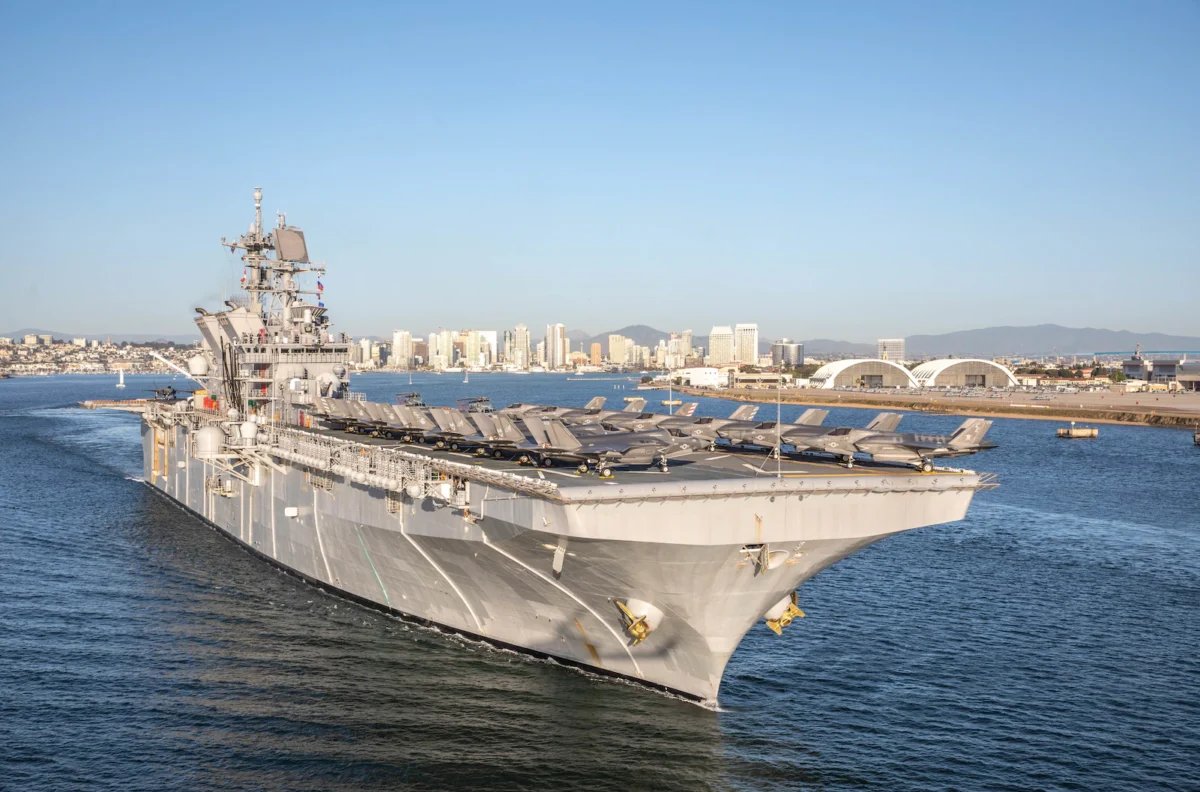
USS Tripoli deploys to Middle East with Marines and F-35s
The USS Tripoli is heading to the Middle East in a major new show of force as the United States ramps up military operations tied to the ongoing Iran war. The deployment, confirmed in multiple reports Friday, marks a significant escalation in U.S. regional posture and could place thousands of Marines, several warships, and F-35 fighter jets closer to one of the world’s most volatile maritime chokepoints.
The move underscores how rapidly the conflict is widening beyond air and naval strikes. With Iran continuing to threaten shipping in the Strait of Hormuz, Washington is now repositioning amphibious and expeditionary assets that could support not only sea control and deterrence, but also possible ground operations if ordered. For military watchers, energy markets, and global shipping companies, the arrival of the USS Tripoli Amphibious Ready Group could become one of the most consequential developments yet in the opening phase of the conflict.
USS Tripoli Deployment Signals Major U.S. Military Escalation in the Middle East
Defense Secretary Pete Hegseth has reportedly approved a request from U.S. Central Command (CENTCOM) to send an element of an amphibious ready group and an attached Marine Expeditionary Unit to the Middle East as the U.S. intensifies operations against Iran.
At the center of that deployment is the USS Tripoli, an America-class amphibious assault ship based in Sasebo, Japan. According to reports, the new force package could include up to 5,000 personnel, reinforcing U.S. naval and Marine Corps capabilities in the region at a time when the conflict is disrupting commercial shipping, increasing insurance costs, and rattling oil markets.
The Pentagon has not publicly detailed the full mission profile, but officials indicated the added force gives commanders more flexibility as the U.S. seeks to counter Iran’s regional attacks and preserve freedom of navigation in the Gulf.
What Is the USS Tripoli and Why It Matters in the Iran War
The USS Tripoli (LHA-7) is one of the Navy’s most capable amphibious assault ships, designed to function as a “light aircraft carrier” in some operational scenarios. It can embark F-35B Lightning II stealth fighters, helicopters, and tiltrotor aircraft, making it a critical platform for expeditionary warfare, sea-based aviation, and rapid-response operations.
That capability is especially important now. Unlike a traditional troop transport, the Tripoli can project power across air, sea, and littoral zones. Its aviation deck and Marine integration make it highly valuable for missions such as:
- Air support and strike operations
- Amphibious assault preparation
- Rapid Marine insertion
- Escort and deterrence in contested waterways
- Crisis response near chokepoints like the Strait of Hormuz
A recent U.S. Navy image showed an F-35B Lightning II preparing to take off from the USS Tripoli on March 6, highlighting the ship’s readiness and its likely role in any expanded military campaign.
USS Tripoli Amphibious Ready Group: Warships and Marines Moving With It
The Tripoli Amphibious Ready Group (ARG) is more than a single ship. It is a full expeditionary force package built for fast, flexible combat operations.
Reports indicate the deployment includes:
- USS Tripoli – America-class amphibious assault ship
- USS New Orleans – San Antonio-class amphibious transport dock
- USS San Diego – San Antonio-class amphibious transport dock
- 31st Marine Expeditionary Unit (31st MEU) – embarked Marine force
The 31st MEU is one of the Marine Corps’ most forward-deployed crisis-response units. It includes a ground combat element, a battalion landing team, and combat support units totaling roughly 1,100 Marines and sailors in its core landing force, alongside aviation and logistics components.
The aviation combat element includes:
- Tiltrotor aircraft
- Fixed-wing aircraft
- Transport helicopters
- Attack helicopters
- Air defense teams
- Ground support assets
The logistics component can reportedly sustain the force in austere environments for up to 15 days, adding medical, supply, and explosive ordnance disposal capabilities. In practical terms, that means the Tripoli group can operate as a self-contained crisis-response and combat force in a rapidly evolving theater.
Could the USS Tripoli Support Ground Operations Against Iran?
One of the biggest questions surrounding the deployment is whether the USS Tripoli and the 31st MEU are being positioned solely for deterrence, or for potential direct action.
According to reporting, U.S. officials said CENTCOM requested the force in order to gain more military options against Iran. While officials declined to confirm whether Marines could be used in ground operations, the capability is clearly part of the package.
That matters because a Marine Expeditionary Unit is built precisely for missions that can escalate quickly, including:
- Seizure of key terrain
- Raids on coastal missile sites
- Evacuation or hostage recovery
- Protection of maritime routes
- Limited amphibious operations
With Iran reportedly targeting traffic in the Strait of Hormuz, analysts are closely watching whether U.S. forces could be used to suppress land-based anti-ship missile systems threatening commercial shipping.
READ ALSO
Israeli F-35I shoots down Iranian Yak-130 over Tehran in historic first air-to-air kill
Strait of Hormuz Threats Put USS Tripoli at the Center of Global Shipping Security
The Strait of Hormuz remains one of the most strategically important waterways on Earth, with a significant share of the world’s oil shipments passing through it. Iran’s attacks on maritime traffic in the area have already pushed up oil prices, shipping rates, and marine insurance costs.
U.S. officials have signaled that Navy escorts for commercial ships could begin soon. Before that happens, the military is reportedly planning possible operations to eliminate Iranian anti-ship threats near the strait.
That is where the USS Tripoli becomes especially relevant. Its ability to launch F-35Bs, helicopters, and Marine assault teams makes it a flexible asset for:
- Securing sea lanes
- Supporting convoy operations
- Deterring Iranian naval or missile activity
- Projecting force without relying solely on larger carrier groups
In short, the ship is not just another deployment headline, it is central to how Washington may try to stabilize or dominate a rapidly deteriorating maritime battlespace.
Rising Costs and Casualties Add Pressure to the USS Tripoli Mission
The deployment comes as the financial and human costs of the war continue to mount. Pentagon officials reportedly told senators that the first six days of Operation Epic Fury cost U.S. taxpayers an estimated $11.3 billion, with that figure not yet including all war-related expenses.
At the same time, U.S. casualties are rising. Reports indicate 13 U.S. service members have been killed in the conflict so far, with around 140 wounded, including several severely. The toll increased sharply after a U.S. Air Force KC-135 refuelling aircraft crashed during combat operations in Iraq, killing all six crew members aboard.
Those losses make the Tripoli deployment even more politically and strategically significant. Washington is adding forces not in a vacuum, but in the middle of a conflict that is becoming costlier, deadlier, and more complex by the day.
USS Tripoli Deployment Comes Despite Ongoing Amphibious Readiness Concerns
The deployment also raises questions about naval readiness. Less than a year ago, reporting found that the Navy’s amphibious assault ship readiness rate had fallen to just 41%, creating operational strain and contributing to a multi-month gap in Marine Expeditionary Unit deployments.
That context makes the USS Tripoli deployment notable. Despite previous readiness challenges, the Navy is now surging one of its most important amphibious platforms into an increasingly dangerous theater.
For the Pentagon, that suggests the mission is being treated as high priority. For observers, it is a sign that the U.S. is willing to stretch expeditionary assets to maintain pressure on Iran and secure maritime access in the Gulf.
Why the USS Tripoli Deployment Could Shape the Next Phase of the Iran War
The dispatch of the USS Tripoli is more than a force movement, it is a signal. It tells allies, adversaries, and markets that the U.S. is preparing for a wider range of military options in the Middle East, from maritime security to air operations and potentially limited amphibious or ground missions.
If the conflict intensifies, the Tripoli and its embarked Marines could become one of the most visible and operationally important U.S. assets in theater. And if the war expands around the Strait of Hormuz, the ship’s role could directly influence not only battlefield outcomes, but also global oil flows, shipping security, and broader regional stability.
For now, the message is clear: the USS Tripoli is no routine deployment, it is a frontline indicator that the Iran war is entering a more dangerous phase.
FAQ
1. Why is the USS Tripoli going to the Middle East?
The USS Tripoli is being deployed to the Middle East as part of a U.S. military reinforcement package tied to the ongoing Iran war. U.S. Central Command reportedly requested the force to give commanders more options for operations against Iran and to strengthen security in and around the Strait of Hormuz.
2. What is the USS Tripoli?
The USS Tripoli (LHA-7) is an America-class amphibious assault ship in the U.S. Navy. It is designed to carry Marines, helicopters, tiltrotor aircraft, and F-35B Lightning II stealth fighters. It can support amphibious assaults, sea-based air operations, and rapid-response missions.
3. Is the USS Tripoli an aircraft carrier?
Not officially. The USS Tripoli is classified as an amphibious assault ship, not a traditional aircraft carrier. However, because it can operate F-35B jets and other aircraft from its flight deck, it is often described as functioning like a “light aircraft carrier” in certain missions.
4. Can the USS Tripoli carry F-35B fighter jets?
Yes. One of the ship’s key capabilities is operating the F-35B Lightning II, the short takeoff and vertical landing version of the F-35. This makes the Tripoli especially valuable in expeditionary and contested maritime operations.
5. How many Marines are deploying with the USS Tripoli?
Reports say the broader reinforcement package could involve up to 5,000 personnel. The 31st Marine Expeditionary Unit (31st MEU) embarked with the Tripoli includes a core ground combat force of roughly 1,100 Marines and sailors, along with aviation and logistics elements.
6. What ships are deploying with the USS Tripoli?
The reported Tripoli Amphibious Ready Group includes:
- USS Tripoli
- USS New Orleans
- USS San Diego
Some reporting also references a wider expeditionary strike group including escorts such as:
- USS Robert Smalls
- USS Rafael Peralta
7. What is the 31st Marine Expeditionary Unit (31st MEU)?
The 31st MEU is a forward-deployed Marine rapid-response force based in the Indo-Pacific. It is built for fast crisis response and can conduct amphibious assaults, raids, evacuations, humanitarian operations, and limited ground combat.
8. Could the USS Tripoli be used in ground operations against Iran?
Potentially, yes. U.S. officials have said the deployment gives CENTCOM more operational flexibility. While they have not confirmed any planned ground assault, the presence of a Marine Expeditionary Unit means the capability exists if ordered.
9. Why is the Strait of Hormuz important to the USS Tripoli mission?
The Strait of Hormuz is one of the world’s most critical oil shipping lanes. Iran has reportedly targeted traffic in the area, driving up oil, shipping, and insurance costs. The USS Tripoli could help support maritime security, convoy escorts, and operations against threats such as anti-ship missiles or mine-laying vessels.
10. What is Operation Epic Fury?
Operation Epic Fury is the name used in reports for the current U.S. military campaign tied to the Iran conflict. It includes air and naval strikes, maritime operations, and now expanded deployments such as the USS Tripoli and its associated Marine forces.
11. How much has the Iran war cost so far?
According to reporting cited from a classified Senate briefing, the first six days of Operation Epic Fury reportedly cost about $11.3 billion. That figure may rise significantly because it does not include all war-related expenses.
12. How many U.S. service members have been killed in the conflict?
As of the latest reports provided, 13 U.S. service members have been killed in the conflict, with roughly 140 more wounded. That total increased after a KC-135 refuelling aircraft crashed during combat operations in Iraq.
13. Why is the USS Tripoli deployment a big deal?
The deployment is significant because it signals a major escalation in U.S. force posture. The USS Tripoli is not just another ship, it brings Marines, airpower, logistics, and amphibious capability that can support a wide range of military actions, from deterrence to direct combat.
14. Is this a routine deployment or an emergency war move?
While the USS Tripoli operates regularly in the Indo-Pacific, this reported move to the Middle East is being framed as a wartime reinforcement connected to the Iran conflict. That makes it far more consequential than a normal peacetime patrol or port visit.
15. What does this mean for oil prices and global markets?
Because the deployment is linked to threats in the Strait of Hormuz, it could directly affect oil prices, shipping costs, and marine insurance rates. Any escalation or stabilization effort in that region tends to have immediate consequences for global energy markets.