

U.S. launches military operations in Ecuador against ‘narco-terrorist’ groups in major escalation

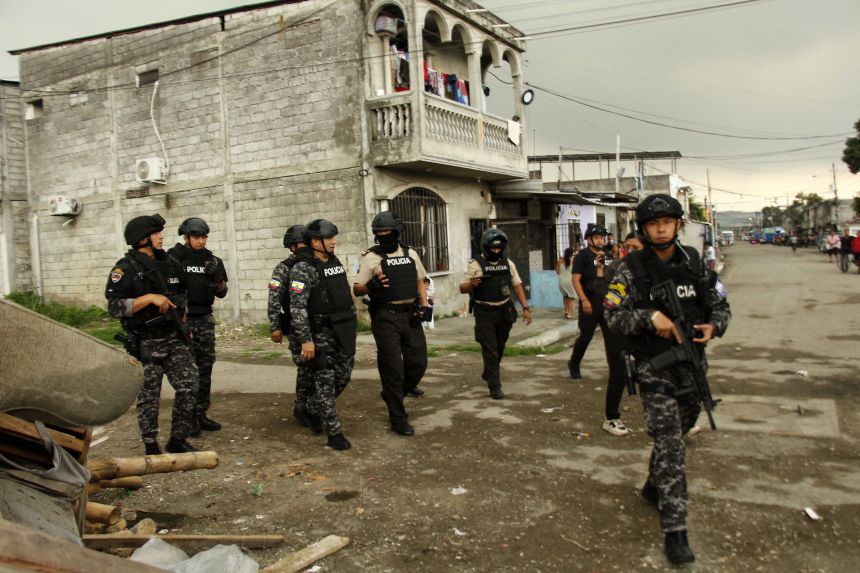
Elite members of the Ecuadorian police carry out an anti-drug operation in the Batallon del Suburbio neighbourhood, in southern Guayaquil, Ecuador, on January 23, 2026. Image Credit: Gerardo Menoscal/AFP/Getty Images
In a significant escalation of anti-drug efforts in Latin America, the United States has launched joint military operations in Ecuador, targeting what officials describe as “designated terrorist organizations” linked to narco-trafficking. The move marks a new front in the Trump administration’s expanding regional security strategy and underscores Ecuador’s growing role as a key U.S. ally in the fight against organized crime.
The Pentagon confirmed Tuesday that U.S. forces are working alongside Ecuadorian troops in coordinated operations aimed at dismantling drug-related networks that officials say have fueled violence and corruption across the hemisphere.
What Is Happening in Ecuador? Inside the Joint Military Operations
According to U.S. officials, U.S. Special Forces are advising and supporting Ecuadorian commandos conducting raids across the country. While American troops are not directly participating in raids, they are providing intelligence, logistics, and operational planning support.
The announcement came from United States Southern Command (SOUTHCOM), which described the operations as a “powerful example” of hemispheric cooperation against narco-terrorism.
A brief video released by SOUTHCOM showed a helicopter deploying troops, believed to depict the first in what officials say will be a series of coordinated missions.
The Pentagon has not disclosed specific targets or operational details.
Operation Southern Spear Expansion Under Donald Trump
The Ecuador operations appear to represent an expansion of Operation Southern Spear, an anti-drug campaign launched under Donald Trump.
Since September, U.S. forces have conducted dozens of strikes against suspected drug-trafficking boats in the Caribbean and Eastern Pacific. Officials say the operations have resulted in at least 150 deaths. However, critics and legal experts have questioned the legality of those strikes, arguing that targeting suspected traffickers without imminent threat may violate international law.
The latest move signals that the United States is now extending its strategy from maritime interdictions to direct operational collaboration inside a sovereign nation.
READ ALSO
Why Ecuador? A Key Drug Trafficking Corridor
Though Ecuador does not produce cocaine, it has become a major transit route for narcotics originating in Colombia and Peru. Criminal organizations have exploited Ecuador’s ports and geographic position to smuggle drugs to North America and Europe.
Two of Ecuador’s most powerful gangs, Los Lobos and Los Choneros, were designated as foreign terrorist organizations by the U.S. State Department last year.
Ecuador has experienced record levels of violence in recent years, driven by gang rivalries and cartel activity.
President Daniel Noboa Strengthens Security Alliance with Washington
Ecuadorian President Daniel Noboa has made combating organized crime a central pillar of his administration.
On Monday, Noboa met with Gen. Francis L. Donovan, head of SOUTHCOM, and other U.S. defense officials at the Government Palace in Quito. The discussions focused on strengthening intelligence sharing, airport and port security, and coordinated operations.
Following the meeting, Noboa announced a “new phase against narco-terrorism and illegal mining,” emphasising that Ecuador’s armed forces would continue collaborating with strategic allies.
Despite close security ties, Ecuadorians rejected a proposal last November that would have allowed the United States to establish a permanent military base in the country.
Legal and Regional Concerns Over U.S. Military Actions
While U.S. and Ecuadorian officials frame the operations as necessary to restore security, legal scholars have raised concerns about the broader anti-drug campaign.
Experts argue that lethal strikes against suspected traffickers, particularly at sea, risk violating international humanitarian law if those targeted do not pose an imminent threat.
The expansion into Ecuador may intensify debate over the legal boundaries of U.S. military power in Latin America, especially as Washington increases coordination with regional partners.
What This Means for Latin America Security in 2026
The joint operations highlight Ecuador’s emerging status as one of Washington’s closest security partners in South America. They also reflect the Trump administration’s prioritization of drug interdiction and border security as central components of U.S. national security policy.
With violence surging in parts of the region and transnational criminal networks expanding their reach, analysts say Ecuador could become a test case for deeper U.S.-Latin American military cooperation in the years ahead.
Whether the operations will meaningfully reduce drug flows or further inflame regional tensions remains to be seen.
FAQ
Why is the U.S. military operating in Ecuador?
The U.S. is supporting Ecuadorian forces in joint operations targeting criminal organizations designated as terrorist groups involved in drug trafficking.
Are U.S. troops directly fighting in Ecuador?
No. U.S. Special Forces are advising, planning, and providing intelligence support, but Ecuadorian troops are conducting the raids.
What is Operation Southern Spear?
Operation Southern Spear is a U.S.-led anti-drug campaign involving maritime strikes against suspected trafficking vessels in the Caribbean and Eastern Pacific.
Which groups are being targeted?
The operations focus on organizations such as Los Lobos and Los Choneros, which have been designated as foreign terrorist organizations by the U.S.
Why is Ecuador important in the drug trade?
Ecuador serves as a major transit hub for cocaine produced in Colombia and Peru due to its ports and geographic location.
Did Ecuador allow a U.S. military base?
No. Ecuadorian voters rejected a proposal last November to allow a permanent U.S. military base in the country.
What are the legal concerns about these operations?
Some legal experts argue that U.S. strikes against suspected traffickers could violate international law if the targets do not pose an imminent threat.
How does this affect U.S.-Latin America relations?
The operations signal deeper military cooperation but may also raise sovereignty and legal concerns across the region.