

US considers sweeping global travel ban as Noem pushes for hardline immigration crackdown

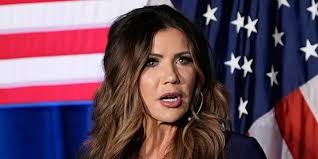
Noem
The immigration debate in the United States intensified on Monday after Homeland Security Secretary Kristi Noem revealed she is formally advising President Donald Trump to consider one of the most sweeping travel restrictions in the country’s history. Noem, in a strongly worded statement shared on social media, said she urged the president to impose a full travel ban on what she described as nations “flooding America with violent offenders and people unwilling to contribute to society.”
Noem announced that she met with President Trump earlier in the day, after which she concluded that a tougher stance on immigration was “urgently necessary.” Her post, which was quickly amplified by both Trump and the Department of Homeland Security (DHS) through their official platforms, has already sparked heated national and international interest.
Although Noem did not disclose which countries were being considered for the ban, she claimed that certain nations were sending individuals who have caused rising security concerns within the U.S. A DHS spokesperson later confirmed that a finalized list of affected countries will be released soon, though no exact timeline was provided.
The White House has hinted that Noem’s recommendation may expand an earlier directive issued in June. That initial list included 19 nations—primarily in Africa, the Middle East, and the Caribbean—flagged for either full or partial immigration restrictions. Press secretary Karoline Leavitt said Monday that the administration had already committed to limiting immigration from “failed states,” but noted that Noem’s updated proposal would “widen the scope significantly.”
Noem’s fiery comments come days after a violent incident in Washington, D.C., where two National Guard members were shot near the White House. Authorities later identified the suspect as 29-year-old Rahmanullah Lakanwal, an Afghan national who legally entered the United States in 2021 under Operation Allies Welcome—an initiative launched during the Biden administration to resettle Afghans who assisted U.S. forces during the war.
Before recommending the travel ban, Noem criticized the vetting standards used under that program, saying the process allowed individuals with “unverified backgrounds” into the country. Emails obtained last year by CBS News suggested that the suspect had experienced serious mental health challenges since his arrival.
The attack resulted in the death of 20-year-old National Guard member Sarah Beckstrom and left her colleague, 24-year-old Andrew Wolfe, in critical condition. According to updates from West Virginia Governor Patrick Morrisey, Wolfe was able to respond with a thumbs-up to medical staff but remains hospitalized.
In reaction to the shooting, the Trump administration temporarily halted all asylum case decisions. USCIS Director Joseph Edlow said no new asylum rulings will occur until “every avenue of vetting” is strengthened to maximum capacity. Edlow also confirmed he was instructed to review all previously issued green cards for immigrants originating from the 19 countries listed in June.
President Trump later signaled an even more aggressive stance, saying he is considering a permanent halt to migration from what he referred to as “third-world countries.” In a Thanksgiving message, he claimed refugees were contributing to “social dysfunction” and vowed to deport individuals he believes are not “net assets to America.”
Meanwhile, Afghan community advocates in the United States have urged the government not to punish entire populations for the actions of one individual. The Afghan Community Coalition issued a statement expressing condolences to the victims and appealing for ongoing support for Afghans who worked alongside American forces. They emphasized that two decades of partnership “must not be forgotten.”
Human rights observers, including the United Nations, have called on the U.S. to ensure that any new travel or immigration policies align with international asylum and refugee protection agreements.
As the nation awaits the official list of countries that may be subject to the expanded travel ban, the debate over national security, fairness, and America’s global responsibilities continues to deepen.
FAQ Section
1. What travel ban did Kristi Noem propose?
She recommended a full travel ban on multiple countries she claims are sending criminals and unvetted migrants into the United States.
2. Has the list of affected countries been released?
No. DHS says the list will be announced soon, but no specific date has been confirmed.
3. Why was the proposal made now?
The recommendation followed a fatal attack on two National Guard members in Washington, D.C., allegedly committed by an Afghan national who entered the U.S. under a 2021 resettlement program.
4. How has the White House responded?
The White House indicated the ban may broaden the earlier restrictions placed on 19 countries in June.
5. Are asylum decisions currently paused?
Yes. All asylum decisions are temporarily halted while the government reviews and strengthens vetting procedures.