

US and Israel launch “massive” strikes on Iran: Explosions rock Tehran as Trump warns of casualties and calls for regime change

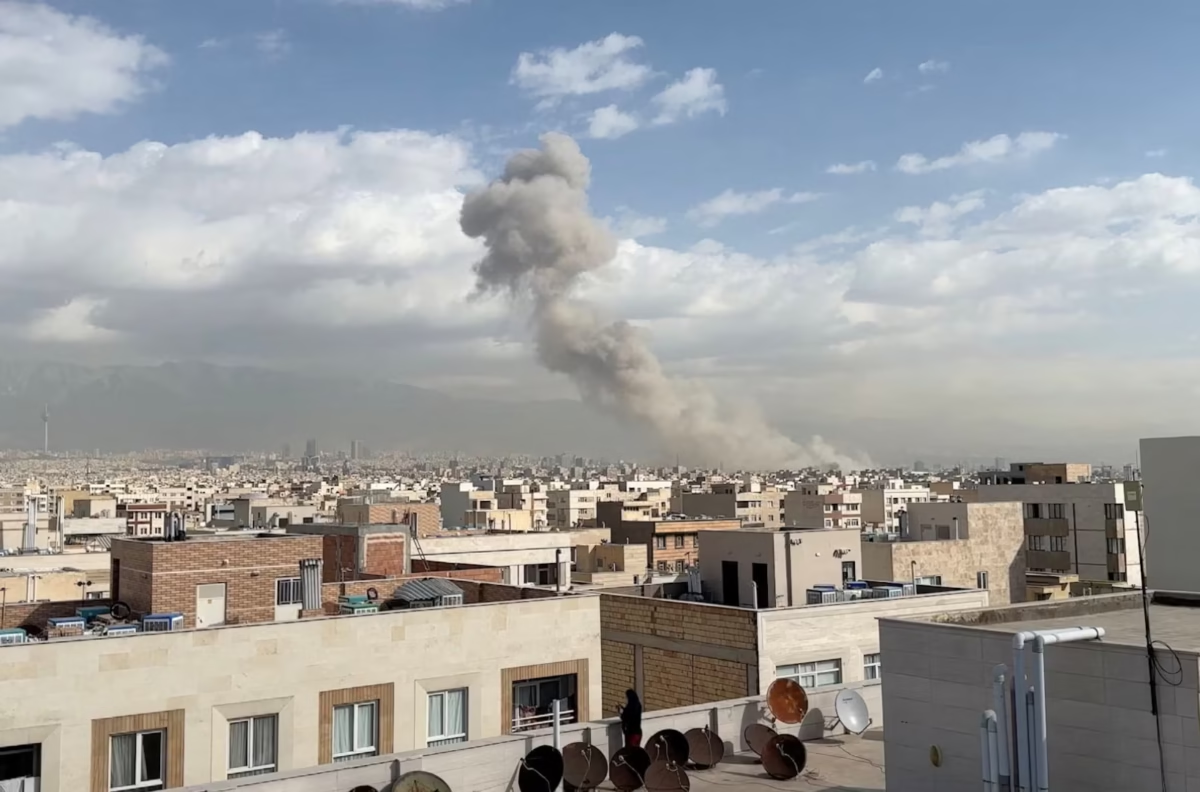
Smoke rises following an explosion in Tehran, Iran February 28, 2026 in this screen grab taken from video. WANA (West Asia News Agency)/Handout
Tensions in the Middle East escalated dramatically Saturday as the United States and Israel launched coordinated military strikes on Iran, triggering explosions across Tehran and prompting fears of a broader regional war. The operation, described by President Donald Trump as “massive and ongoing,” marks one of the most significant direct confrontations between the two sides in recent years.
Smoke was seen rising over the Iranian capital after missiles reportedly struck near the office compound of Iran’s Supreme Leader, Ali Khamenei. Iranian state media confirmed explosions in multiple cities as airspace closures, missile launches, and internet blackouts followed.
Strikes Target Tehran as Operation “Epic Fury” Begins
The U.S. Department of Defense confirmed the campaign is officially named “Operation Epic Fury.” Israeli officials announced their parallel military campaign under the codename “Roaring Lion.”
According to reports, explosions were heard in Tehran’s Pasteur district, home to the highly secure compound of Ayatollah Khamenei. It remains unclear whether the 86-year-old leader was present at the time of the strike.
President Donald Trump said in a video message that American forces had begun “major combat operations in Iran,” accusing Tehran of continuing nuclear development and rebuilding missile capabilities. He acknowledged potential U.S. casualties, stating, “That often happens in war.”
Israeli Prime Minister Benjamin Netanyahu described the joint assault as necessary to remove what he called an “existential threat.”
Iran Vows Retaliation as Missiles Target Israel
Within hours of the strikes, Iranian media reported the launch of dozens of ballistic missiles toward Israel. Explosions were heard across northern Israel as air defense systems activated to intercept incoming fire.
Sirens sounded in multiple areas, and Israeli hospitals implemented emergency protocols, relocating patients to underground facilities. Jordan also reported air raid alerts.
Iran has long warned it would retaliate against any attack, including targeting U.S. military bases in the region. State media described preparations for a “crushing response.”
READ ALSO
Iran nuclear talks take dramatic turn as Trump deploys warships and warns Tehran
Is Iran facing a breaking point as Khamenei blames Trump for Nationwide protests?
Nuclear Talks Collapse Amid Renewed Military Escalation
The strikes come just one day after indirect nuclear talks between Tehran and Washington in Geneva. Iranian Foreign Minister Abbas Araghchi had indicated that a deal was “within reach” if diplomacy prevailed.
However, President Trump expressed dissatisfaction with negotiations, stating Iran refused to explicitly renounce nuclear weapons ambitions. Tehran has consistently maintained its nuclear program is for civilian purposes.
While U.S. intelligence sources have reportedly found no evidence that Iran is close to developing intercontinental ballistic missiles capable of striking the American mainland, Washington has criticised Iran’s missile and space programs as potential long-term threats.
Iran Shuts Down Airspace and Internet
Following the strikes, Iran closed its airspace and ordered schools nationwide to shift to remote learning. Internet watchdog NetBlocks reported a near-total internet blackout, with national connectivity dropping to just 4% of normal levels.
Mobile services were reportedly disrupted, and heavy traffic was seen in parts of Tehran as residents reacted to the blasts.
Iranian President Masoud Pezeshkian was reported to be safe, according to state media.
Regional and Global Implications
The coordinated U.S.-Israel military action significantly raises the stakes in an already volatile region. Analysts warn that prolonged strikes could draw in additional regional actors, potentially expanding into a broader Middle East conflict.
President Trump openly called on Iranians to “take over your government,” advocating for regime change once military operations conclude, a statement likely to inflame tensions further.
The operation follows last year’s 12-day conflict between Israel and Iran, which culminated in U.S. airstrikes on Iranian nuclear facilities.
As both sides brace for further escalation, the world watches closely to see whether diplomacy can be revived, or whether the region is entering a prolonged phase of military confrontation.
FAQ – US and Israel Strikes on Iran
Why did the US and Israel attack Iran in 2026?
The strikes were launched amid escalating tensions over Iran’s nuclear program. The U.S. and Israel claim Iran continues developing nuclear and missile capabilities that pose regional and global security threats.
What is Operation Epic Fury?
Operation Epic Fury is the official name given by the U.S. Department of Defense to the 2026 military campaign targeting Iranian military and strategic infrastructure.
What is Israel’s “Roaring Lion” operation?
“Roaring Lion” is the codename announced by Israel for its coordinated military campaign against Iranian targets.
Was Iran’s Supreme Leader targeted?
Explosions were reported near the office compound of Supreme Leader Ali Khamenei in Tehran. However, there is no confirmation that he was harmed.
Did Iran retaliate?
Yes. Iranian media reported dozens of ballistic missiles launched toward Israel following the initial strikes.
Is this related to nuclear talks?
Yes. The strikes occurred shortly after a round of indirect nuclear negotiations between Iran and the United States, which appeared to stall over disagreements about Iran’s enrichment program.
Is Iran at war with the United States?
While both countries are engaged in direct military strikes, neither has formally declared war. However, the situation represents one of the most serious escalations in recent years.
Has Iran shut down the internet?
Yes. Monitoring groups reported a near-total internet blackout across Iran following the strikes.
Could this escalate into a wider Middle East war?
Analysts warn that continued strikes and retaliatory attacks could broaden the conflict, especially if regional militias or neighboring countries become involved.