

Why did the US bomb Militants in Nigeria? Inside the Airstrikes, the Intelligence Deal, and the Rising Terror Threat

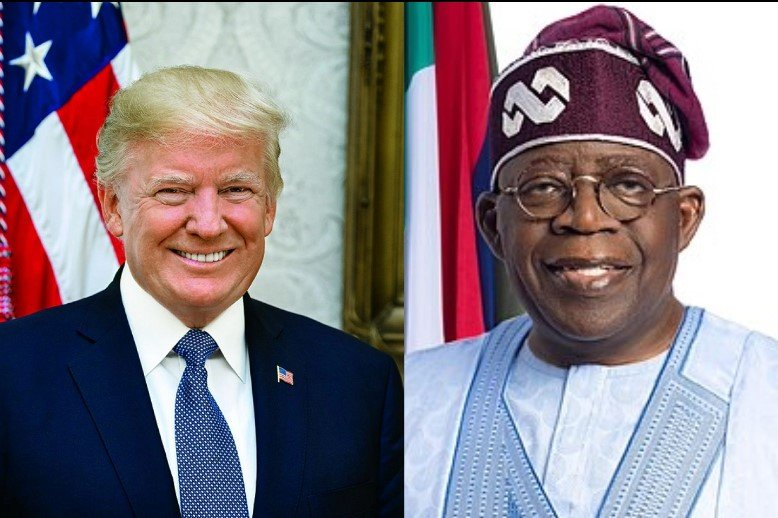
US airstrikes target Islamic State-linked militants in Nigeria
The United States airstrikes on militant targets in northwest Nigeria have marked a significant escalation in international involvement in Nigeria’s long-running security crisis. Carried out on Thursday and confirmed by both Washington and Abuja, the operation targeted Islamic State–affiliated militants operating in remote border regions, where Nigeria’s military has struggled for years to contain growing violence.
The strikes, ordered under US President Donald Trump, were described as “powerful and deadly” and aimed at extremist groups accused of mass killings, kidnappings, and attacks on rural communities. While the exact impact of the airstrikes remains unclear, Nigerian officials have now confirmed that Nigeria provided the intelligence and formally approved the operation, underscoring deepening counterterrorism cooperation between both countries.
Who Were the Militants Targeted by the US Airstrikes?
Security analysts believe the strikes were directed at fighters linked to the Islamic State Sahel Province (ISSP), locally known as Lakurawa, a group that has grown increasingly violent across Sokoto and Kebbi states in northwestern Nigeria.
Lakurawa, initially invited into some communities around 2017 to counter banditry, has since become a major security threat. Analysts say the group enforces a harsh interpretation of Sharia law, clashes with traditional leaders, and engages in killings, kidnappings, rape, and armed robbery.
According to researchers, Lakurawa’s expansion was fueled by instability along the Nigeria–Niger border, especially after the 2023 military coup in Niger, which weakened cross-border security coordination and allowed militants to exploit vast, poorly governed forest regions.
READ ALSO
Is Trump trying to take Greenland? New US Envoy appointment sparks Global Outrage
Nigeria Confirms Intelligence Sharing and Approval
Nigeria’s Minister of Foreign Affairs, Yusuf Tuggar, confirmed that the country played a direct role in enabling the strikes. Speaking on national television, Tuggar revealed that Nigeria supplied the intelligence, consulted extensively with US officials, and obtained approval from President Bola Ahmed Tinubu before the operation.
Tuggar emphasized that the strike was not religiously motivated, countering claims that the action targeted militants solely for attacks on Christians. He stressed that Nigeria’s security crisis affects both Muslims and Christians, and that the objective was to protect innocent lives regardless of religion.
“This was a strike against terrorism,” Tuggar said, describing the operation as part of ongoing joint security collaboration between Nigeria and the United States.
Why the US Strike Is a Major Escalation
Direct US airstrikes on Nigerian soil are rare and often politically sensitive. Analysts describe the latest operation as a response to Nigeria’s overstretched military, which is battling multiple security threats simultaneously, from Boko Haram and ISWAP in the northeast to banditry and terror groups in the northwest.
Nigeria’s military has carried out its own air operations in the region, but experts note that such campaigns are often unsustained, allowing militants to regroup and relocate using motorcycles and forest routes that span several states.
US involvement is seen as a force multiplier, offering advanced intelligence, surveillance, and precision strike capabilities Nigeria lacks.
Governance, Not Firepower, at the Core of the Crisis
Despite the military action, security experts warn that airstrikes alone will not end Nigeria’s insecurity. Studies show that militant strongholds often coincide with areas facing extreme poverty, hunger, unemployment, and weak state presence.
Former Defence Chief Christopher Musa has previously stated that military force accounts for only 30% of the solution, while 70% depends on governance, development, and local trust.
“The absence of the state in remote communities allows non-state actors to present themselves as alternative governments,” analysts warn, a dynamic extremist groups continue to exploit.
What the Airstrikes Mean for Nigeria Going Forward
Thursday’s strikes signal a new phase in US–Nigeria counterterrorism cooperation, potentially opening the door to deeper intelligence sharing and coordinated operations. For the Tinubu administration, officials describe the action as a vindication of its security strategy, amid criticism that the government has moved too slowly against rising violence.
However, analysts caution that without sustained operations and improvements in governance, militants could re-emerge quickly, adapting their tactics and expanding into new regions.
FAQ
Why did the US launch airstrikes in Nigeria?
The US conducted airstrikes to target Islamic State–linked militants operating in northwest Nigeria, following intelligence shared by Nigerian authorities and with formal approval from the Nigerian government.
Which militant group was targeted in the US strike?
Analysts believe the target was Lakurawa, linked to the Islamic State Sahel Province, a group responsible for killings, kidnappings, and territorial control in parts of Sokoto and Kebbi states.
Did Nigeria approve the US airstrikes?
Yes. Nigeria’s Foreign Affairs Minister confirmed that Nigeria provided the intelligence and approved the operation after consultations between US officials and President Bola Tinubu.
Is Nigeria’s insecurity driven by religion?
Nigerian officials insist the crisis is not religiously motivated. Both Muslims and Christians have been victims of terrorism, banditry, and insurgent violence.
How serious is the security situation in northwest Nigeria?
The region faces escalating violence due to weak governance, porous borders, poverty, and armed groups exploiting remote terrain and limited state presence.
Will US airstrikes end terrorism in Nigeria?
Experts say airstrikes can weaken militants temporarily, but lasting security depends on governance, economic development, and sustained military operations.
How does this affect US–Nigeria relations?
The strikes reflect closer security cooperation, signaling stronger diplomatic and military ties between Washington and Abuja in the fight against terrorism.