

Trump and NYC Mayor Zohran Mamdani find rare common ground on Zoning: Could this rewrite New York’s housing future?

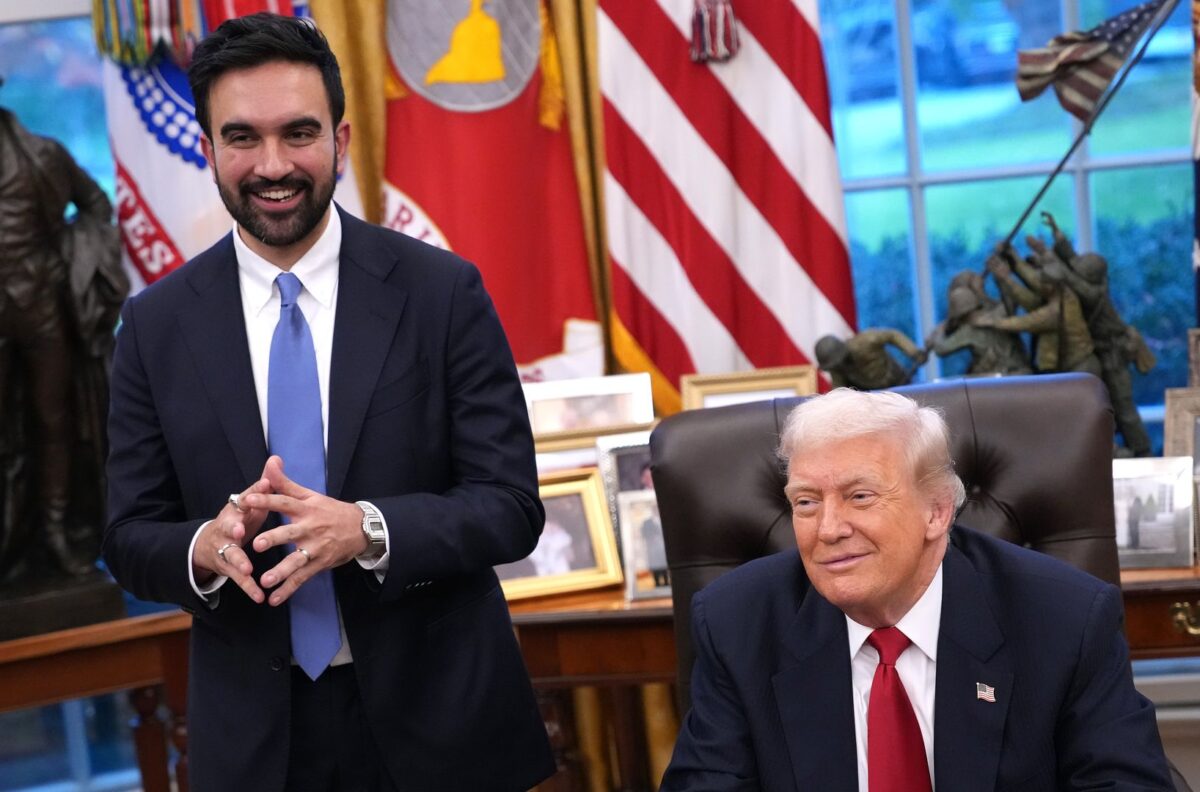
Zohran Mamdani, after he was elected mayor of New York, with President Trump in the Oval Office last November. Photo: Andrew Harnik/Getty Images
In a political climate defined by sharp ideological divides, President Donald Trump and New York City Mayor Zohran Mamdani have found unexpected common ground on one of the city’s most contentious issues: zoning reform.
During a private Oval Office meeting last fall, Mamdani, a democratic socialist who built his political rise on opposing Trump, steered the discussion toward New York City’s Uniform Land Use Review Procedure (ULURP). What followed surprised aides familiar with the conversation. Trump, a former New York real estate developer, reportedly became animated, expressing long-standing frustration with a system he believes has throttled large-scale development for decades.
According to individuals with direct knowledge of the meeting, Trump told Mamdani that reforming the zoning process would be “amazing,” noting that he had wanted such changes for years.
Why Zoning Reform Resonates With Trump
Trump’s interest in New York City zoning is deeply personal. Long before entering politics, he battled ULURP while attempting to develop major projects in Manhattan, including the ambitious West Side Yards “Television City” proposal in the 1980s.
That plan, which once envisioned a 150-story skyscraper and a sprawling mixed-use district, was dramatically scaled back after community opposition surfaced through the ULURP process. Former Trump Organization executive Barbara Res says the experience left a lasting mark.
“He hated ULURP because he saw it as anti-development and anti-business,” Res explained, adding that Trump believed the process destroyed what he viewed as transformative projects.
ULURP requires approval from community boards, borough presidents, the City Planning Commission, and the City Council, a process officially designed to take seven months, but which often stretches into years.
READ ALSO
Mamdani’s Strategy: Engagement Over Escalation
For Mayor Mamdani, zoning reform represents both a policy priority and a strategic opening. New York City faces a severe affordable housing shortage, and Mamdani has argued that bureaucratic delays are inflating costs and slowing desperately needed construction.
Sources say Trump and Mamdani continued discussing zoning reform via text messages after their Oval Office meeting, signaling an unusual channel of communication between City Hall and the White House.
While Mamdani has publicly criticized Trump on immigration, federal policing, and social policy, this pragmatic engagement reflects a calculated approach: working with the president on issues where interests overlap, while resisting him elsewhere.
Housing Supply, Developer Interest, and Political Calculations
Trump’s renewed attention to zoning reform has also raised questions about self-interest. The Trump Organization still owns and licenses high-profile New York properties, including Trump Tower, and recently pursued, unsuccessfully, the city contract for Wollman Rink.
Additionally, the company benefited from a $150 million windfall tied to a casino development deal on Trump-owned land in the Bronx, further fueling speculation about potential gains from streamlined zoning rules.
Still, developers across the city argue the issue transcends politics. Real estate developer Bruce Teitelbaum, whose Harlem housing project spent nearly a decade navigating ULURP, says the process is a key contributor to the housing crisis.
“It adds enormous expense, time, and uncertainty,” he said. “The city would be better off without it in its current form.”
What This Rare Alignment Could Mean for New York
While no formal proposal has yet emerged, observers say even limited zoning reform, such as shorter approval timelines, expanded by-right development, or targeted upzoning near transit corridors, could significantly reshape New York’s housing landscape.
For Mamdani, progress on zoning could unlock new housing supply and blunt federal retaliation threats from Trump. For Trump, it offers a chance to revisit unfinished business from his real estate past.
As both sides continue their quiet dialogue, New York’s famously rigid land-use rules may soon face their most serious challenge in decades.
FAQ
What is ULURP in New York City?
ULURP, or the Uniform Land Use Review Procedure, is New York City’s official process for approving zoning changes and major development projects. It involves multiple layers of review and often takes years to complete.
Why does Donald Trump oppose ULURP?
Trump has criticized ULURP since his days as a real estate developer, arguing that it slows construction, raises costs, and blocks large-scale development projects.
Why is Mayor Zohran Mamdani open to zoning reform?
Mamdani believes zoning reform is essential to speeding up housing construction and addressing New York City’s worsening affordable housing shortage.
Did Trump and Mamdani really agree on zoning?
Yes. Despite political differences, both reportedly expressed shared frustration with New York City’s land-use approval process during a private Oval Office meeting.
Could zoning reform lower housing costs in NYC?
Potentially. Faster approvals and higher density near transit hubs could increase housing supply, easing pressure on rents in some neighborhoods over time.
Is Trump personally benefiting from zoning reform?
There is no direct evidence, but Trump-linked properties and the Trump Organization could benefit if development rules become more flexible.
What happens next?
Any meaningful zoning reform would require action by the New York City Council and planning agencies. For now, discussions remain informal but politically significant.