

Did Susie Wiles just expose Trump’s second-term secrets, and put her job on the line? What to know

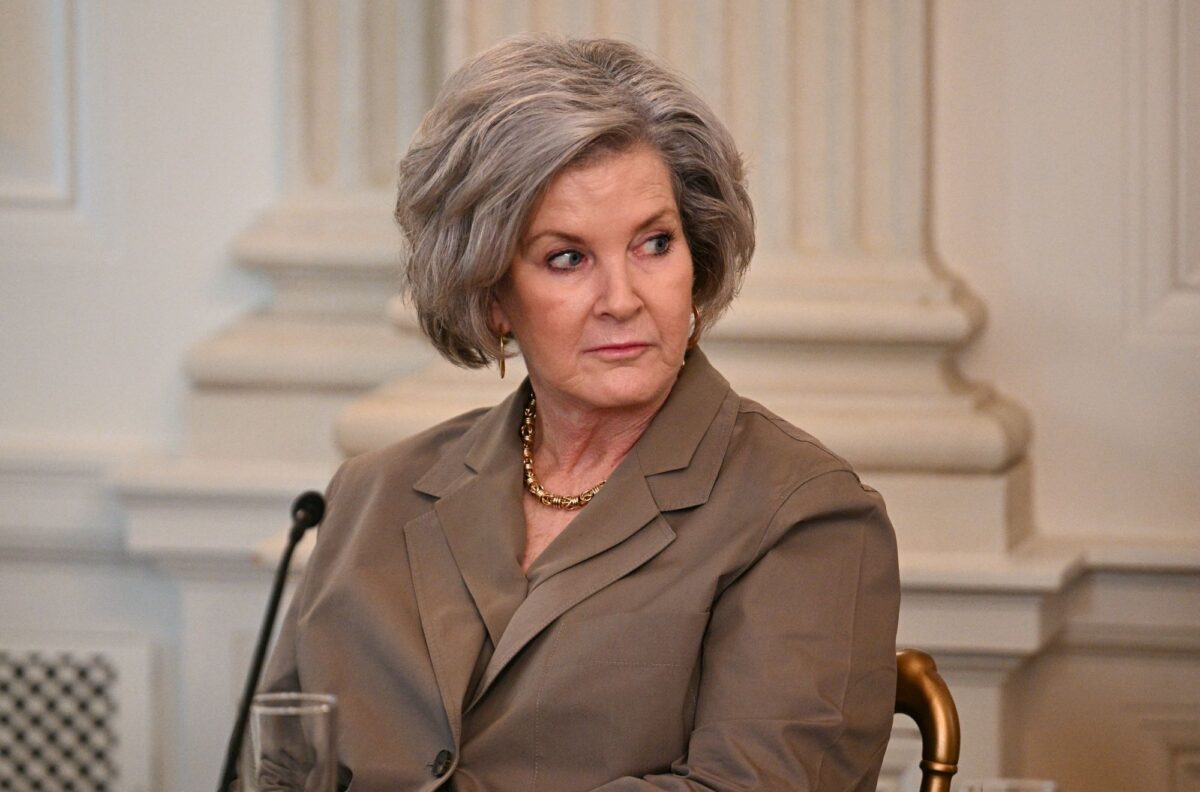
White House Chief of Staff Susie Wiles attends a roundtable about Antifa in the State Dining Room of the White House. Image Credit: JIM WATSON/AFP via Getty Images
White House Chief of Staff Susie Wiles, long viewed as one of the most disciplined and strategic figures in American politics, has ignited a political firestorm after delivering a series of unusually frank interviews to Vanity Fair. The remarks, ranging from President Donald Trump’s “alcoholic’s personality” to admissions about revenge-driven governance, have stunned Washington, triggered internal backlash, and raised a single urgent question: why would the most careful operator in Trump’s orbit speak so freely now?
Across more than ten conversations with veteran journalist Chris Whipple, Wiles peeled back the curtain on Trump’s second term, exposing internal debates, policy contradictions, and personal dynamics rarely voiced by a sitting chief of staff.
“An Alcoholic’s Personality”: Wiles’ Stark Psychological Assessment
Among the most explosive revelations, Wiles described Trump as having “an alcoholic’s personality”, despite being a lifelong teetotaler. Drawing from personal experience growing up with an alcoholic father, she said Trump’s personality traits, impulsivity, obsession, and emotional exaggeration, mirror those patterns.
Trump later brushed off the remark, telling the New York Post he has a “possessive and addictive type personality,” while publicly reaffirming confidence in Wiles. Still, the comment cut deep, fueling intense speculation across political media and Capitol Hill.
READ ALSO
Why is Judge James Boasberg at the center of a high-stakes court clash with Trump’s DOJ?
Revenge as Policy? Admissions That Raised Alarms
Wiles acknowledged that retribution plays a role, at least occasionally, in Trump’s decision-making. Asked about prosecutions of political opponents, including former FBI Director James Comey, she conceded that actions could appear “vindictive,” adding, “I can’t tell you why you shouldn’t think that.”
The admission undercuts repeated White House claims that enforcement actions are strictly apolitical, and it has become one of the most cited lines from the interviews.
Epstein Files, Clinton Claims, and Internal Frustrations
Wiles also delivered blunt clarity on the Jeffrey Epstein files, confirming Trump appears in flight manifests but “not doing anything awful.” She directly contradicted Trump’s repeated claims that Bill Clinton visited Epstein’s island, stating flatly: “There is no evidence. The president was wrong about that.”
Her criticism extended to Attorney General Pam Bondi, whom Wiles said “completely whiffed” by distributing binders of Epstein materials that contained “nothingness” to conservative influencers, an episode that enraged key segments of Trump’s newer voter coalition.
Unfiltered Takes on Trump’s Inner Circle
Wiles did not hold back when discussing Trump’s closest allies:
- JD Vance, she said, has “been a conspiracy theorist for a decade,” though she credited his political discipline.
- Elon Musk was described as “an odd, odd duck,” and an “avowed ketamine user,” whose dismantling of USAID left her “aghast.”
- Russell Vought, head of OMB and Project 2025 architect, was labeled a “right-wing absolute zealot.”
- On Marco Rubio, Wiles acknowledged ideological evolution but positioned him as a disciplined foreign-policy operator.
Despite the sharp critiques, nearly all figures publicly defended Wiles, signaling her deep institutional protection, at least for now.
Foreign Policy Flashpoints: Venezuela, Gaza, and Ukraine
Wiles confirmed Trump’s boat-bombing campaign targeting Venezuela-linked drug trafficking, openly stating the president wants to keep striking until Nicolás Maduro “cries uncle.” Her remarks contradicted official claims that the strikes are purely interdiction efforts, not regime change.
On Gaza, Wiles warned Trump’s pro-Israel rhetoric risks alienating younger and nontraditional GOP voters. On Ukraine, she revealed Trump privately believes Vladimir Putin wants the entire country, even as ceasefire talks continue publicly.
Damage Control and White House Backlash
Within hours of publication, Wiles took to X, calling the article a “disingenuously framed hit piece.” She did not deny the quotes but argued they were stripped of context to create a narrative of chaos.
Press Secretary Karoline Leavitt doubled down on support, calling Wiles Trump’s “most loyal advisor.” Still, aides privately admitted the interviews were “in every group chat”, with reactions ranging from disbelief to outright shock.
Why Would Susie Wiles Do This?
That question now dominates Trump-world speculation. Was it a calculated legacy move? A signal of frustration? Or a strategic effort to shape how history records Trump’s second term?
One thing is clear: every quote sounded unmistakably like Susie Wiles, measured, controlled, and devastatingly precise.
FAQ
Who is Susie Wiles?
Susie Wiles is the White House Chief of Staff under President Donald Trump’s second term and is widely regarded as one of the most powerful women in global politics.
Why are Susie Wiles’ interviews controversial?
She made unusually candid remarks about Trump’s personality, revenge politics, foreign policy decisions, and senior advisers—rare transparency for a sitting chief of staff.
Did Susie Wiles really say Trump has an “alcoholic’s personality”?
Yes. She used the phrase to describe exaggerated personality traits, not alcohol use, citing her personal experience growing up with an alcoholic parent.
What did Wiles say about the Epstein files?
She confirmed Trump appears in flight manifests but stated there is no evidence of wrongdoing and dismissed claims involving Bill Clinton as unsupported.
Is Susie Wiles being fired or forced out?
As of now, no. Trump and senior aides have publicly reaffirmed support, though speculation remains intense.
What did Wiles reveal about Trump’s foreign policy?
She acknowledged aggressive actions in Venezuela, confirmed Trump’s skepticism about Putin’s intentions, and warned of political risks tied to Gaza policy.
Why does this matter politically?
The interviews expose internal thinking at the highest level of the Trump administration and may shape public perception heading into the midterm election cycle.