

Stephen McCullagh found guilty in Natalie McNally murder: How a fake YouTube livestream alibi collapsed in court

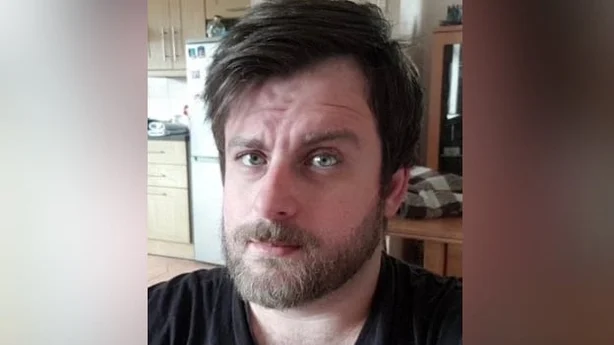
Stephen McCullagh
A Belfast Crown Court jury has found Stephen McCullagh guilty of murdering his pregnant partner, Natalie McNally, in a case that has shocked Northern Ireland and drawn widespread attention because of an unusual and highly calculated digital cover story. Prosecutors said McCullagh tried to create a false alibi by appearing to be livestreaming video games on YouTube while, in reality, he was travelling to McNally’s home and carrying out the killing. The jury convicted him on Monday, March 23, 2026, after about two hours of deliberation in the fifth week of trial.
The case has become one of the most talked-about crime stories of the year because it combined digital deception, forensic evidence, CCTV tracking and a highly public trial. McCullagh, who was known online as votesaxon07, had built what prosecutors described as a sophisticated false alibi around a supposed six-hour gaming livestream. But that strategy collapsed after cyber investigators determined the footage had actually been pre-recorded days earlier, not streamed live during the murder window.
The verdict now means McCullagh faces a mandatory life sentence for murder, with a tariff hearing scheduled for May to decide the minimum time he must serve before he can be considered for release.
Who Is Stephen McCullagh and Why Is He in the Headlines?
Stephen McCullagh is a 36-year-old man from Lisburn, Northern Ireland, who became widely known online through his YouTube activity under the name votesaxon07. In court, he was accused of constructing a fake gaming livestream to make it appear he was at home the night his partner was killed. On March 23, 2026, that case ended with a guilty verdict in Belfast Crown Court.
The story has drawn intense public interest because of the way investigators said the murder was hidden behind a false digital trail. The prosecution argued that what looked like an ordinary gaming session was actually part of a deliberate plan to mislead police and the public.
What Happened to Natalie McNally?
Natalie McNally, 32, was killed at her home in Lurgan, County Armagh, on the evening of December 18, 2022. She was 15 weeks pregnant at the time of her death. Court reporting said she died between 8:50pm and 9:30pm during a violent attack.

The Guardian reported that the prosecution said McCullagh travelled from Lisburn to Lurgan, attacked McNally at her home, and then returned home by taxi. The court heard that McNally suffered a violent assault involving stab wounds and blows to the head. Because this is a real-life violent crime, many reports have avoided graphic detail, but the core facts presented in court were enough to make the case deeply distressing and nationally significant.
How the Fake YouTube Livestream Alibi Worked
One of the most searched parts of the case is the fake YouTube livestream alibi.
According to trial reporting, McCullagh promoted what appeared to be a surprise gaming broadcast titled “The Violent Night Christmas Live Gaming Stream.” Viewers saw what looked like a live six-hour session of him drinking, joking and playing video games, while telling the audience that technical issues meant he could not respond to live chat. He also said he would not use his phone. Those details later became crucial.
But the supposed livestream was not live at all. The Police Service of Northern Ireland’s cybercrime investigators examined his devices and found evidence that the footage had been pre-recorded on December 14, 2022, then saved as a file before being uploaded to run as if it were a live stream on the night of the murder. That discovery shattered the defence-friendly narrative McCullagh initially benefited from.
The Guardian also reported that after being rearrested in January, McCullagh admitted in a prepared statement that he had pre-recorded the footage, although he continued to deny the murder itself and claimed he had been drinking and asleep at home. The prosecution rejected that explanation and argued the stream was part of a planned cover story.
READ ALSO
How Police and Prosecutors Broke the Case Open
What makes the Stephen McCullagh case especially significant is how digital forensics became central to the conviction.
Investigators reportedly seized McCullagh’s computers and devices after the killing. Forensic analysis showed the live stream was not spontaneous or real-time, but a previously recorded file. That evidence, combined with travel evidence and CCTV, formed the backbone of the prosecution case.
The Guardian reported that prosecutors said CCTV footage helped track a disguised passenger travelling toward Lurgan and later showed a return journey consistent with the timeline of the murder. They argued that McCullagh’s actions before and after the killing were methodical, including travel planning and efforts to reinforce the false alibi.
This is why the case is now widely discussed as an example of how digital evidence can expose even elaborate online deception.
Jury Verdict and What Happens Next
After a five-week trial at Belfast Crown Court, a jury of six men and six women found McCullagh guilty of murder. The verdict was reached after about two hours of deliberations, according to The Guardian’s report.
The trial judge, Mr Justice Kinney, told the court that murder carries a mandatory life sentence. A separate hearing in May 2026 will determine the tariff, or the minimum number of years McCullagh must spend in prison before he can be considered for release.
Why the Stephen McCullagh Case Is Drawing So Much Attention
The reason the Stephen McCullagh verdict is trending goes beyond the conviction itself.
This case combined several elements that drive intense public interest:
- A pregnant victim
- A high-profile murder trial
- A YouTube creator as the defendant
- A fake livestream alibi
- Cybercrime forensics
- A jury verdict after a closely watched trial
- Wider conversations about violence against women
Outside court, McNally’s family said they hoped the verdict would also resonate with other victims and families affected by violence against women and girls. One of her brothers said their hearts went out to others still seeking justice.
FAQ
1. Who is Stephen McCullagh?
Stephen McCullagh is a 36-year-old man from Lisburn, Northern Ireland, who was known online through a YouTube channel under the name votesaxon07. He was found guilty in March 2026 of murdering his pregnant partner, Natalie McNally.
2. What is the Stephen McCullagh verdict?
The verdict is that Stephen McCullagh was found guilty of murder at Belfast Crown Court on March 23, 2026. A jury reached the decision after about two hours of deliberations during the fifth week of the trial.
3. Was Stephen McCullagh found guilty of murdering Natalie McNally?
Yes. Stephen McCullagh was convicted of murdering Natalie McNally, who was 32 and 15 weeks pregnant when she was killed in December 2022.
4. Who was Natalie McNally?
Natalie McNally was a 32-year-old woman from Lurgan, County Armagh. She was 15 weeks pregnant at the time of her death in December 2022. The Guardian reported that she worked in marketing for the public transport provider Translink and was looking forward to becoming a mother.
5. How did Stephen McCullagh fake the YouTube livestream alibi?
According to trial reporting, McCullagh used a pre-recorded six-hour gaming video and made it appear to viewers as though it was a live YouTube stream on the night of the murder. He told viewers he could not interact with chat because of “technical issues,” which later became a major clue in the case.
6. How did police prove the livestream was fake?
The Police Service of Northern Ireland cybercrime unit examined McCullagh’s devices and found extensive evidence that the stream had been recorded on December 14, 2022, days before the killing, and saved as a video file rather than broadcast live in real time. That digital forensic evidence was central to the prosecution case.
7. What happened on the night Natalie McNally was killed?
Court reporting said McNally died between 8:50pm and 9:30pm on December 18, 2022, at her home in Lurgan, County Armagh. Prosecutors said McCullagh travelled from Lisburn to Lurgan while the pre-recorded stream was playing, killed her, and later returned home by taxi.
8. Why is the Stephen McCullagh case so widely discussed?
The case is widely discussed because it involves:
- A fake YouTube livestream alibi
- A pregnant victim
- Digital forensic evidence
- A closely watched murder trial
- Broader concerns around violence against women and girls
These factors have made it one of the most searched UK crime stories of March 2026.
9. Has Stephen McCullagh been sentenced yet?
Not fully. He has been convicted, and the judge said the murder conviction carries a mandatory life sentence, but a tariff hearing in May 2026 will decide the minimum amount of time he must spend in prison before he can be considered for release.
10. What does a tariff hearing mean in the Stephen McCullagh case?
A tariff hearing is the court process that sets the minimum term a person convicted of murder must serve before becoming eligible to apply for parole or release consideration. In McCullagh’s case, that hearing is scheduled for May 2026.
11. What was Stephen McCullagh’s YouTube name?
The Guardian reported that Stephen McCullagh was known online as votesaxon07.
12. Where did the Stephen McCullagh trial take place?
The trial took place at Belfast Crown Court in Northern Ireland.
13. How long did the jury take to reach a verdict?
The jury took about two hours to reach the guilty verdict.
14. Did Stephen McCullagh testify in his own defence?
The Guardian’s trial coverage said McCullagh did not take the stand during the trial.
15. Why is the Stephen McCullagh case important beyond the verdict?
The case is important because it highlights how digital evidence, cybercrime analysis and device forensics can dismantle complex false alibis. It has also reignited public debate about violence against women, victim protection, and how seemingly sophisticated deception can still be exposed in court.