

SpaceX launches Crew-12 in dramatic ISS rescue mission after medical emergency: Falcon 9 nails perfect landing

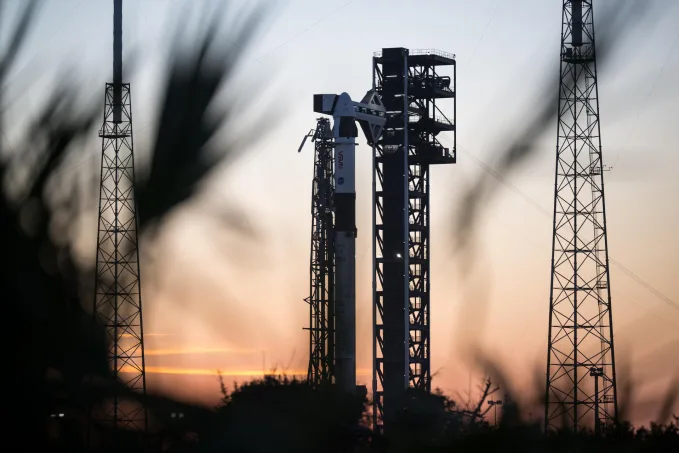
A SpaceX Falcon 9 rocket with the company’s Crew Dragon spacecraft on top is seen on the launchpad on February 10, at Cape Canaveral Space Force Station in Florida. Image Credit: Aubrey Gemignani/NASA
A powerful SpaceX launch lit up the Florida sky early Friday morning as a Falcon 9 rocket carried four astronauts toward the (ISS), marking a critical turning point for NASA’s orbiting laboratory.
The mission, known as Crew-12, blasted off at 5:15 a.m. EST from Cape Canaveral Space Force Station, delivering much-needed reinforcements after the station had been operating with a reduced crew for nearly a month.
The successful liftoff not only restores the ISS to its standard seven-person staffing level but also underscores NASA and SpaceX’s growing reliance on commercial partnerships to maintain uninterrupted operations in low-Earth orbit.
Crew-12 Mission: Why This SpaceX Launch Matters
The urgency behind the Crew-12 mission stems from the unexpected early return of Crew-11 in January due to a medical issue involving one astronaut. That emergency departure left the ISS operating with only three crew members, far below NASA’s preferred staffing level.
NASA typically plans for direct handovers between crews to ensure continuity of research and maintenance. However, because Crew-11 returned ahead of schedule, the incoming astronauts will conduct an indirect transition.
A fully staffed ISS is essential. The orbiting laboratory costs approximately $3 billion annually to operate, and maximizing scientific output is a priority as NASA eyes the development of future commercial space stations.
Who Is On Board Crew-12?
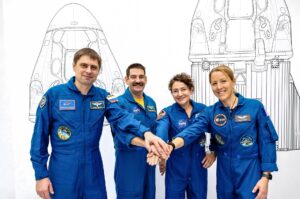
Crew-12 is commanded by veteran NASA astronaut , who previously served aboard the ISS. She is joined by:
- NASA astronaut Jack Hathaway
- European Space Agency astronaut Sophie Adenot
- Russian cosmonaut Andrey Fedyaev
The four astronauts launched aboard a Crew Dragon capsule named Freedom, sitting atop a reusable rocket.
Moments after liftoff, the Falcon 9’s first stage separated and executed a flawless landing at Landing Pad 40, demonstrating SpaceX’s hallmark reusability technology.
“It turns out Friday the 13th is a very lucky day,” flight controllers radioed after the successful launch.
READ ALSO
Is NASA about to end an ISS mission early? Inside the medical scare aboard the space station
Falcon 9 Performance and Dragon’s Journey to Orbit
Following stage separation, the Falcon 9 booster returned safely to Earth while the Dragon spacecraft continued toward its designated orbit.
The Crew Dragon capsule is now on a two-day journey to the ISS, where it will dock and integrate the new astronauts into Expedition 74 operations.
NASA confirmed a 90% chance of favorable weather ahead of launch, after earlier delays caused by poor downrange conditions.
The mission marks another milestone in NASA’s Commercial Crew Program, which has enabled routine astronaut transport since SpaceX began operational missions in 2020.
ISS Research Goals: What Crew-12 Will Work On
During their roughly eight-month stay aboard the ISS, Crew-12 astronauts will conduct cutting-edge research including:
- Ultrasound scans of blood vessels to study circulation changes in microgravity
- Pharmaceutical research on bacteria linked to pneumonia
- A simulated lunar landing experiment to assess gravity transition impacts
NASA officials have emphasized that maximizing scientific output on the ISS is crucial before the station is retired later this decade.
The research also supports future lunar missions and deep-space exploration initiatives.
Why This Launch Signals a Broader Shift in Space Exploration
Beyond restoring ISS staffing levels, the Crew-12 mission highlights NASA’s long-term vision: transitioning from government-operated stations to commercially owned orbital platforms.
NASA leadership has repeatedly stated that a thriving commercial space station ecosystem will allow the agency to focus on deep-space missions, including future lunar and Mars exploration efforts.
The Crew-12 launch demonstrates how public-private collaboration is now central to America’s space strategy.
With a smooth ascent, precise booster landing, and stable orbit insertion, this SpaceX launch reinforces confidence in reusable rocket systems and the sustainability of crewed spaceflight operations.
FAQ
What is the SpaceX Crew-12 mission?
Crew-12 is a NASA-SpaceX astronaut mission transporting four crew members to the International Space Station to restore full staffing levels after Crew-11 returned early due to a medical issue.
When did SpaceX launch Crew-12?
Crew-12 launched on February 13, 2026, at 5:15 a.m. EST from Cape Canaveral Space Force Station in Florida.
Why was Crew-12 launch expedited?
The mission was moved forward after Crew-11 made an emergency return to Earth, leaving the ISS with only three astronauts.
Who are the astronauts on Crew-12?
The Crew-12 team includes NASA astronauts Jessica Meir and Jack Hathaway, ESA astronaut Sophie Adenot, and Roscosmos cosmonaut Andrey Fedyaev.
Did the Falcon 9 rocket land successfully?
Yes. The Falcon 9 first-stage booster completed a successful landing at Landing Pad 40 shortly after liftoff.
What will Crew-12 do on the ISS?
The astronauts will conduct medical research, pharmaceutical studies, and simulated lunar landing experiments during their eight-month mission.
How long will Crew-12 stay in space?
Crew-12 is scheduled to remain aboard the ISS for approximately eight months.
How can I watch SpaceX launch live?
NASA streams launches live on NASA+, YouTube, Amazon Prime, and official social media channels.