

South Korea’s Former President jailed for life over insurrection: Yoon Suk Yeol avoids death penalty in historic martial law verdict

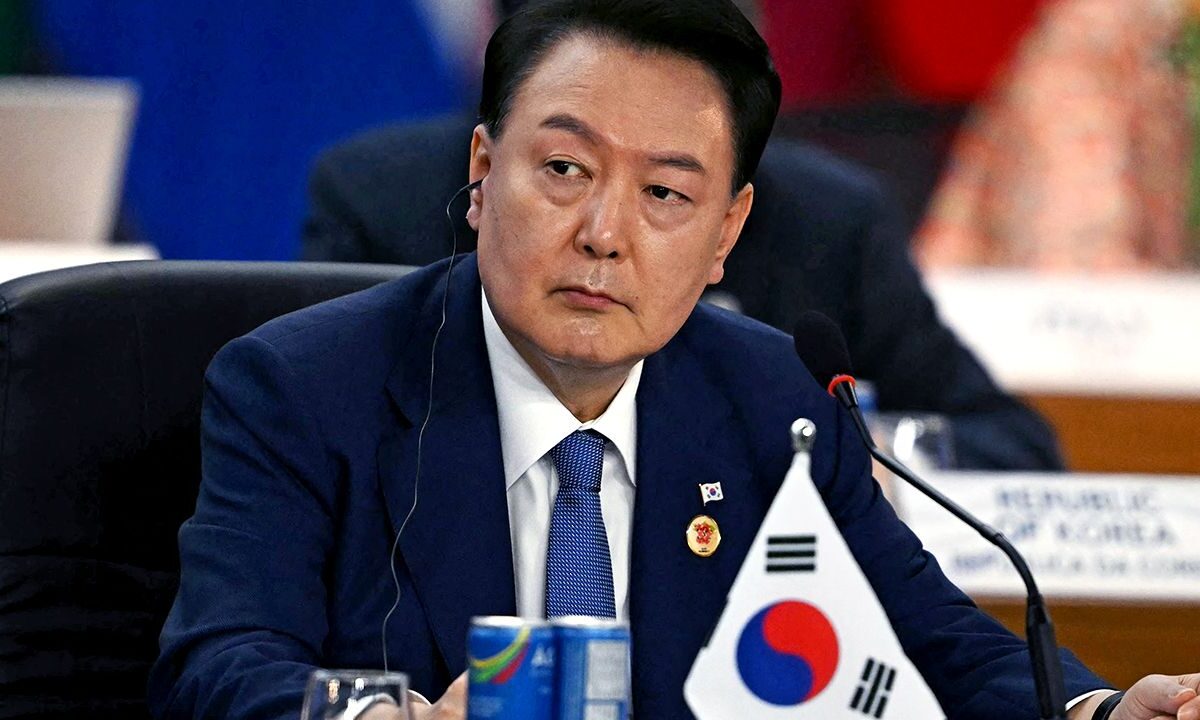
South Korea’s Former President, Yoon Suk Yeol. Image Source: AFP
South Korea has entered a defining chapter in its modern democratic history after former president Yoon Suk Yeol was sentenced to life in prison for leading an insurrection tied to his failed 2024 martial law declaration.
A three-judge panel at the Seoul Central District Court ruled that Yoon’s actions “fundamentally undermined the core values of democracy.” While prosecutors had sought the death penalty, the court instead imposed life imprisonment, a sentence that still ranks among the harshest ever handed to a former South Korean leader.
The ruling caps months of legal proceedings following a dramatic six-hour military rule declaration in December 2024 that triggered nationwide protests and political upheaval.
What Happened During the 2024 Martial Law Crisis?
On December 3, 2024, Yoon appeared in a late-night broadcast accusing opposition lawmakers of harboring “anti-state” forces and declared emergency martial law to “protect constitutional order.”
Within hours, heavily armed troops were deployed toward the National Assembly in Seoul. Lawmakers and aides reportedly barricaded entrances using furniture, while some scaled fences to enter the building. In an emergency vote, 190 lawmakers unanimously rejected the decree.
Yoon rescinded the order roughly six hours later, but the political damage had been done. He was impeached days later and formally removed from office by the Constitutional Court in April 2025.
The court concluded that Yoon had attempted to deploy military and police forces to impede lawmakers and arrest political rivals, including then-opposition leader Lee Jae Myung, now the country’s president.
Court Says Insurrection Damaged Democracy
In delivering the life sentence, judges stated that Yoon’s declaration of martial law severely harmed political neutrality within the military and police, weakened international credibility, and deepened political polarization.
However, the court rejected claims that Yoon had planned a year-long dictatorship plot, citing insufficient evidence. Judges also acknowledged that no fatalities occurred during the brief military rule, which some legal experts view as a mitigating factor in sparing him from execution.
South Korea has not carried out a death sentence since 1997, though capital punishment remains on the books.
Yoon, 65, is eligible for parole after serving 20 years.
READ ALSO
Truth Social backlash explodes after Trump shares racist video targeting Barack and Michelle Obama
Other Senior Officials Also Jailed
The insurrection trial extended beyond Yoon. Several senior officials were sentenced for their roles in the crisis:
- Former defence minister Kim Yong-hyun: 30 years
- Former prime minister Han Duck-soo: 23 years
- Former intelligence commander Roh Sang-won: 18 years
- Former police chief Cho Ji-ho: 12 years
Two officials were acquitted due to insufficient evidence.
The sweeping convictions underscore the scale of what the court described as an “insurrection from the top.”
Nation Divided: Protests and Political Fallout
Crowds of Yoon supporters gathered outside the courthouse following the verdict, some expressing outrage at what they described as a politically motivated decision. Others within the ruling Democratic Party argued that life imprisonment was too lenient and that the death penalty would have sent a stronger message.
Public opinion remains sharply divided. Surveys conducted earlier this year indicated that a majority of respondents favored capital punishment.
Yoon’s legal team has criticised the proceedings and is expected to appeal. Under South Korea’s judicial system, criminal cases can be tried three times, including a final review by the Supreme Court.
A Pattern in South Korean Politics
Yoon’s conviction adds to a long history of former South Korean presidents facing legal consequences after leaving office. Several predecessors, including Park Geun-hye and Lee Myung-bak, were imprisoned on corruption charges before receiving pardons.
Political analysts describe this as a reflection of intense factional rivalry within a single-term presidential system that grants sweeping executive power.
Current President Lee Jae Myung’s administration has reportedly pushed for legal amendments to prevent pardons for those convicted of insurrection, signaling that this case could reshape future governance norms.
FAQ
Why was Yoon Suk Yeol sentenced to life in prison?
He was convicted of leading an insurrection after declaring martial law in December 2024 and deploying military forces in a move the court ruled unconstitutional.
Did Yoon Suk Yeol receive the death penalty?
No. Although prosecutors sought the death penalty, the court sentenced him to life imprisonment instead.
What happened during South Korea’s 2024 martial law declaration?
Yoon declared emergency rule late at night, accusing opposition forces of anti-state activities. Lawmakers convened an emergency session and voted to overturn the decree within hours.
How long did martial law last in South Korea?
It lasted approximately six hours before being rescinded.
Can Yoon Suk Yeol appeal his conviction?
Yes. South Korea’s legal system allows criminal cases to be appealed up to the Supreme Court.
Who else was sentenced in the insurrection case?
Several senior officials, including former defence minister Kim Yong-hyun and former prime minister Han Duck-soo, received lengthy prison terms.
Has South Korea executed anyone recently?
No. South Korea has not carried out an execution since 1997, although capital punishment remains legal.
What impact does this verdict have on South Korea’s democracy?
Legal experts say the ruling reinforces constitutional limits on executive power and may influence future reforms regarding presidential authority and pardons.