

South Africa erupts over alleged Igbo King coronation: Who is Solomon Eziko and why the Eastern Cape protests turned violent

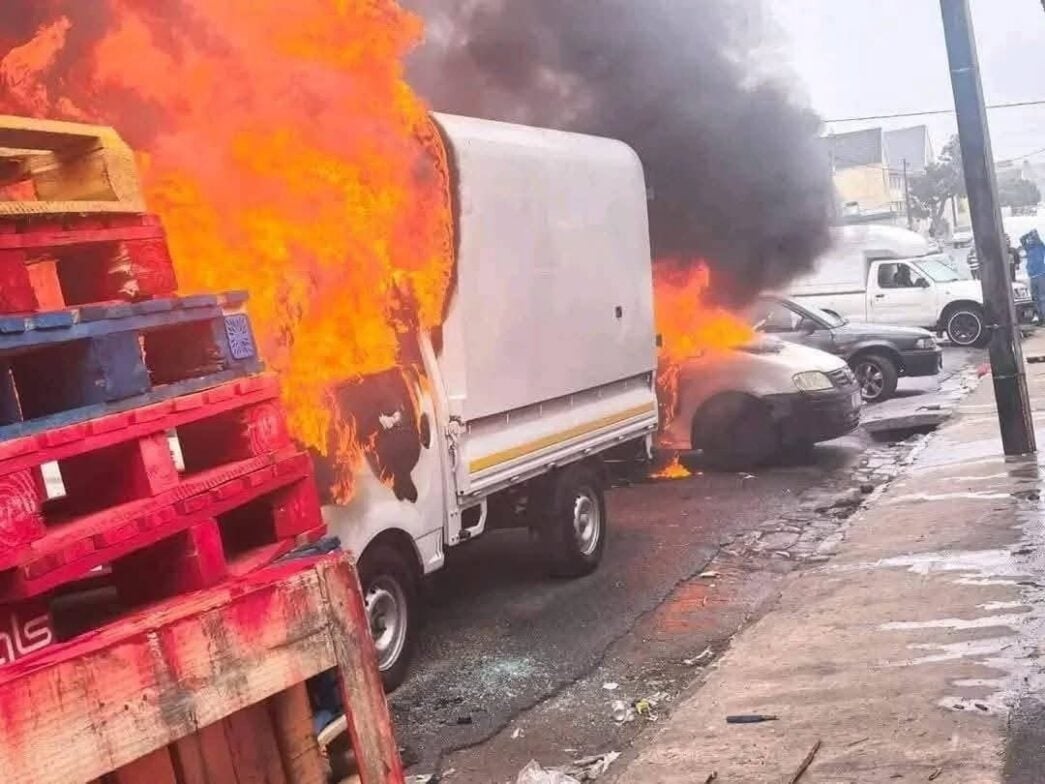
Protests erupt in South Africa over alleged Igbo king coronation
Tensions have exploded in South Africa’s Eastern Cape after an alleged Igbo king coronation triggered violent protests, looting, and xenophobic fears, placing Nigerians in the country under renewed scrutiny. The controversy centres on reports that a Nigerian man, Solomon Eziko, was crowned as an Igbo traditional leader during a cultural gathering in East London, a claim that has been fiercely rejected by Nigerian diplomats, who insist no political kingship was established.
The incident has quickly become one of the most talked-about diaspora flashpoints of 2026, with South African political actors, traditional leaders, and residents accusing organisers of undermining the country’s constitutional and traditional leadership systems. As videos of torched vehicles and vandalised foreign-owned properties spread online, many Nigerians are now asking a central question: Who is Solomon Eziko, and what exactly happened in South Africa?
What Happened in South Africa Over the Alleged Igbo King Coronation?
Violence broke out in KuGompo, Eastern Cape, after protests over the alleged installation of an Igbo king in South Africa escalated into chaos. According to multiple reports, demonstrators led by ActionSA, alongside traditional leaders and local residents, staged protests against what they described as an unlawful attempt to create a foreign traditional authority on South African soil.
What began as a political and cultural protest reportedly turned destructive, with vehicles torched, shops looted, and buildings allegedly owned by foreign nationals attacked. Some reports also indicated that police were forced to intervene as unrest spread. Videos shared online showed smashed windscreens, burning vehicles, and scenes of panic, further inflaming public debate around immigration, sovereignty, and traditional governance.
The backlash was driven by claims that the event represented more than a community gathering, with critics alleging it amounted to the crowning of a Nigerian king in the Eastern Cape, something they argued is inconsistent with South Africa’s laws and recognised traditional institutions.
Who Is Solomon Eziko?
At the centre of the controversy is Solomon Eziko, the Nigerian man identified in reports as the figure allegedly crowned during the event in East London, South Africa.
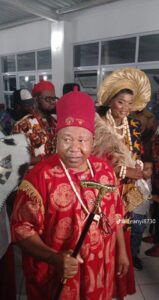
Based on the information available from the linked reports, Solomon Eziko is presented as a Nigerian associated with the Igbo community in South Africa, and he is the person protesters claim was installed as a traditional leader or “king” of the Igbo community in the Eastern Cape. However, there is no verified public profile in the supplied reports establishing him as a state-recognised monarch, political ruler, or officially recognised king under South African law.
This distinction is crucial.
In many Igbo diaspora communities, honorary titles and symbolic leadership roles are often used to preserve culture, organise festivals, mediate disputes, and represent community interests. Titles such as “Eze Ndi Igbo” are commonly understood as cultural or community leadership designations, not territorial kingship in the legal sense of a sovereign monarch.
So, while Solomon Eziko is widely being discussed as the alleged “Igbo king” in the media coverage, the available evidence from the linked reports suggests the controversy may stem from a cultural title or ceremony being interpreted by opponents as a formal coronation with political implications.
Did South Africa Officially Recognise an Igbo King?
No, there is no indication that South Africa officially recognised any Igbo king. This is one of the most important facts in the story.
South African political parties and commentators, including the Economic Freedom Fighters (EFF), stressed that only the Department of Cooperative Governance and Traditional Affairs (COGTA), through a process that can involve presidential approval under the Traditional and Khoi-San Leadership Act, 2019, can recognise a king or queen in South Africa.
That means any event held by a private group or diaspora community cannot legally create an official South African kingship.
This legal point is what turned the controversy into a national issue. Protesters argued that even the appearance of such a coronation was provocative and unlawful. But legally speaking, there is no evidence in the linked reports that the South African state conferred any royal or constitutional authority on Solomon Eziko.
Nigeria’s High Commission Clarifies: ‘No Igbo Traditional Ruler Was Crowned’
Nigeria’s High Commission in South Africa has pushed back strongly against the narrative.
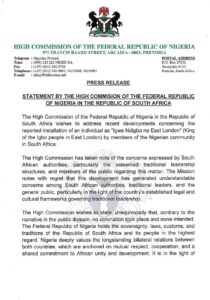
According to the diplomatic clarification cited in the reports, the gathering in East London was not a political coronation and did not establish a territorial or sovereign kingship. Instead, the mission said the event was a cultural gathering meant to celebrate Igbo heritage, which may have included traditional displays, symbolic honours, or community customs that were misunderstood outside the Nigerian cultural context.
The High Commission emphasised that:
- No challenge was made to South Africa’s sovereignty
- No recognised traditional authority was being replaced or rivalled
- The event had no political agenda
- The ceremony was about cultural identity and community expression
The mission also urged calm, restraint, and mutual understanding, noting that misinterpretation of cultural practices can easily fuel tensions in already sensitive environments.
READ ALSO
Why South Africans Reacted So Strongly
The anger in the Eastern Cape did not happen in a vacuum.
South Africa has long faced deep tensions around immigration, xenophobia, and economic frustration, and Nigerians are often caught in the middle of these debates. In this case, the alleged coronation tapped into several sensitive fault lines:
1. Sovereignty Concerns
Protesters argued that a foreign national being presented as a “king” in South Africa appeared to undermine the authority of recognised traditional leaders and the constitutional order.
2. Traditional Leadership Sensitivities
South Africa’s traditional institutions are formal and politically significant. Any perceived parallel structure, especially one involving a foreigner, can be seen as highly provocative.
3. Immigration Politics
ActionSA used the controversy to reinforce its hardline rhetoric on illegal immigration, while some protesters reportedly demanded deportations and tougher action against foreigners.
4. Historical Trauma
Some leaders referenced the Eastern Cape’s painful history of displacement, land dispossession, and homeland politics, arguing that any talk of a foreign “homeland” or kingship would trigger fierce resistance.
How This Mirrors the Ghana ‘Eze Ndi Igbo’ Controversy
This is not the first time an Igbo diaspora kingship title has sparked controversy abroad.
The report draws parallels with the 2025 backlash in Ghana, where Eze Chukwudi Ihenetu was installed as “Eze Ndi Igbo Ghana.” That move also triggered public anger, with critics arguing that foreign royal titles could clash with local sovereignty and traditional institutions.
In both Ghana and South Africa, the recurring issue is the same: a symbolic Igbo cultural title within the diaspora is being interpreted by some locals as a claim to political authority or territorial recognition.
This misunderstanding, or, in some cases, politicisation, has made diaspora cultural ceremonies increasingly controversial.
What This Means for Nigerians in South Africa
Following the unrest, the Nigerian High Commission in Pretoria reportedly advised Nigerians in South Africa to:
- Remain calm and vigilant
- Keep a low profile
- Avoid large gatherings
- Limit unnecessary travel
- Be careful with social media posts and misinformation
- Strictly obey local laws
This advisory reflects concern that the controversy could spill beyond the immediate protest site and trigger broader hostility toward Nigerian-owned businesses or communities.
For Nigerians living in South Africa, the issue is now bigger than one ceremony, it has become a test of diaspora safety, diplomatic messaging, and cultural sensitivity.
The Bigger Story: Culture, Identity and Misinterpretation
At its core, the Igbo king South Africa controversy is about how diaspora identity is expressed, and how those expressions are interpreted in host countries.
For many Igbo communities abroad, cultural titles are part of community organisation and heritage preservation. But in countries with strong formal traditional systems, those same titles can be read as a challenge to state authority or local custom.
That is why the story around Solomon Eziko matters: not simply because of who he is, but because his name has become a symbol of a much larger debate over migration, belonging, cultural rights, and national sovereignty.
As of now, the clearest available evidence from the linked reports suggests this was a disputed cultural event, not a state-recognised coronation, even though the fallout has already become a major regional and diaspora flashpoint.
FAQ
1. Who is Solomon Eziko?
Solomon Eziko is the Nigerian man identified in reports as the individual allegedly crowned during an Igbo cultural event in East London, South Africa. Based on the linked reports, he is associated with the Igbo community in South Africa, but there is no verified evidence in the supplied sources that he is an officially recognised king under South African law. The controversy appears to stem from a cultural or symbolic title being interpreted as a formal coronation.
2. Was an Igbo king officially crowned in South Africa?
There is no evidence that South Africa officially recognised or crowned an Igbo king. Nigeria’s High Commission in South Africa said the event was a cultural gathering, not a political or territorial coronation. Under South African law, official recognition of kingship falls under COGTA and may require presidential approval.
3. Why did the protests in South Africa turn violent?
The protests escalated because many demonstrators believed the alleged coronation violated South Africa’s sovereignty, constitutional order, and traditional leadership structures. Tensions were worsened by existing anxieties around immigration, xenophobia, and economic frustrations, leading to attacks on property allegedly owned by foreign nationals.
4. Where did the alleged Igbo king coronation happen?
Reports say the controversial event took place in East London, Eastern Cape, South Africa, while the most intense protests and unrest were reported in KuGompo.
5. What did the Nigerian High Commission say about the Igbo king claim?
The Nigerian High Commission said no Igbo traditional ruler was crowned in a way that challenged South African authority. It described the gathering as a cultural event celebrating Igbo heritage and said it had no political agenda and did not attempt to create any recognised kingship.
6. Is it legal to crown a foreign king in South Africa?
A private cultural group may hold symbolic or community events, but official kingship recognition in South Africa is regulated by law. Political parties like the EFF argued that only the state, through COGTA and processes under the Traditional and Khoi-San Leadership Act, 2019, can recognise a king or queen. So a diaspora ceremony cannot legally create an official South African monarch.
7. What does ‘Eze Ndi Igbo’ mean?
“Eze Ndi Igbo” roughly translates to “King/Leader of the Igbo people.” In diaspora contexts, it is often used as a symbolic cultural leadership title, not necessarily a territorial or state-recognised kingship.
8. Why are South Africans upset about an Igbo king title?
Many critics believe the use of the word “king” suggests political or territorial authority. In South Africa, where traditional leadership is formally structured and constitutionally sensitive, a foreign national being publicly presented as a king can be seen as provocative, even if the intention was purely cultural.
9. Were Nigerians attacked in South Africa over the protest?
The reports indicate that foreign-owned vehicles, shops, and buildings were attacked during the unrest. However, at the time of the reports, NiDCOM said it had not received official confirmation of direct attacks on Nigerians through formal diplomatic channels.
10. Is this similar to the Ghana ‘Eze Ndi Igbo’ controversy?
Yes. The report compares the South Africa situation to the backlash in Ghana, where the installation of Eze Chukwudi Ihenetu as “Eze Ndi Igbo Ghana” also triggered public concern about sovereignty and the role of foreign traditional titles.
11. What should Nigerians in South Africa do now?
The Nigerian High Commission reportedly advised Nigerians to stay vigilant, avoid unnecessary travel, keep a low profile, avoid large gatherings, and be cautious online. The goal is to reduce exposure to possible retaliatory violence or misinformation-driven tensions.
12. Is Solomon Eziko a recognised South African traditional ruler?
Based on the linked reports, no. There is no evidence that Solomon Eziko has been recognised by the South African government as a traditional ruler under the country’s legal framework.