

Rocket Launch Today: SpaceX set for Falcon 9 Starlink mission as company crosses 10,000 satellites in orbit

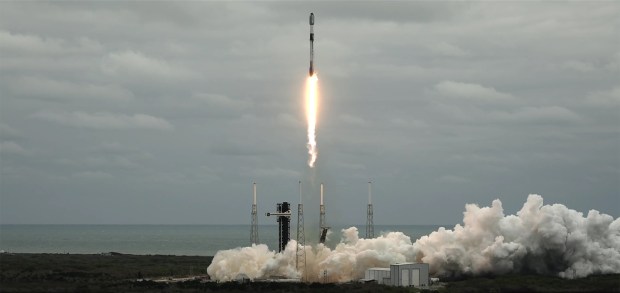
SpaceX Falcon 9 prepares for today’s Starlink launch from Cape Canaveral.
SpaceX is back on the launch pad today, with another high-profile Falcon 9 mission set to lift off from Florida as the company continues its rapid Starlink expansion. The rocket launch today is drawing strong interest from space fans, not just because it adds more satellites to orbit, but because it comes days after SpaceX crossed a major milestone: more than 10,000 active Starlink satellites in space.
According to launch coverage from Spaceflight Now, SpaceX is preparing to send 29 Starlink V2 Mini satellites into low Earth orbit on the Starlink 10-33 mission, a launch that would mark the company’s 35th Starlink mission of 2026. The mission is scheduled from Space Launch Complex 40 at Cape Canaveral Space Force Station in Florida.
What Time Is the Rocket Launch Today? SpaceX Falcon 9 Launch Window Explained
The rocket launch today is currently scheduled for 10:20 a.m. EDT (1420 UTC) on Thursday, according to Spaceflight Now’s live coverage page. The Falcon 9 will launch on a northeasterly trajectory after liftoff from Cape Canaveral. Spaceflight Now also reported that its live coverage would begin about an hour before launch, giving viewers a way to follow countdown milestones in real time.
Because launch times can shift due to weather or technical checks, readers should note that rocket launch schedules can change close to liftoff.
Starlink 10-33 Mission: What SpaceX Is Launching Today
Today’s Falcon 9 mission is designated Starlink 10-33, and its payload consists of 29 Starlink V2 Mini satellites bound for low Earth orbit. Spaceflight Now said the launch will further expand the company’s internet megaconstellation, which already exceeds 10,000 spacecraft.
This is significant because SpaceX’s Starlink network has become the dominant satellite constellation in orbit. Scientific American reported that as of March 17, 2026, more than 10,000 active Starlink satellites are now in space, accounting for roughly two-thirds of all satellites currently in orbit. The publication cited astrophysicist Jonathan McDowell’s tracking data, which put the operational total at 10,020 satellites after a March 17 Falcon 9 launch from California.
That milestone gives today’s launch even more weight: it is not just another Starlink mission, but part of the largest satellite deployment campaign in modern space history.
READ ALSO
Falcon 9 Booster Details: Reusable Rocket Set for Another Landing Attempt
Spaceflight Now reports that the mission will use Falcon 9 first-stage booster B1077, which is set to make its 27th flight. The booster previously supported missions including NASA’s Crew-5, CRS-28, and NG-20.
About 8.5 minutes after liftoff, the first stage is expected to attempt a landing on the droneship “Just Read the Instructions” in the Atlantic Ocean. If successful, Spaceflight Now said it would mark the 154th landing on that vessel and the 588th booster landing overall for SpaceX.
This reusability continues to be one of the biggest reasons SpaceX can launch so frequently. Scientific American noted that Falcon 9’s reusable architecture has enabled SpaceX to deploy Starlink at an extraordinary pace, helping the company cement its lead in the global satellite internet race.
Launch Weather Forecast: Will Today’s Rocket Launch Be Delayed?
Weather remains a factor for the rocket launch today. Spaceflight Now cited the 45th Weather Squadron, which forecast a 75% chance of favorable conditions at the opening of the launch window, dropping to 60% by the end. Meteorologists warned that coastal showers and mid-level clouds could drift near the pad, creating a low risk of violations involving the Cumulus Cloud Rule and Thick Cloud Layers rule.
For anyone asking “Will the SpaceX launch be delayed today?”, the current forecast is mostly favorable, but not perfect.
Why Today’s Rocket Launch Matters Beyond the Countdown
The phrase “rocket launch today” often trends because of the spectacle, but this mission also highlights a bigger story: Earth orbit is getting crowded fast.
Scientific American reported that SpaceX has launched 11,529 Starlink satellites since May 2019, though some have been replacements for deorbited or failed units. The publication also noted that Starlink now serves 10 million users and counting, while experts continue to raise questions about orbital congestion, collision avoidance, space debris, and astronomy interference.
The report added that SpaceX disclosed about 300,000 collision avoidance maneuvers in 2025 alone, underscoring how complex managing mega-constellations has become.
So while today’s launch may look routine, it is also part of a much larger debate over the future of commercial spaceflight, global internet access, and the long-term sustainability of near-Earth orbit.
How to Watch the Rocket Launch Today
Spaceflight Now said it would provide live coverage roughly one hour before liftoff, making it one of the easiest ways for readers to follow the mission as it happens.
FAQ
1. What is the rocket launch today?
The rocket launch today is SpaceX’s Falcon 9 Starlink 10-33 mission from Cape Canaveral Space Force Station in Florida. The mission is set to carry 29 Starlink V2 Mini satellites into low Earth orbit.
2. What time is the SpaceX rocket launch today?
The current scheduled liftoff time is 10:20 a.m. EDT (1420 UTC) on Thursday, according to Spaceflight Now’s live coverage. Launch times can shift if weather or technical conditions change.
3. Where is the rocket launching from today?
Today’s Falcon 9 is set to launch from Space Launch Complex 40 (SLC-40) at Cape Canaveral Space Force Station, Florida.
4. What is SpaceX launching today?
SpaceX is launching 29 Starlink V2 Mini satellites as part of the Starlink 10-33 mission, which is designed to expand the company’s satellite internet constellation.
5. How can I watch the rocket launch live today?
Spaceflight Now said it would begin live coverage about one hour before liftoff. Viewers commonly search for live streams through space news outlets and official mission coverage pages before launch.
6. Is the weather good for the SpaceX launch today?
The 45th Weather Squadron forecast a 75% chance of favourable conditions at the start of the window, dropping to 60% by the end. Coastal showers and mid-level clouds could still create minor risks.
7. Will the Falcon 9 booster land after launch today?
Yes. The Falcon 9 first-stage booster B1077 is expected to attempt a landing about 8.5 minutes after liftoff on the drone ship Just Read the Instructions in the Atlantic Ocean.
8. Which booster is flying on today’s SpaceX launch?
Today’s mission is scheduled to use booster B1077, a highly reused Falcon 9 first stage that would be making its 27th flight.
9. Has SpaceX really reached 10,000 Starlink satellites?
Yes. Scientific American reported that SpaceX now has more than 10,000 active Starlink satellites in orbit, with the operational total reaching 10,020 after a March 17, 2026 launch.
10. Why is the 10,000 Starlink satellites milestone important?
It marks a major shift in the space industry. Scientific American said Starlink now accounts for roughly two-thirds of all satellites currently in orbit, making it the dominant satellite constellation and a defining example of the mega-constellation era.
11. How many Starlink satellites has SpaceX launched in total?
Scientific American reported that SpaceX has launched 11,529 Starlink satellites since May 2019, though not all remain active because some were replacements for deorbited or failed spacecraft.
12. How many Starlink satellites are being launched today?
Today’s Starlink 10-33 mission is carrying 29 satellites.
13. Why does SpaceX launch Starlink so often?
SpaceX launches Starlink frequently because it is rapidly expanding its global internet network. The company’s reusable Falcon 9 rocket system allows for high launch cadence and lower costs, which has helped it dominate the satellite broadband market.
14. What are Starlink V2 Mini satellites?
Starlink V2 Mini satellites are compact next-generation Starlink spacecraft designed to improve network capacity and performance while remaining compatible with Falcon 9 launches. Today’s mission is deploying 29 of these satellites.