

Is Peter Obi rewriting the Abacha era? Why his comment has triggered a political storm

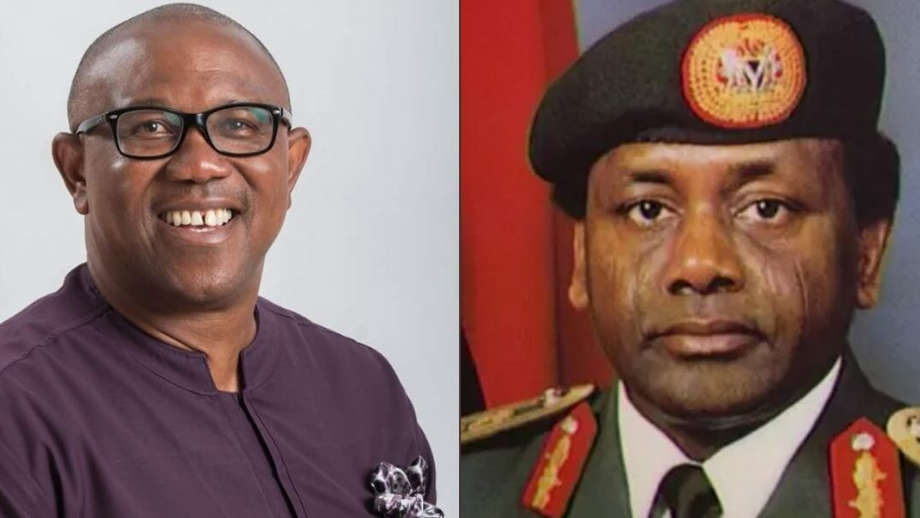
Peter Obi’s Abacha remark sparks backlash as Fani-Kayode defends NADECO’s democracy struggle.
A fresh political storm erupted on Thursday after Peter Obi made a controversial statement suggesting that late military ruler General Sani Abacha may now be seen by some as “more democratic” than some of Nigeria’s present-day leaders, a remark that triggered fierce backlash from former Aviation Minister Femi Fani-Kayode and reopened debate over the legacy of NADECO and the country’s pro-democracy struggle.
The comment, which quickly spread across social media and political circles, has become one of the most talked-about issues in Nigeria’s political space, with supporters describing it as a metaphorical criticism of current governance and critics calling it an unacceptable comparison that distorts the memory of military repression.
What Peter Obi Said About Abacha and Today’s Leaders
Peter Obi, a leading presidential aspirant on the ADC platform, made the remark in a statement on X (formerly Twitter), where he criticized what he described as the decline of democratic values in Nigeria.
Obi argued that many of those who once positioned themselves as defenders of democracy and human rights during the military era are now presiding over a system that undermines those same ideals.
He wrote that it was “an irony of history” that some of the people who claimed to have fought against military rule, particularly during the era of General Sani Abacha, now appear worse in their democratic conduct than the man they once opposed.
The former Anambra governor’s statement included the now-viral line that Abacha, once widely seen as the face of oppression, could be remembered as seemingly more democratic and more respectful of human rights than some of today’s so-called defenders of democracy.
That remark immediately sparked intense reactions online, especially because Abacha’s regime (1993–1998) remains one of the most controversial periods in Nigerian history, often associated with human rights abuses, suppression of dissent, detentions, and the execution of activists including Ken Saro-Wiwa.
Fani-Kayode Fires Back, Says Peter Obi Is Revising History
Reacting strongly, Femi Fani-Kayode, Nigeria’s ambassador-designate to Germany and a former minister, accused Peter Obi of trying to denigrate the leaders and members of the National Democratic Coalition (NADECO), the group that became a symbol of resistance against military rule following the annulment of the June 12, 1993 election.
Fani-Kayode said Obi’s statement was deeply offensive to those who fought, suffered, and, in some cases, died for Nigeria’s return to democracy.
According to him, NADECO members were imprisoned, exiled, tortured, and persecuted while resisting military dictatorship, and he insisted their sacrifices should not be trivialized by present-day political rhetoric.
He further alleged that Peter Obi worked “assiduously” for General Abacha during that era, while pro-democracy activists were risking their lives in opposition to the regime. Fani-Kayode also claimed that many younger political supporters may not fully understand the historical context of the Abacha years and the role played by different political actors at the time.
READ ALSO
Why the NADECO Legacy Still Matters in Nigerian Politics
The controversy has once again brought NADECO back into the national conversation.
The National Democratic Coalition emerged as one of the most influential pro-democracy movements in Nigeria after the annulment of the June 12, 1993 presidential election, widely believed to have been won by Chief MKO Abiola.
For many Nigerians, NADECO represents the resistance that helped sustain pressure on successive military governments and contributed to the eventual return to democratic rule in 1999.
That is why any suggestion that appears to downplay the brutality of the Abacha era or diminish the sacrifices of democracy activists often provokes strong emotional and political reactions.
Supporters of Peter Obi, however, argue that his statement should be read as a sharp indictment of current political hypocrisy, not as an endorsement of Abacha’s regime. They say his message was aimed at exposing how some politicians who once claimed moral superiority have failed to uphold democratic standards after gaining power.
Why Peter Obi’s Abacha Comparison Is So Controversial
The main reason the statement has generated such outrage is simple: General Sani Abacha remains widely associated with one of Nigeria’s darkest authoritarian chapters.
His administration is remembered for:
- Crackdowns on dissent
- Detention of political opponents
- Suppression of civil liberties
- International condemnation
- Execution of activists, including Ken Saro-Wiwa and the Ogoni Nine
Because of that legacy, comparing any democratic administration, however flawed, to Abacha is politically explosive.
Critics say such a comparison risks normalising authoritarian rule or minimising the pain of victims of military repression, while supporters of Obi insist the remark was rhetorical and meant to emphasize the severity of democratic decline under current leaders.
The Bigger Political Meaning Ahead of 2027
Beyond the immediate backlash, the Peter Obi–Abacha controversy may also shape the tone of political discourse heading into Nigeria’s 2027 election cycle.
The exchange reflects a growing trend in Nigerian politics where historical memory, democracy credentials, and legacy battles are becoming central campaign weapons. It also shows how figures linked to the June 12 struggle, military rule, and post-1999 democratic politics continue to influence public perception today.
As political alignments shift and opposition figures position themselves for 2027, controversies like this are likely to deepen debates about who truly fought for democracy, who benefitted from past regimes, and who can credibly claim the mantle of reform.
For now, Peter Obi’s comment has succeeded in doing one thing unmistakably: it has reignited a national conversation about Abacha, NADECO, democratic hypocrisy, and the unresolved tensions in Nigeria’s political history.
FAQ: Peter Obi, Abacha and the NADECO Controversy Explained
1. What did Peter Obi say about Abacha?
Peter Obi said that it is an “irony of history” that some people who once claimed to fight for democracy during the era of General Sani Abacha now appear worse in their democratic conduct than the late military ruler. He added that Abacha, once seen as the face of oppression, may now be remembered by some as “seemingly more democratic” and more respectful of human rights than certain present-day leaders.
2. Did Peter Obi praise Sani Abacha?
Not directly in a conventional sense, but his wording has been widely interpreted as controversial because it suggested that today’s democratic leaders may be performing worse than Abacha in terms of respecting democratic values and human rights. Supporters say it was a rhetorical criticism of current governance, while critics say it sounded like praise or rehabilitation of Abacha’s image.
3. Why is Peter Obi trending over Abacha?
Peter Obi is trending because his statement comparing present-day leaders to Sani Abacha touched a sensitive historical nerve in Nigeria. Abacha is widely remembered for authoritarian rule, human rights abuses, and repression, so any statement that appears to cast him in a better light quickly attracts strong public attention.
4. Why did Femi Fani-Kayode react so strongly to Peter Obi?
Femi Fani-Kayode said Peter Obi’s remark insulted the sacrifices of NADECO leaders and pro-democracy activists who resisted military rule in the 1990s. He argued that many people were jailed, tortured, exiled, or killed during the struggle against dictatorship, and he accused Obi of trying to rewrite history by downplaying that era.
5. What is NADECO and why is it important?
NADECO (National Democratic Coalition) was a major pro-democracy movement formed after the annulment of the June 12, 1993 presidential election. It became one of the strongest voices against military rule in Nigeria and pushed for the validation of MKO Abiola’s mandate. Its importance lies in its role in the resistance that helped sustain the fight for democracy.
6. Why is comparing Abacha to democratic leaders controversial?
It is controversial because Abacha’s regime is widely associated with repression, including:
- detention of opponents,
- suppression of free speech,
- intimidation of activists,
- and the execution of critics such as Ken Saro-Wiwa.
Because of that history, many Nigerians believe no democratic government should be compared favourably to his rule, even rhetorically.
7. Was Sani Abacha considered democratic?
Historically and politically, Sani Abacha is not regarded as a democratic leader. He ruled Nigeria as a military head of state from 1993 to 1998 and his administration is widely described as authoritarian. While some people may debate infrastructure, security, or economic management under his regime, his government is broadly remembered for suppressing democratic freedoms.
8. What happened during the Abacha era in Nigeria?
The Abacha era (1993–1998) is remembered for:
- military rule,
- political crackdowns,
- detention of opposition figures,
- exile of pro-democracy activists,
- international isolation,
- and the execution of Ken Saro-Wiwa and the Ogoni Nine.
It remains one of the most debated and emotionally charged periods in Nigeria’s modern political history.
9. Did Peter Obi attack NADECO directly?
From the reports provided, Peter Obi did not directly name NADECO members individually in his original comment, but he referenced the “so-called champions of activism from the NADECO days.” That wording was interpreted by critics, especially Fani-Kayode, as a dismissal of the role NADECO played in Nigeria’s democratic struggle.
10. What does this controversy mean for 2027 politics?
The controversy could become significant ahead of the 2027 general election because it raises questions about:
- political credibility,
- historical legacy,
- democracy credentials,
- and how candidates frame national memory.
It may also be used by opponents to challenge Peter Obi’s messaging and political positioning.
11. Is Peter Obi saying today’s democracy is failing?
Yes, that appears to be the central message behind his statement. Obi’s comment suggests that some leaders who once claimed to defend democracy are now undermining democratic values, human rights, and accountability, making current governance look deeply disappointing in comparison to the ideals they once preached.