

What is “Perfidy”? Pentagon boat strike sparks war-crime debate over disguised military tactics

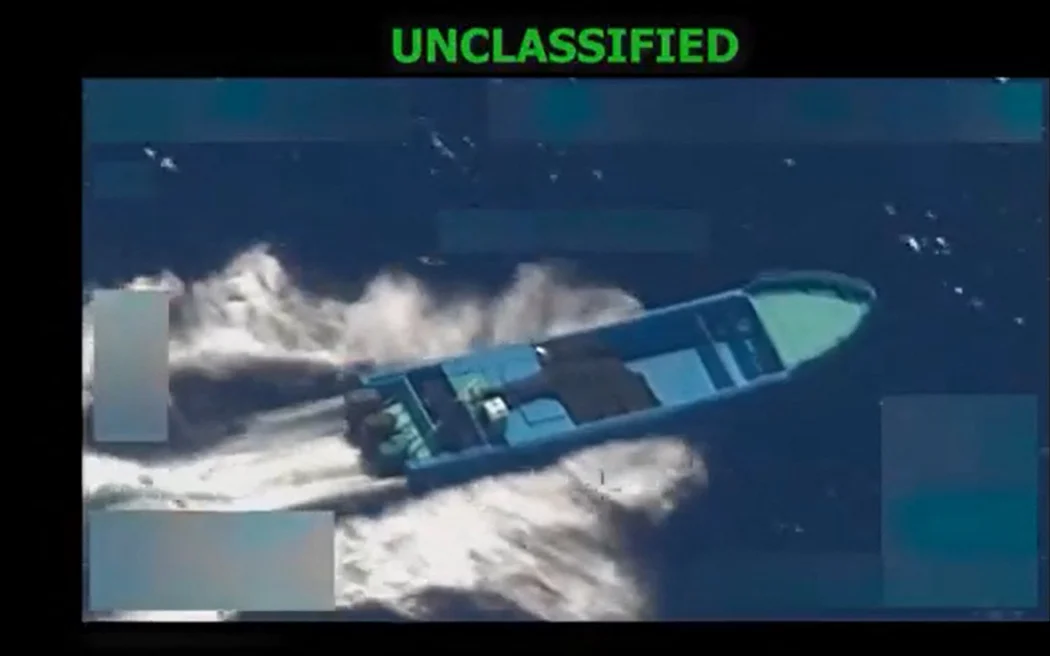
Legal experts debate “perfidy” after U.S. boat strike
The rarely discussed war-crime concept of perfidy has moved into the global spotlight following revelations about a U.S. military strike in the Caribbean that allegedly involved disguised aircraft tactics. Legal experts now say the operation may raise serious questions under international humanitarian law, reigniting debate over how far military deception can go before crossing a legal red line.
The controversy centers on a September 2025 missile strike targeting an alleged drug-smuggling boat, an operation reportedly authorized under the Trump administration. According to investigative reporting, the aircraft involved was painted to resemble a civilian plane and carried its weapons inside the fuselage, rather than visibly under its wings, an approach that some legal scholars argue could amount to perfidy.
What Is Perfidy Under International Law?
Perfidy is a prohibited act of war under international humanitarian law, specifically outlined in the Geneva Conventions and Additional Protocol I. It refers to acts in which a combatant feigns civilian or protected status in order to carry out an attack.
In simple terms, perfidy occurs when a military force deceives an enemy into believing it is not a legitimate combatant, then launches an attack while benefiting from that false protection. Common examples include pretending to surrender, posing as civilians, or disguising military equipment as non-combatant assets.
“Shielding your identity is an element of perfidy,” said retired Maj. Gen. Steven Lepper, a former Air Force judge advocate, in comments cited by The New York Times. “If the aircraft flying above is not identifiable as a combatant aircraft, it should not be engaged in combatant activity.”
Why the Pentagon Strike Is Drawing Scrutiny
According to reports, the aircraft involved in the Caribbean operation lacked traditional military markings and was not painted in the standard military gray. While it reportedly transmitted a military tail number over radio communications, legal experts argue that visual identification matters, particularly in combat scenarios governed by the law of armed conflict.
The strike reportedly killed 11 people, including two survivors of the initial missile impact who were later targeted while clinging to wreckage. Lawmakers briefed on the footage said the individuals were visibly waving at the aircraft before being killed, an act that, if confirmed, could violate rules protecting shipwrecked persons, who are explicitly safeguarded under international law.
READ ALSO
Crimea: The peninsula at the heart of the Russia-Ukraine war
Previous War-Crime Allegations Resurface
This is not the first time the operation has raised alarms. Defense Secretary Pete Hegseth was already facing criticism over allegations that he ordered a second strike on survivors. Reports suggest he issued a command to “kill everybody,” language that alarmed even some officials within the administration.
“I’m not even a military lawyer and I knew this would be illegal,” one unnamed official told investigative outlet Zeteo. “There’s defending the homeland, and then there’s criminal behavior.”
Pentagon Response and Policy Shift
The Pentagon has denied wrongdoing, stating that all aircraft used in operations comply with domestic and international law. A spokesperson emphasized that the U.S. military employs both standard and non-standard aircraft depending on mission requirements, each vetted through a rigorous procurement and legal review process.
However, officials acknowledged that the military has since shifted to using clearly identifiable aircraft, a move that some analysts see as an implicit recognition of legal risk.
Both Defense Secretary Hegseth and Secretary of State Marco Rubio have defended the strikes as lawful, arguing they were necessary to combat transnational drug trafficking.
Why Perfidy Matters Beyond This Case
The perfidy debate has implications far beyond a single strike. If established, it could set a precedent affecting future military operations, the use of covert aircraft, and how states balance deception with legal obligations.
Military deception itself is not illegal. Camouflage, decoys, and misinformation are permitted. The line is crossed when deception exploits protected civilian or humanitarian status, undermining the legal framework designed to limit harm during armed conflict.
As investigations and public scrutiny continue, the case has become a defining example of how modern warfare, technology, and secrecy collide with centuries-old legal principles.
FAQ
What does perfidy mean in war?
Perfidy refers to a war crime where a combatant pretends to be a civilian or otherwise protected person in order to attack an enemy.
Is perfidy illegal under international law?
Yes. Perfidy is prohibited under the Geneva Conventions and is considered a serious violation of the law of armed conflict.
How is perfidy different from military deception?
Military deception is legal when it does not involve pretending to have protected civilian or humanitarian status. Perfidy crosses that line.
Why is the Pentagon strike being investigated for perfidy?
Legal experts argue the use of an aircraft disguised as civilian could mislead targets into believing it was non-combatant, which may violate international law.
Are disguised aircraft always illegal in war?
Not necessarily. The legality depends on whether the disguise falsely claims civilian or protected status during an attack.
What happens if perfidy is proven?
If proven, perfidy can constitute a war crime, potentially leading to investigations, sanctions, or international legal action.