

OpenClaw creator joins OpenAI after Meta makes offer: Will the viral AI agent stay open source?

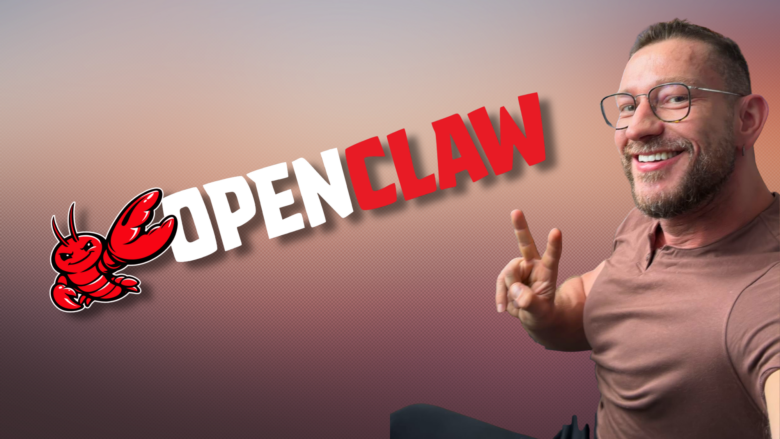
Peter Steinberger’s OpenClaw. Credit: OpenClaw/P. Steinberger
The viral AI agent OpenClaw has moved from open-source sensation to Silicon Valley battleground in a matter of weeks. After amassing more than 180,000 GitHub stars and igniting global interest in autonomous AI agents, creator Peter Steinberger is officially joining OpenAI, CEO Sam Altman confirmed.
At the same time, acquisition offers from Meta and other tech giants have intensified scrutiny over whether the fast-rising project will remain open source, or become part of a corporate AI arms race.
OpenClaw Creator Peter Steinberger Joins OpenAI
In a post on X, Sam Altman announced that Peter Steinberger, the Austrian developer behind OpenClaw, will join OpenAI to “drive the next generation of personal agents.” Altman said OpenClaw will “live in a foundation as an open-source project” inside the company, signaling continued support rather than full absorption.
Altman described Steinberger as “a genius with a lot of amazing ideas about the future of very smart agents interacting with each other.” He added that OpenClaw is expected to quickly become core to OpenAI’s product offerings.
The financial terms of the move were not disclosed.
OpenAI, recently valued at approximately $500 billion, has aggressively pursued AI talent amid mounting competition from Google and Anthropic, whose Claude models continue gaining enterprise traction.
What Is OpenClaw and Why Is It Going Viral?
OpenClaw is an open-source AI agent platform that can autonomously complete tasks, manage workflows, and interact with online services with minimal human oversight. Unlike traditional chatbots, OpenClaw can modify itself, coordinate multiple agents, and execute complex instructions.
Launched just last month, the tool quickly surged to 180,000 GitHub stars, an extraordinary milestone in open-source development. It previously operated under the names Clawdbot and MoltBot before settling on OpenClaw following trademark and security challenges.
Its rise reflects growing demand for AI agents capable of replacing traditional apps. Steinberger has predicted that agent-driven systems could eliminate up to 80% of existing applications by automating tasks like scheduling, ordering food, managing health tracking, and coordinating meetings.
READ ALSO
Is Google’s Gemini 3 becoming unstoppable? Inside the ‘code red’ panic shaking OpenAI
Acquisition Offers From Meta and OpenAI Spark Open-Source Debate
Before agreeing to join OpenAI, Steinberger revealed that both Mark Zuckerberg and Sam Altman had made acquisition offers. According to Steinberger, he would only consider a deal if the project remained open source.
“My conditions are that the project stays open source,” he said publicly, emphasizing that OpenClaw is “too important to just give to a company and make it theirs.”
Steinberger compared his ideal outcome to the Chrome–Chromium model, where a corporate-backed product coexists with an open-source foundation.
The offers underscore intensifying competition among AI heavyweights as autonomous agents become the next frontier in artificial intelligence.
China Expansion and Global Adoption
OpenClaw has also gained rapid adoption in China, where it can be paired with Chinese-developed large language models such as DeepSeek. It has been configured to work with local messaging apps, expanding its reach beyond Western ecosystems.
Chinese search giant Baidu reportedly plans to give users of its smartphone app direct access to OpenClaw, a move that could dramatically increase user adoption.
The platform’s flexibility, including compatibility with multiple models, has made it attractive to developers worldwide.
Security Risks and Open-Source Concerns
Despite enthusiasm, OpenClaw’s openness has raised cybersecurity concerns. Researchers warn that highly customizable AI agents could be modified for malicious activity if not properly monitored.
Steinberger himself faced a major crisis during earlier rebranding efforts, when crypto scammers hijacked accounts and distributed malware under the project’s name. The incident nearly led him to abandon the platform.
The experience highlighted both the power and vulnerability of viral open-source software.
AI Talent Wars Intensify
OpenClaw’s trajectory comes amid escalating competition in the generative AI market. Anthropic recently introduced Claude Opus 4.6, promoting stronger coding and long-duration task performance. Meanwhile, Meta and Google continue pouring billions into AI research and acquisitions.
OpenAI’s recruitment of Steinberger signals a strategic bet on agentic AI, systems capable of acting autonomously rather than simply responding to prompts.
If successful, OpenClaw could help redefine how users interact with software altogether.
FAQ
What is OpenClaw?
OpenClaw is an open-source AI agent platform that autonomously performs digital tasks, manages workflows, and interacts with online services without constant human supervision.
Who created OpenClaw?
OpenClaw was created by Austrian software developer Peter Steinberger.
Is OpenClaw being acquired by OpenAI?
OpenAI has brought Peter Steinberger into the company, and OpenClaw will operate within a foundation supported by OpenAI. Full acquisition terms have not been disclosed.
Did Meta try to buy OpenClaw?
Yes. Steinberger confirmed that Meta CEO Mark Zuckerberg made an acquisition offer.
Will OpenClaw remain open source?
According to Steinberger and OpenAI CEO Sam Altman, OpenClaw will continue as an open-source project under a foundation structure.
Why is OpenClaw important?
OpenClaw represents a new generation of AI agents capable of automating complex digital tasks, potentially replacing many standalone apps.
How popular is OpenClaw?
The project surpassed 180,000 GitHub stars shortly after launch, making it one of the fastest-growing open-source AI projects in recent memory.
Is OpenClaw available in China?
Yes. OpenClaw has gained traction in China and can integrate with Chinese language models and platforms. Baidu is reportedly exploring integration into its smartphone app.
What risks are associated with OpenClaw?
Experts warn that open-source AI agents can be modified in ways that pose cybersecurity risks if safeguards are not implemented.