

Oluremi Tinubu Food Bank fund sparks Nationwide buzz as Dangote, FG and NNPC back N66bn anti-hunger drive for Nigerian children

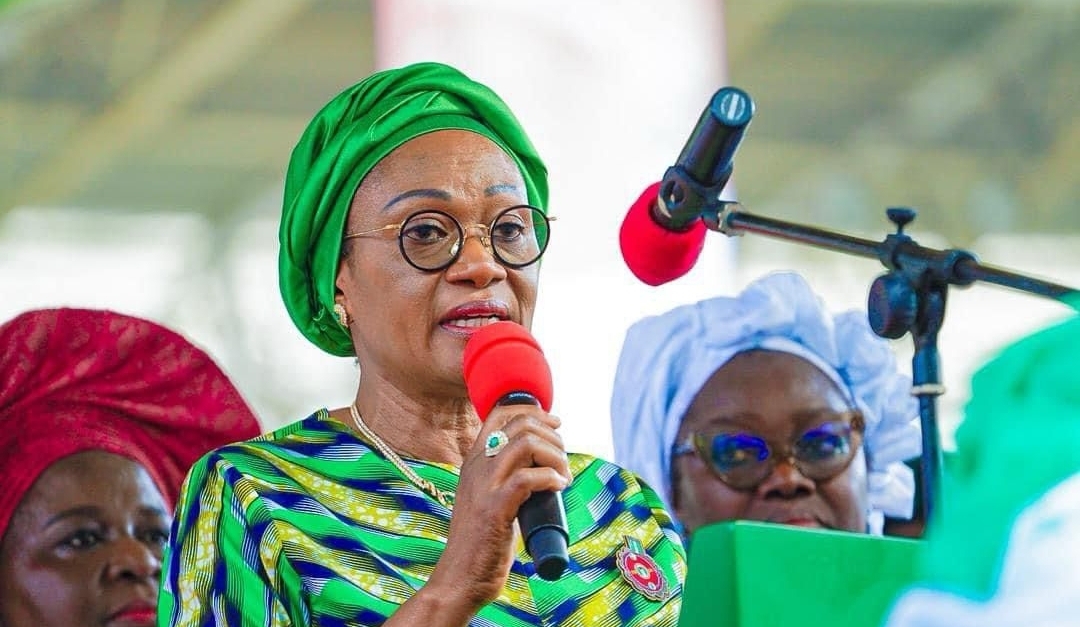
Oluremi Tinubu food bank attracts over N66bn
Nigeria’s First Lady, Senator Oluremi Tinubu, has launched a major national anti-hunger initiative after pledges to the National Community Food Bank Programme climbed past N66 billion, positioning the scheme as one of the most ambitious recent interventions targeting child malnutrition, food insecurity, and vulnerable households across the country.
The programme, unveiled in Abuja on Thursday during the inauguration of its Board of Trustees and a fundraising event, is designed to support children under six, pregnant women, nursing mothers, orphans, and other nutritionally vulnerable Nigerians through community-based food distribution systems.
At the launch, Oluremi Tinubu declared that child malnutrition remains a national emergency, stressing that delays in addressing the crisis threaten the health, development, and future productivity of millions of Nigerian children.
Oluremi Tinubu says child malnutrition is a national priority
Speaking at the event, the First Lady described the nutrition crisis as urgent and deeply tied to Nigeria’s long-term development goals.
She said millions of Nigerian children still lack regular access to the nutrition required for healthy growth, warning that every day of inaction weakens their future potential. According to her, the Community Food Bank Programme is a sustainable intervention aligned with President Bola Ahmed Tinubu’s Renewed Hope Agenda.
Oluremi Tinubu also framed the initiative as more than a charitable response, saying it is a structured national effort to ensure that “no child goes to bed hungry” in Nigeria.
How much was raised? Pledges exceed N66bn for Nigeria’s food bank scheme
Funding announcements at the launch quickly became the headline of the event, with combined commitments from public institutions, private foundations, and supporters pushing the projected value of the programme above N66 billion.
Among the biggest pledges:
- Aliko Dangote Foundation committed N20 billion in-kind support over five years
- Federal Government approved N17 billion through the Social Action Fund
- Nigerian Governors’ Forum (proposed counterpart funding) could add N18 billion if all 36 states contribute N500 million each
- NNPC Limited pledged N10 billion over five years
- Sir Emeka Offor Foundation pledged N500 million
- Anonymous supporters donated $500,000 (reported as roughly N750 million)
- Oluremi Tinubu personally pledged N500 million
While one report placed total commitments at over N65 billion, another put the projected figure at above N66 billion, largely depending on whether the governors’ proposed counterpart contribution is fully counted at launch.
Dangote Foundation leads private sector support
The Aliko Dangote Foundation emerged as the biggest private-sector contributor, announcing a N20 billion in-kind commitment spread across five years for the supply of fortified and nutritious food products.
The pledge signals significant corporate backing for the programme and adds weight to the federal government’s attempt to build a multi-stakeholder response to worsening food insecurity and child undernutrition in Nigeria.
Also joining the donor list, NNPC Limited committed N10 billion over the same five-year period, while the Sir Emeka Offor Foundation made an immediate N500 million commitment.
How the National Community Food Bank Programme will work
Officials say the National Community Food Bank Programme will establish a network of community-based food banks linked to Primary Health Care Centres and supported by the Basic Health Care Provision Fund framework.
The scheme will be implemented in partnership with:
- Federal Ministry of Health and Social Welfare
- National Primary Health Care Development Agency (NPHCDA)
- Bank of Agriculture
Beneficiaries will receive locally sourced, nutritious food through a voucher-based system at designated community food banks.
The programme is expected to prioritise:
- Malnourished children under six
- Pregnant women
- Lactating mothers
- Orphans and vulnerable children
- Households facing severe nutritional and economic stress
According to officials, the first phase targets 500,000 households within the first year.
READ ALSO
Focus on grassroots delivery across wards and local governments
A major feature of the scheme is its community-level design. The programme is intended to function through Nigeria’s ward and local government structures, with procurement expected to happen locally to both improve efficiency and stimulate local economies.
Health Minister Prof. Muhammad Ali Pate said the federal government plans to decentralise procurement through community-based platforms in wards across the country using simplified systems that allow local sourcing.
This approach is expected to strengthen community nutrition systems while ensuring food reaches households faster and in a more accountable way.
Why the programme matters: Nigeria’s child malnutrition crisis
The urgency behind the initiative reflects Nigeria’s worsening nutrition indicators.
Officials at the launch said around 32 per cent of children under five in Nigeria are stunted, placing the country among the worst affected globally. The Minister of Agriculture and Food Security, Abubakar Kyari, also noted that roughly 12 million Nigerian children under five are stunted, describing the challenge as one that requires better food distribution, not just higher food production.
That framing is crucial: the government is presenting the food bank as a systemic nutrition intervention, not simply a temporary relief programme.
Governors yet to finalise counterpart funding
Although the Nigerian Governors’ Forum (NGF) signalled support, its proposed contribution remains subject to further consultations.
NGF Chairman and Kwara State Governor AbdulRahman AbdulRazaq said he would engage fellow governors on aligning a counterpart fund with the federal government’s commitment. If every state contributes N500 million, that would inject N18 billion more into the programme.
This means the final funding size may rise even further if state governments formally sign on.
A high-profile anti-hunger initiative with political and public health implications
Beyond the fundraising figures, the launch positions Oluremi Tinubu’s food bank initiative as a flagship social intervention under the administration’s broader Renewed Hope narrative.
With the cost-of-living crisis still biting and food inflation remaining a major public concern, the success of the National Community Food Bank Programme will likely be judged not by pledges alone, but by how quickly food reaches vulnerable families, especially in rural and low-income communities.
For now, the programme has secured a strong start, combining presidential backing, corporate philanthropy, health-sector coordination, and grassroots delivery plans in what could become one of Nigeria’s most closely watched social protection projects in 2026.
FAQ: Oluremi Tinubu Food Bank Funding and Nigeria’s National Community Food Bank Programme
1. What is Oluremi Tinubu’s food bank programme?
Oluremi Tinubu’s food bank initiative is the National Community Food Bank Programme, a federal-backed scheme launched in 2026 to fight child malnutrition, hunger, and food insecurity in Nigeria. It is designed to distribute locally sourced nutritious food to vulnerable groups through community food banks linked to primary healthcare centres.
2. How much was raised for Oluremi Tinubu’s food bank?
Pledges announced at launch ranged from over N65 billion to more than N66 billion, depending on whether projected governors’ counterpart funding is fully counted. The total includes commitments from the Federal Government, Aliko Dangote Foundation, NNPC Limited, private donors, and other supporters.
3. Who donated to Oluremi Tinubu’s food bank?
Major donors and pledges include:
- Aliko Dangote Foundation – N20bn
- Federal Government – N17bn
- NNPC Limited – N10bn
- Sir Emeka Offor Foundation – N500m
- Anonymous supporters – $500,000
- Oluremi Tinubu – N500m personal pledge
- Potential governors’ counterpart funding – N18bn if all 36 states contribute N500m each
4. Did President Bola Tinubu approve funding for the food bank?
Yes. According to officials at the launch, President Bola Ahmed Tinubu approved a N17 billion special intervention through the Social Action Fund to support the National Community Food Bank Programme.
5. How much did Dangote donate to Oluremi Tinubu’s food bank?
The Aliko Dangote Foundation pledged N20 billion in-kind support over five years, mainly for the provision of fortified and nutritious food products.
6. How much did NNPC donate to the food bank programme?
NNPC Limited pledged N10 billion, to be disbursed over five years, in support of the National Community Food Bank Programme.
7. What is the National Community Food Bank Programme in Nigeria?
It is a community-based nutrition intervention created to make healthy food accessible to children under six, pregnant women, nursing mothers, and vulnerable households. The programme will use community food banks, vouchers, and primary healthcare centres to deliver support.
8. Who will benefit from Oluremi Tinubu’s food bank?
The main beneficiaries are:
- Children under six
- Pregnant women
- Lactating mothers
- Orphans and vulnerable children
- Low-income households at nutritional risk
9. How will the Nigeria food bank scheme work?
Beneficiaries are expected to receive vouchers that can be used to access locally sourced nutritious food at designated community food banks. The system will be tied to Primary Health Care Centres and supported by the Federal Ministry of Health, NPHCDA, and the Bank of Agriculture.
10. Will the programme cover all of Nigeria?
The initiative is designed as a nationwide scheme. Reports indicate it is intended to operate across wards and local government structures, with a goal of building a system that can reach communities across the country.
11. How many households will benefit from the food bank in the first year?
Officials said the programme is targeting 500,000 households in its first year.
12. Why is Oluremi Tinubu’s food bank important?
The programme is important because child malnutrition remains a severe public health challenge in Nigeria. Officials said 32% of Nigerian children under five are stunted, while millions of households struggle with food insecurity and rising living costs.
13. Is child malnutrition really a national emergency in Nigeria?
Yes. Nigerian officials and public health experts increasingly describe child malnutrition as a national emergency because it affects:
- Child growth and brain development
- School readiness and productivity
- Under-five mortality
- Long-term economic outcomes
14. What is the connection between the food bank and the Renewed Hope Agenda?
Oluremi Tinubu and other officials said the programme aligns with President Tinubu’s Renewed Hope Agenda, especially its goals around social welfare, health outcomes, community resilience, and poverty reduction.
15. Are state governors contributing to the programme?
Not fully yet. The Nigerian Governors’ Forum has expressed support, but the contribution is still being discussed. If all 36 governors contribute N500 million each, the scheme could gain an extra N18 billion.
16. Will the food bank only help children?
No. Although children under six are the central focus, the programme also plans to support:
- Pregnant women
- Nursing mothers
- Orphans
- Other nutritionally vulnerable households
17. What makes this food bank different from regular food relief programmes?
Unlike one-off food palliatives, the National Community Food Bank Programme is being presented as a structured, long-term system with:
- A trust fund
- A Board of Trustees
- Community procurement
- Healthcare-linked distribution
- Voucher-based access
- Locally sourced nutrition support
18. Where was Oluremi Tinubu’s food bank launched?
The programme was launched at the State House Conference Centre in Abuja during the inauguration of the Board of Trustees and fundraising ceremony.
19. Who is managing the Community Food Bank Trust Fund?
The scheme is expected to be managed through a structured trust arrangement, with the Bank of Agriculture playing a key implementation/management role, while the Board of Trustees provides oversight.