

Netanyahu under pressure as Iran war enters new phase: Why Israel’s ‘total victory’ narrative is facing a major political test

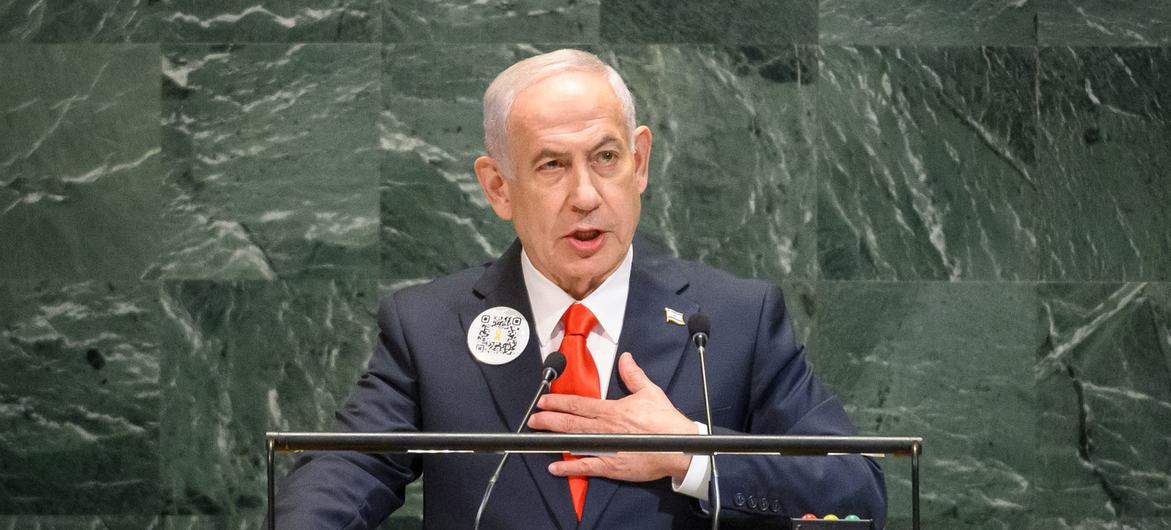
Prime Minister Benjamin Netanyahu of Israel addresses the general debate of the General Assembly’s eightieth session. Image Credit: UN Photo/Loey Felipe
Benjamin Netanyahu is entering one of the most politically defining moments of his career as Israel’s war with Iran appears to be approaching a new and uncertain phase. After weeks of framing the conflict as a historic campaign that could reshape the Middle East, the Israeli prime minister is now confronting a difficult reality: the prospect of regime change in Tehran appears to be fading, even as Israel and the United States claim major military gains.
For Netanyahu, the war has always been more than a battlefield confrontation. It is also deeply tied to his political identity, his national security doctrine, and the legacy he hopes to leave behind. But as questions grow over whether Israel can truly deliver the “total victory” he has promised, the prime minister is facing a serious political test at home, one that could define the next chapter of Israeli politics.
Netanyahu’s Iran War Narrative Faces a New Reality
For decades, Benjamin Netanyahu has built much of his public image around confronting Iran. His long-standing warnings about Tehran’s military ambitions and regional influence have shaped both his political brand and Israel’s broader security messaging.
Throughout the current Iran war, Netanyahu described the campaign in sweeping terms, calling it a “fateful campaign” for Israel’s future and signaling that the conflict could fundamentally transform the region. Israeli military leaders also emphasised the scale of the mission, presenting it as a generational struggle over Israel’s long-term survival.
However, despite those sweeping claims, Israel now appears to be signaling that the war may end without toppling Iran’s ruling system. That marks a notable shift from earlier rhetoric that openly raised hopes of regime change after Israeli strikes targeted top Iranian leadership and after repeated appeals were made for Iranians to rise up internally.
This shift matters politically because Netanyahu’s messaging had raised expectations far beyond limited military degradation. If the Iranian system survives, even in a weakened state, critics may ask whether Israel truly achieved the strategic breakthrough its leadership promised.
Why Regime Change in Iran Matters to Netanyahu’s Political Legacy
The stakes are unusually high for Netanyahu because this conflict has been framed as the culmination of a political and military worldview he has championed for years.
Supporters of regime change argued that removing or fatally weakening Iran’s leadership could dramatically reduce support for regional armed groups hostile to Israel, including Hezbollah and Hamas. That would not only change the military balance, but potentially alter Israel’s long-term strategic environment.
But if the Iranian regime remains in place, Netanyahu could face a familiar question: how long before the next war?
That concern is especially sharp because Israel already declared a “historic victory” after its previous war with Iran in 2025, only to return to a larger conflict months later. This time, Israeli officials say the damage to Iran’s missile infrastructure, military leadership, and production capabilities is deeper and more lasting. Still, even Israeli voices have acknowledged that some of the effects may be temporary rather than permanent.
That creates a political vulnerability for Netanyahu. If he sells the current conflict as transformational but Israel ends up facing renewed threats later, opponents may argue that the prime minister overpromised and underdelivered.
READ ALSO
Israel-Iran war live: New casualties in Northern Israel as Tehran erupts during Al Quds day rally
Israel’s Unfinished Wars in Gaza and Lebanon Add Pressure
Netanyahu’s political challenge is not only about Iran.
Even as Israel claims gains in the Iran theater, the country remains deeply entangled in other unresolved fronts. Hamas still retains influence in parts of Gaza, while Hezbollah has intensified its role in the regional conflict, opening another major front from Lebanon.
Israeli officials have made clear that the military campaign in southern Lebanon could expand, with some suggesting that broader operations remain under consideration. The public message from military leadership has stressed “persistence and patience,” signaling that the northern conflict may continue for an extended period.
That raises a central question for Israeli voters: Can military escalation across multiple fronts produce lasting security without a political settlement?
For Netanyahu, this is risky terrain. His critics argue that repeated military campaigns have not yet delivered a stable end state in Gaza, Lebanon, or Iran. If the public begins to view the current war as another open-ended cycle rather than a decisive turning point, the prime minister’s “War of Redemption” narrative could weaken.
Could the Iran War Still Strengthen Netanyahu Politically?
Despite the risks, the conflict could still work in Netanyahu’s favor, at least in the short term.
Public opinion in Israel has reportedly remained broadly supportive of the regional war effort, even after prolonged fighting and growing war fatigue. For many Israelis, the confrontation with Iran and its allied forces is seen as part of a wider struggle that began after the October 7, 2023 Hamas attacks and continues to shape national security priorities.
That gives Netanyahu political room to argue that, even without regime change, the war has already reshaped the balance of power in Israel’s favor. He has already told Israelis that “this is no longer the same Iran, this is no longer the same Middle East, and this is not the same Israel.”
If that message resonates, Netanyahu could try to use the war’s momentum to rebuild his image ahead of elections expected later this year. But the durability of that strategy depends on whether Israelis see real long-term gains, not just powerful rhetoric.
What Netanyahu’s Political Test Means for Israel’s Next Chapter
At its core, Netanyahu’s political test is about whether military dominance can be converted into lasting strategic success.
If the war ends with Iran weakened but intact, Hezbollah still active, and Gaza unresolved, Netanyahu may still claim victory, but the political debate inside Israel is likely to intensify. Supporters will point to battlefield achievements and regional deterrence. Critics will ask whether the campaign truly changed Israel’s future or simply postponed another round of conflict.
That is the central tension now surrounding Benjamin Netanyahu: he may be able to declare success, but he may still struggle to prove that success is permanent.
And in Israeli politics, that difference could matter enormously.
FAQ
Why is Benjamin Netanyahu facing a political test now?
Benjamin Netanyahu is facing a political test because the war with Iran has been central to his long-term security narrative, but the possibility of regime change in Tehran appears to be fading. If Israel ends the war without the sweeping outcome many expected, critics may question whether Netanyahu truly achieved the “total victory” he promised.
Did Netanyahu want regime change in Iran?
Netanyahu strongly signaled that regime change in Iran was a desired outcome, especially after Israeli strikes targeted top Iranian leadership and Israeli messaging encouraged internal unrest in Iran. However, more recent signals suggest Israel may end the war even if Iran’s ruling system remains in place.
Has Israel achieved its goals in the Iran war?
That depends on how the goals are defined. Israeli leaders say the military has significantly damaged Iran’s missile infrastructure, leadership networks, and weapons production. But if the broader political goal was to fundamentally transform Iran’s regime or permanently end the threat, that outcome remains uncertain.
Why is the Iran war so important to Netanyahu’s legacy?
Netanyahu has spent decades warning about Iran and presenting himself as the Israeli leader most prepared to confront Tehran. Because of that, this war is seen as a defining test of his career and his national security doctrine. Its outcome could shape how history judges his leadership.
Could the Iran war help Netanyahu politically?
Yes, in the short term. If Israeli voters see the war as a major strategic success, Netanyahu could use it to rebuild support ahead of elections. However, if the conflict drags on or fails to produce lasting security, it could become a political liability.
What happens if Iran’s regime stays in power?
If Iran’s regime survives, even weakened, Israel may still claim success if it believes Tehran’s military capabilities were significantly reduced. But politically, it would raise concerns over whether Israel only delayed the next conflict rather than eliminating the long-term threat.
Is Netanyahu using the war for political survival?
Critics and analysts have argued that the war may also serve Netanyahu politically by shifting public attention away from past security failures, including fallout from the October 7, 2023 attacks, and refocusing debate on national security — an area where he has traditionally been strongest.
Why is Israel still fighting Hezbollah during the Iran war?
Hezbollah joined the broader regional escalation after the conflict intensified, creating a second major front for Israel in Lebanon. Israeli leaders have suggested that weakening or disarming Hezbollah is now part of a wider strategy to reshape regional threats tied to Iran.
Could Netanyahu call early elections after the war?
It is possible. If Netanyahu believes the war has improved his standing or restored his image as a security leader, he could try to leverage that momentum politically. Much depends on public sentiment, casualty levels, and whether Israelis believe the war produced meaningful long-term gains.
What is the biggest risk for Netanyahu now?
The biggest risk is that his expansive promises about “total victory” and a transformed Middle East may be seen as overstated if Iran’s regime survives and Israel remains stuck in prolonged conflicts in Gaza and Lebanon. In that case, the war could reinforce criticism rather than redeem his leadership.
What does Netanyahu mean by “total victory”?
In political and military terms, “total victory” refers to a broad strategic outcome where Israel not only weakens its enemies militarily but also fundamentally changes the regional threat landscape. Critics argue that such a goal is hard to define, and even harder to prove.
Will the Iran war end soon?
There are growing signs that the U.S. and Israel may be considering how to wind down the Iran campaign, especially amid economic pressure such as rising oil prices. However, ongoing fighting involving Hezbollah and unresolved regional tensions mean the wider conflict may continue even if the Iran phase slows.