

N500,000 Minimum Wage: What Nigerian Workers Are Asking Tinubu to Change

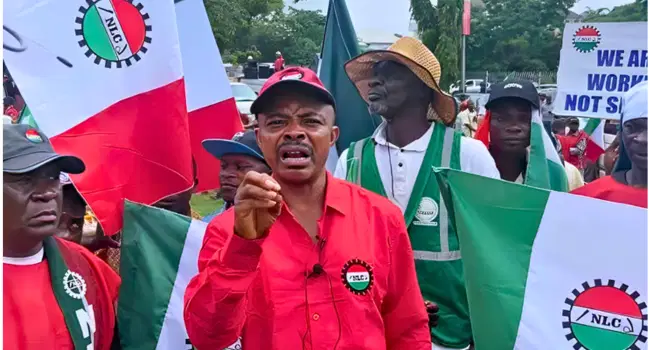
Nigerian workers are pushing for a major change to their pay and the cost of fuel, with organised labour backing a proposal that would put the minimum monthly salary for the lowest-paid public servants at N500,000.
The demand was contained in a letter sent to President Bola Tinubu by the Trade Union Side of the Joint National Public Service Negotiating Council (JNPSNC), which also asked the Federal Government to reduce petrol to N500 per litre and introduce an immediate wage award for workers.
The council gave the Federal Government until September 30, 2026, to respond to its demands, saying rising fuel prices and the broader cost-of-living crisis had placed increasing pressure on workers and their families.
What workers want from the Federal Government
The proposed N500,000 figure is not an immediate replacement for the existing national minimum wage.
Rather, the JNPSNC is proposing the amount as the minimum monthly pay for an officer on Grade Level 01, Step 1 under a new 2027 salary structure.
The council wants negotiations for a new national minimum wage to begin immediately so that the process can be completed before January 2027.
It also wants the Federal Government to review salaries and allowances across the public service and extend the review to federal, state and local government workers.
The proposal comes about two years after Nigeria’s current minimum wage was approved.
In July 2024, President Tinubu announced a new national minimum wage of N70,000 after negotiations with organised labour. The State House said at the time that the wage would be reviewed after three years rather than five years.
That three-year review window is now approaching, making the workers’ demand for a new wage structure particularly significant.
Why N500 petrol is part of the demand
The workers are not asking for higher wages in isolation.
They are also demanding that petrol be stabilised at N500 per litre, arguing that the price of fuel has a direct effect on transportation, food, school expenses and other household costs.
In their letter, the workers referred to petrol selling for about N1,430 per litre or more in some locations.
The demand comes after another round of increases in petrol prices across Nigeria. Reuters reported on September 21 that petrol was selling at around N1,400 per litre in Lagos and Abuja, while some northern locations had reached N1,500. The report linked the latest increase partly to higher global crude oil prices caused by tensions in the Middle East.
The National Bureau of Statistics’ petrol-price data also shows how significantly pump prices have changed in recent years. Its February 2026 data put the national average retail price at N1,051.47 per litre, although prices varied considerably between states.
For workers, the argument is straightforward: an increase in salary can be quickly absorbed by higher transportation and living costs if fuel prices continue rising.
NLC backs the demand
The Nigeria Labour Congress has now thrown its weight behind the public workers’ demands.
NLC Acting General Secretary Benson Upah described the request for a wage award and lower petrol prices as realistic and legitimate, arguing that workers’ earnings have been eroded by rising costs.
The labour centre said the impact of fuel prices extends beyond motorists because higher energy and transportation costs can feed into the prices of goods and services.
The NLC had already called for government intervention over rising petrol prices in a statement issued earlier in September.
It asked the government to consider wage awards, sell sufficient crude oil in naira to local refineries and expand national storage capacity as part of measures to protect Nigerians from external energy shocks.
This means the latest N500 petrol demand is part of a broader position the labour movement has been advancing in response to rising energy costs.
Workers also want an immediate wage award
Another important part of the proposal is the request for an immediate wage award.
The workers want the intervention to cover federal, state and local government employees while negotiations for a new national minimum wage take place.
A wage award would therefore operate as a short-term intervention, while the proposed N500,000 minimum salary is tied to the longer-term review of the wage structure expected to take effect from January 2027.
The Federal Government has previously used wage awards as part of its response to pressure over workers’ purchasing power.
In February 2024, the Federal Ministry of Labour and Employment announced that the government would resume payment of a wage award to workers following an agreement reached with organised labour.
What happens next?
The immediate deadline set by the JNPSNC is September 30.
The council wants the Federal Government to respond to its demands on petrol prices, wage awards and the commencement of negotiations for a new minimum wage before the deadline.
The proposed N500,000 figure will also have to go through negotiations rather than automatically becoming the new national minimum wage.
Nigeria’s previous wage review involved the Federal Government, organised labour and the private sector, and the final figure was reached after negotiations. In 2024, the government initially offered N62,000 before President Tinubu approved N70,000.
The new demand therefore opens another round of discussions over how much Nigerian workers should earn, how quickly a new wage should take effect and how the government can respond to rising energy costs.
For workers, the issue is not only the figure printed on a salary slip. The N500,000 proposal is being presented alongside the demand for cheaper petrol because both wages and transportation costs determine how much of an employee’s income remains available for food, housing, education and other expenses.