

Moscow internet blackouts spark panic: Kremlin’s mobile shutdowns cripple daily life, raise fears of a bigger Russia web crackdown

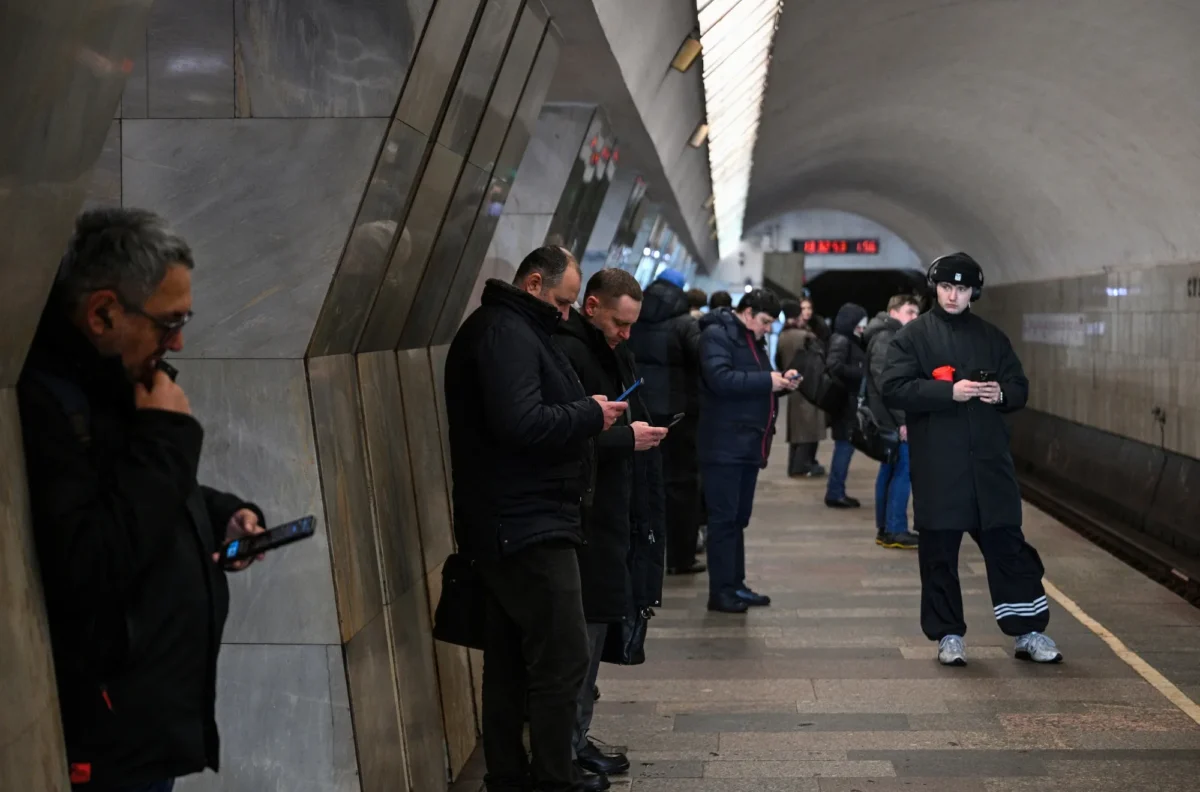
Muscovites have complained about Wi-Fi disruptions in the city’s subway system. Image Credit: Hector Retamal/AFP/Getty Images
Moscow mobile internet blackouts are no longer just a technical inconvenience, they are rapidly becoming a major political and economic flashpoint. Over the past week, large parts of the Russian capital have been hit by repeated mobile internet shutdowns, disrupting taxis, banking apps, card payments, ATMs and even phone calls, while intensifying fears that the Kremlin may be testing new tools for broader online censorship.
Russian officials insist the restrictions are necessary “security measures” tied to the threat of Ukrainian drone attacks. But the scale, duration and timing of the disruptions in the country’s political and economic center have triggered speculation that the outages may also be a trial run for a more tightly controlled “whitelist” internet, where only approved websites and services remain accessible.
Why Moscow’s Mobile Internet Is Going Dark
The latest wave of outages reportedly began on March 5, first affecting parts of Moscow’s outskirts before spreading into the city center. Residents across central districts said mobile internet access became intermittent or disappeared entirely, with some also reporting total loss of cellular service for calls and SMS. In several cases, users could not access taxi apps, delivery platforms, bank services or even some government-linked sites that were supposed to remain functional.
Kremlin spokesman Dmitry Peskov said the measures are being imposed “in strict conformity with the law” and would remain in place for as long as authorities deem necessary to protect citizens. Officials have pointed to increasingly sophisticated Ukrainian drone attacks as the reason for the restrictions, arguing that limiting mobile connectivity can reduce risks to critical infrastructure and urban areas.
However, experts quoted by multiple outlets say the blackouts appear broader than a purely tactical anti-drone measure. The fact that central Moscow, including areas near the Kremlin and the State Duma, has been affected has heightened concerns that authorities may be rehearsing deeper digital controls.
Moscow Residents and Businesses Hit Hard by Internet Shutdowns
For Muscovites, the disruptions have turned ordinary routines into logistical headaches. Residents described needing to take screenshots of directions in advance, carry cash because card terminals may fail, and arrange backup communication plans before leaving home. In a city deeply reliant on mobile apps, the outages have broken the seamless digital systems that underpin everyday life.
The economic damage is mounting. According to estimates cited by Russian media and independent reporting, Moscow businesses may have lost between 3 billion and 5 billion rubles ($38 million to $63 million) in just five days, with some estimates suggesting losses could reach roughly 1 billion rubles per day. Retailers, cafes, restaurants, courier companies, taxi services and car-sharing operators have been among the hardest hit, especially those dependant on mobile payment terminals and app-based transactions.
ATMs and parking meters that rely on mobile networks were also disrupted, while taxi apps reportedly had to offer customers phone-based ordering and cash payment options as a workaround.
‘Whitelist’ Internet Fears Grow in Moscow
A major concern surrounding the shutdowns is the possibility that Russia is expanding its use of a “whitelist” system, a model under which only government-approved websites and essential online services remain accessible during outages.
Officials have previously said such whitelists would include services considered essential for daily life, such as public service portals, marketplaces, delivery apps and online pharmacies. But residents in Moscow reported that even some supposedly approved services, including banks and taxi apps, stopped working during the latest disruptions. That has raised questions about whether the system is being stress-tested or whether implementation remains inconsistent.
Human rights advocates and analysts warn that if a whitelist model becomes normalized, it could represent a dramatic step toward a more heavily censored and state-curated Russian internet, often described as a “sovereign internet” framework. The Kremlin has denied plans for a full disconnection from the global web, but recent measures have continued to move in that direction.
READ ALSO
Russia’s Wider Internet Crackdown Is Accelerating
The Moscow outages come amid a broader tightening of digital controls across Russia since the full-scale invasion of Ukraine in 2022. Authorities have blocked or restricted access to major foreign platforms including Facebook, Instagram, Twitter/X, and YouTube, while pressure has increased on messaging apps such as Telegram and WhatsApp. At the same time, officials have promoted state-backed domestic alternatives such as the MAX messenger app.
A law signed earlier this year gave telecom operators new obligations to suspend services when ordered by the FSB, Russia’s security service, strengthening the legal foundation for rapid shutdowns of mobile internet, calls and other communications. Analysts say this legal architecture makes future blackouts easier to implement at scale.
Research group Top10VPN has estimated that Russia ranked first globally for internet disruptions in 2025, underlining how common shutdowns have become across dozens of regions. Monitoring cited by Russian outlets suggests restrictions are now being introduced daily in an average of 63 regions.
From Walkie-Talkies to Paper Maps: How Muscovites Are Coping
One of the most striking signs of the disruption has been the return of old-school communication tools. Reports say demand in Moscow has surged for walkie-talkies, pagers and printed maps as residents and businesses look for ways to function during blackouts.
The Guardian reported that sales of walkie-talkies rose 27%, pager demand jumped 73%, and demand for paper maps nearly tripled. Even lawmakers in the State Duma complained of being effectively cut off when mobile networks and Wi-Fi stopped working inside parliament.
That symbolic detail matters: if even Russia’s own political elite are being disrupted, it suggests the shutdowns are either unusually broad or part of a more aggressive technical test than previous regional blackouts.
What Moscow’s Internet Blackouts Could Mean Next
For now, fixed-line broadband remains operational in Moscow, which has limited the damage for residents at home and businesses with wired connections. But the blackouts have exposed just how dependent modern urban life is on mobile data, and how quickly a government can disrupt that ecosystem when it chooses.
The bigger question is whether these shutdowns are temporary wartime security measures or the early stages of a more permanent transformation of Russia’s internet. If the Kremlin expands “whitelist” restrictions, limits VPN access, and further pushes state-controlled platforms, Moscow’s current outage crisis could be remembered as a turning point in Russia’s digital future.
For now, Muscovites are still asking a simpler question: When will the internet come back, and in what form?
FAQ
1. Why is the internet down in Moscow?
Moscow’s mobile internet disruptions are being described by the Kremlin as security measures linked to the threat of Ukrainian drone attacks. Officials say restrictions are necessary to protect citizens and critical infrastructure. However, experts and rights advocates believe the outages may also be connected to broader testing of tighter internet controls.
2. Is all internet in Moscow shut down?
No. Reports indicate that mobile internet has been the main target of the shutdowns, while fixed-line broadband in homes and offices has largely continued to work. That said, some residents also reported temporary disruption to voice calls and SMS in certain districts.
3. What is the ‘whitelist internet’ system in Russia?
A whitelist internet system allows only government-approved websites and essential services to remain accessible during shutdowns. In theory, this includes public service portals, marketplaces, pharmacies and selected domestic apps. Critics say it could become a tool for large-scale censorship if expanded permanently.
4. Is Russia testing a sovereign internet in Moscow?
There is no official confirmation that Moscow’s outages are a full test of Russia’s sovereign internet system, but analysts and some media reports say the shutdowns resemble a dress rehearsal for broader control over access to the global web. The use of whitelist access has intensified that speculation.
5. How are Moscow residents affected by the internet blackouts?
Residents have reported problems ordering taxis, using banking apps, making card payments, withdrawing cash, receiving deliveries, using maps and even placing phone calls in some areas. Many have started carrying cash, taking screenshots of directions and arranging alternative communication methods before leaving home.
6. How much money are Moscow businesses losing from the shutdowns?
Estimates cited in reports suggest Moscow businesses lost 3 billion to 5 billion rubles ($38 million to $63 million) over five days, while some outlets estimate losses could reach around 1 billion rubles per day depending on the sector and duration of the disruption. Retail, food service, taxis and courier services are among the worst affected.
7. Are taxi apps and banking apps working in Moscow?
They have been unreliable during the outages. Multiple reports say taxi apps, banking apps, ATMs, parking meters and payment terminals have all been disrupted in affected districts, especially where businesses rely on mobile internet rather than fixed broadband.
8. Is WhatsApp blocked in Russia?
Russia has heavily restricted major foreign platforms since 2022, and multiple reports describe ongoing pressure on WhatsApp, Telegram, and other messaging services. While access conditions can vary, the broader trend is toward tighter controls and promotion of domestic alternatives.
9. What is the MAX app in Russia?
MAX is a state-backed Russian messaging platform that officials are promoting as a domestic alternative to foreign apps. Critics and observers have compared it to a state-controlled super-app and raised concerns that it could enable greater surveillance and tighter control over digital communications.
10. Are VPNs being blocked in Russia too?
There are growing concerns that Russian authorities may move to further limit VPN traffic, which remains one of the main ways users access blocked sites. While not all VPNs are universally blocked at all times, lawmakers have openly discussed stronger restrictions.
11. How long will Moscow’s internet shutdown last?
There is no official end date. The Kremlin has said restrictions will remain in place “as long as additional measures are necessary” for security. That means outages could continue intermittently depending on the government’s threat assessment and policy decisions.
12. Is this the first time Moscow has faced internet shutdowns?
No. Moscow and other Russian regions have experienced previous disruptions, especially amid security alerts and drone threats. But the duration, central-city impact and scale of the current blackouts have made this episode especially notable.
13. Did Russia’s parliament lose internet too?
Yes. Reports say the State Duma experienced outages, with lawmakers unable to use mobile networks and, in some cases, Wi-Fi inside the building. This reinforced how widespread the disruptions had become.
14. Why are Muscovites buying walkie-talkies and paper maps?
Because mobile internet outages have made apps unreliable. Reports show increased demand for walkie-talkies, pagers and paper maps as people seek backup ways to communicate and navigate during blackouts.
15. Could Russia fully disconnect from the global internet?
A full disconnection has not been officially announced, and fixed broadband remains active. But the infrastructure, legal tools and whitelist experiments now in use suggest Russia is building greater capability to selectively isolate or tightly filter access if authorities decide to do so in the future.