

Could Americans be arrested abroad for old tweets? Marco Rubio issues stark warning on Europe’s speech laws

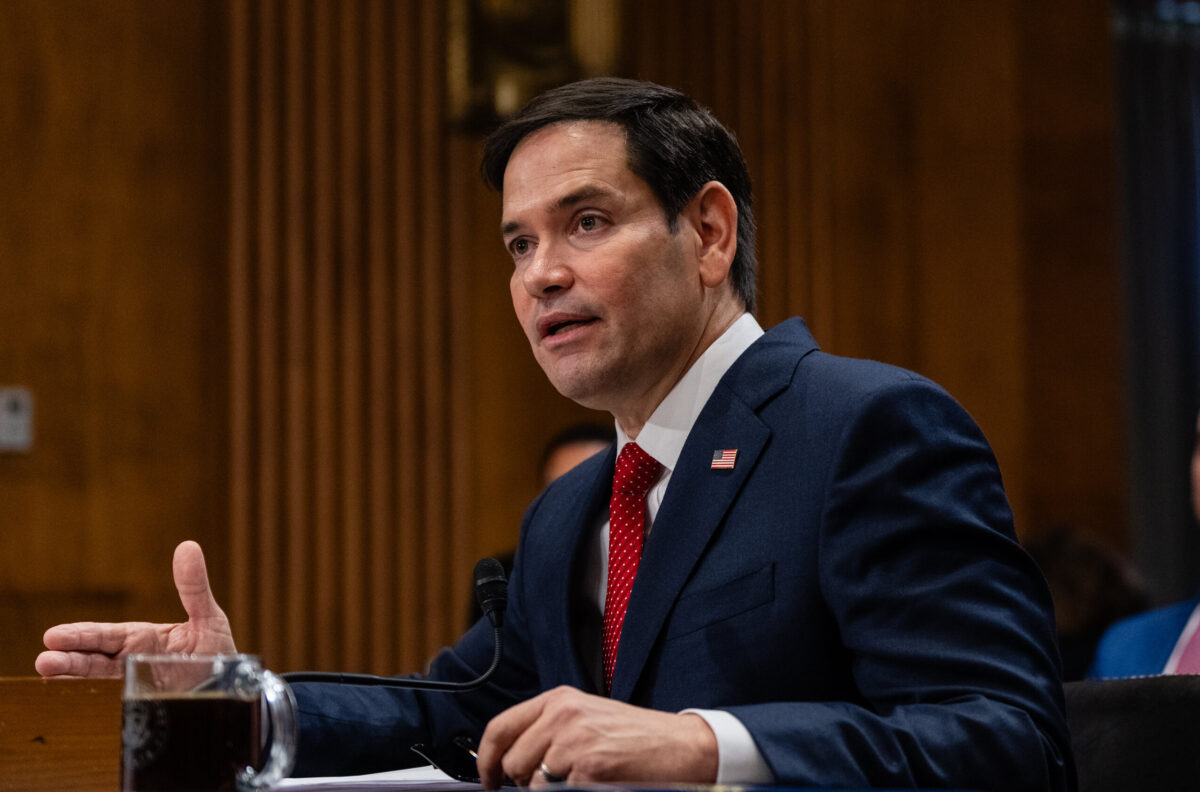
U.S. Secretary of State Marco Rubio. Image Credit: Eric Lee/The New York Times
U.S. Secretary of State Marco Rubio has raised fresh concerns about the future of free expression for Americans traveling abroad, warning that U.S. citizens could one day be arrested in Europe for old social media posts. Speaking during a State Department press briefing, Rubio framed the issue as a growing point of tension between Washington and its European allies, one that challenges the shared democratic values long cited as the foundation of the transatlantic relationship.
The warning comes as the Trump administration intensifies its pushback against European speech regulations, particularly laws that target online content deemed “hateful” or politically incorrect.
Rubio Warns of Arrests Over Past Social Media Posts
During a December press briefing, Rubio posed a pointed question that quickly drew attention across diplomatic and media circles.
“Are we going to live in a world where some American puts up a social media post and then gets to some airport somewhere and is arrested?” Rubio asked.
The Secretary of State said the U.S. is increasingly concerned about situations where American free speech rights could be implicated overseas, especially as European governments expand enforcement of online speech laws.
Free Speech Becomes a Key US–Europe Flashpoint
Since President Donald Trump’s inauguration, freedom of expression has become a central pillar of U.S. foreign policy, particularly in dealings with Europe. While Rubio acknowledged the close historical and cultural ties between the U.S. and European nations, he emphasized that shared values, not just strategic interests, underpin those alliances.
Rubio warned that those values are now under strain.
“One of those values and principles, we hope, is freedom and the freedom of expression,” he said, adding that the U.S. is concerned that free speech protections in Europe are eroding.
Impact on American Tech and Social Media Platforms
Beyond individual travelers, Rubio highlighted the impact of European regulations on American technology companies. He pointed to the European Union’s aggressive enforcement actions against U.S.-based platforms, including massive fines tied to content moderation policies.
Rubio referenced ongoing penalties faced by X (formerly Twitter), suggesting that such actions amount to pressure on American companies to censor content that would otherwise be protected under U.S. law.
Europe’s Speech Laws Under Growing Scrutiny
Concerns over European speech restrictions are not new. In August 2024, a senior London police official sparked backlash after suggesting that U.S. citizens could face extradition to the UK for violating British hate speech laws online.
In some European countries, police have reportedly conducted home visits or raids tied to social media posts involving politically sensitive topics, fueling fears among free speech advocates that enforcement is becoming increasingly aggressive.
READ ALSO
Is Trump trying to take Greenland? New US Envoy appointment sparks Global Outrage
JD Vance: Censorship a Bigger Threat Than Russia
Vice President JD Vance reinforced Rubio’s message earlier this year during remarks at the Munich Security Conference, where he sharply criticized European leaders for prioritizing censorship.
Vance argued that Europe’s internal suppression of speech posed a greater long-term danger to democratic societies than external threats.
“When I look at Europe today, it’s sometimes not so clear what happened to some of the Cold War’s winners,” Vance said.
US Takes Action Against European Officials
The Trump administration has already taken concrete steps in response. The State Department imposed visa bans on former EU commissioner Thierry Breton and four other anti-disinformation figures, accusing them of coercing American platforms to censor U.S. viewpoints.
Rubio described the move as a defense of American constitutional values, saying the U.S. would not tolerate coordinated efforts to suppress lawful speech.
A Growing Divide Over Democratic Values
The dispute underscores a widening philosophical divide between the U.S. and parts of Europe over the balance between public safety, misinformation, and free expression. While European governments argue their laws protect social cohesion, U.S. officials maintain that such policies risk undermining fundamental freedoms.
For American travelers and tech companies alike, the outcome of this clash could have lasting consequences.
FAQ
What did Marco Rubio warn about Europe?
Rubio warned that Americans could potentially be arrested in Europe for old social media posts under strict speech laws.
Can Americans really be arrested overseas for social media posts?
While no widespread arrests have occurred, European officials have suggested that foreign nationals could face legal action under local hate speech laws.
Why is free speech an issue between the US and Europe?
The U.S. prioritizes broad free speech protections, while many European countries enforce stricter limits on online expression.
What laws are causing concern?
The EU’s Digital Services Act and national hate speech laws are key sources of concern for U.S. officials.
How does this affect American travelers?
Rubio suggested travelers could face legal risks if past online posts violate local speech laws abroad.
What action has the US taken?
The U.S. imposed visa bans on European officials accused of pressuring American platforms to censor content.
What did JD Vance say about Europe’s censorship?
Vance said Europe’s censorship trend poses a greater threat to democracy than external adversaries.
Are US tech companies affected?
Yes. American platforms face heavy fines and regulatory pressure under European digital laws.