

Please call me case: Why did court reject bid to freeze Nkosana Kenneth Makate’s Vodacom settlement?

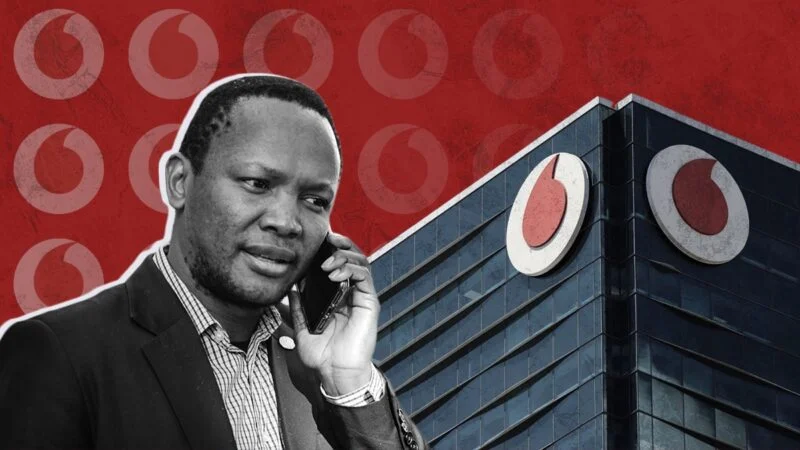
nkosana makate vodacom payout Photo credit: MyBroadband
The Johannesburg High Court has dismissed an urgent application by Errol Elsdon — a former financial supporter of “Please Call Me” inventor Nkosana Kenneth Makate — seeking to freeze 40% of Makate’s settlement from Vodacom. Elsdon, acting through his British Virgin Islands–registered company Black Rock Mining, attempted to halt the transfer of funds while pursuing a disputed litigation funding claim dating back more than a decade.
Black Rock argued that the portion of settlement due to Makate should be held in trust until arbitration on the contentious 2011 funding agreement is concluded. Elsdon claimed there was a risk that Makate or his legal representatives might dissipate or distribute the settlement funds, making it difficult to recover Black Rock’s alleged share.
Acting Judge Don Mahon rejected that argument, ruling that Elsdon had failed to provide evidence of any real danger of dissipation. In his judgment, Mahon stressed that Black Rock’s concerns were purely financial and could be addressed through normal legal processes.
“The harm Black Rock fears is financial and capable of redress in ordinary proceedings,” he wrote. “Without evidence of dissipation or irreparable harm, the application cannot meet the requirements of urgency or interim interdictory relief.”
Makate, in his responding papers, said blocking access to 40% of the settlement would have imposed significant personal financial costs. He explained that keeping large sums in trust accounts reduces the interest payable to him under South Africa’s Legal Practice Act, which diverts a percentage of such interest to the Legal Practice Council or the Fidelity Fund.
“The financial advice I received was that my money could be invested with a return far greater than the ordinary interest I would earn on a trust fund investment,” Makate stated. He added that he has considerable liabilities owed to experts, lawyers, and supporters who assisted him throughout his lengthy litigation against Vodacom — costs he now needs to settle.
He further argued that Black Rock had not offered to cover the interest losses he would incur if the funds remained frozen, and had not shown the ability to compensate him for any damages.
A Long-Running Dispute
The latest court battle adds another chapter to the complex history between Makate and his former funders. Black Rock’s claim resurfaced after Vodacom and Makate announced a settlement in early November, although the exact amount remains confidential due to a non-disclosure agreement. Based on Vodafone earnings estimates before and after the announcement, analysts project that Makate received between R353 million and R748 million — placing Black Rock’s claimed 40% share between R141.2 million and R299.2 million before tax.
Elsdon insists that Black Rock contributed R4.39 million towards Makate’s legal fight, including payments to attorneys, expert witnesses, and litigation expenses. He alleges that Stemela & Lubbe Inc., attorneys originally appointed by Black Rock, later conspired to push him and the company out of the case.
He further claims that the late Chris Schoeman — who helped bring him into the matter — confessed shortly before his death that he authored letters sent via Hahn & Hahn Attorneys to terminate Black Rock’s involvement.
Makate dismissed these claims as hearsay and “inaccurate at best.” He said he personally instructed Hahn & Hahn to cancel agreements with Schoeman and his company Raining Men Trade after receiving legal advice. At the time, Black Rock had been deregistered and could not legally be party to the cancellation. According to Makate, even after Black Rock was later revived, he issued a separate cancellation notice.
He also noted that both Elsdon and Schoeman previously testified under oath before an arbitrator that Black Rock’s funding agreement had been cancelled.
Makate did not hold back in criticizing Elsdon, accusing him of attempting to mislead the court and highlighting that Black Rock had not provided financial assistance since 2014. He challenged Elsdon to produce bank statements proving otherwise.
Court Finds No Basis for Urgency
Judge Mahon made it clear his ruling focused solely on the interdict’s legal requirements. He found that Black Rock could not prove Makate intended to dissipate funds nor show any irreparable harm that could not be resolved in later proceedings.
Without meeting those thresholds, the interdict failed. Mahon therefore dismissed the application with costs in Makate’s favour, noting that the dispute over the underlying funding agreement will be addressed in arbitration scheduled for mid-December.
FAQ Section
1. What did the court rule in the Makate–Black Rock matter?
The Johannesburg High Court dismissed Black Rock’s urgent application to freeze 40% of Makate’s settlement, ruling that no evidence of dissipation or irreparable harm existed.
2. Why was Black Rock seeking an interdict?
Black Rock said Makate should not receive the full settlement until arbitration on a disputed 2011 funding agreement is complete.
3. How much is Makate believed to have received from Vodacom?
Based on Vodacom’s earnings disclosures, analysts estimate Makate received between R353 million and R748 million.
4. What does Black Rock claim it contributed?
Black Rock says it paid R4.39 million in legal and litigation expenses during Makate’s case against Vodacom.
5. What happens next in the dispute?
The merits of the funding agreement will be heard in arbitration scheduled for mid-December 2025.
6. Did the court consider allegations of conspiracy and fraud?
No. Judge Mahon said those issues were irrelevant to the interdict application and will be handled elsewhere.